Jack and Nadia’s reunion
Anxious PeopleJack and Nadia’s reunion takes place ten years after he rescued her on a bridge, when neither knew the other’s identity or how long that brief encounter would shape their lives. A letter from Zara leads Jack to Nadia’s office, where a photograph of the bridge and a nine-word message make the past suddenly present. Their recognition is quiet and uncertain, but the meeting joins three lives marked by the same event and reframes what it means to have been saved.
The rescue and its long aftermath
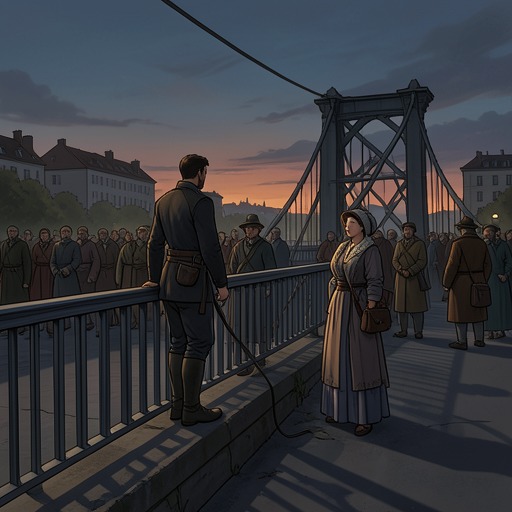
The reunion depends on an encounter that had remained unresolved for a decade. After the man on the bridge died, Nadia was herself in danger there; a boy pulled her away and then vanished. Nadia never saw him again, and Jack never returned to the bridge. He did not know the girl’s name. For Nadia, the rescue became a turning point: unable to know exactly what might have happened otherwise, she tried to understand the difference between her survival and the man’s death. She eventually became a psychologist, working with people in severe distress and bringing to that work the understanding of someone who had once stood close to a crisis herself.
Zara had also witnessed the aftermath. A week after the man’s death, she saw Nadia on the bridge and watched the boy rescue her. Zara remained hidden until an ambulance took Nadia to the hospital; afterward, she found Nadia’s wallet and identification. She kept the dead man’s letter and, over the following ten years, followed Nadia’s education and career from a distance without daring to approach her. By the time they meet, Zara is Nadia’s patient. The reunion is therefore not a chance meeting: it emerges from years of silence, observation, and a connection neither Nadia nor Jack knew they shared.
The letter brings Jack to Nadia
In spring, Jack receives a letter without a stamp on his doormat. It contains the address of Nadia’s office, its floor and room number, a photograph of the bridge, and a second sealed envelope bearing another name. Zara has recognized Jack at the police station and understood that he, too, has been living with the memory. She sends him the materials that can connect the boy from the bridge with the young woman he rescued.
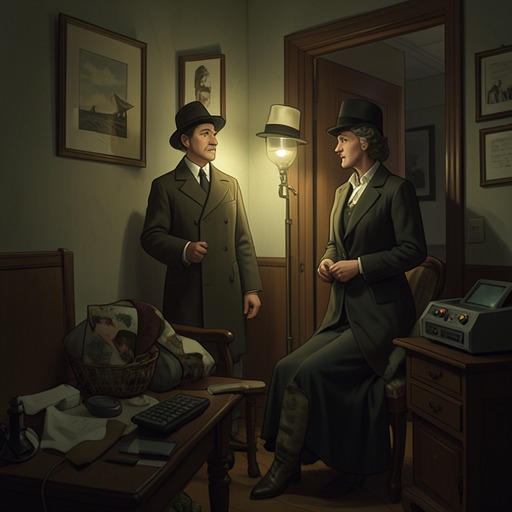
Jack finds Nadia’s office and knocks. Ten years have passed since the rescue, and he has not seen her since she stood on the bridge railing. When the door opens, he recognizes her immediately, though she does not yet know who he is. His emotion leaves him struggling to speak; he reaches for the doorframe, and their fingertips brush. He hands her the large envelope. Inside are the bridge photograph, the office address, and the smaller envelope Zara prepared for Nadia.
Recognition and the meaning of the note
The smaller envelope contains Zara’s handwritten message: “You saved yourself. He just happened to be there.” The words do not deny Jack’s action; they alter the emphasis of the story Nadia has carried. Jack was the person who reached her that day, but the note gives Nadia credit for the life she went on to live. She has spent ten years wondering who the boy was. Now, holding Zara’s message, she recognizes him and asks whether he was there on the bridge. Jack can only nod.
Nadia asks for a moment to compose herself and sits at her desk. Jack follows cautiously. On a bookcase he sees a photograph of Nadia with children at a summer camp held six months earlier. The children have each lost a family member to suicide, and the organization funding the camp helps them find company and support rather than carry grief and shame alone. Nadia returns each year to listen, speak a little, and laugh with them. The photograph shows not only the profession she chose after the bridge, but the practical work her survival has made possible.
A meeting shaped by other people’s care
The reunion is not presented as a clean resolution to ten years of uncertainty. Nadia has more to say than she can manage, and the two sit on opposite sides of a narrow desk, frightened and laughing at once. Their simultaneous, tentative smiles mark a beginning rather than a settled account of what they will become to each other. The narrative leaves that future open, imagining that they might one day tell someone how the first meeting felt.
Around their meeting, the story also reveals an act of help whose recipient does not yet know about it: the summer-camp organization has received a donation from a woman who resigned from her job, gave away her fortune, and crossed a bridge. The timing links Zara’s private reckoning to the support Nadia offers other people bereaved by suicide. Jack and Nadia’s reunion thus gathers more than two people who once met in a crisis. Zara’s letter and note allow a hidden history to surface, while Nadia’s work shows how the consequences of survival can extend outward, through patient attention and help offered to others.