Jim and Jack
Anxious PeopleJim and Jack are father and son, but their shared work at a small-town police station does not make them easy confidants. They care deeply for each other and often recognize the other’s distress; what separates them is less a lack of affection than the difficulty of expressing it. The investigation into the apartment hostage crisis brings that tension to the surface, while small acts of consideration show how much remains between them even when neither can say it plainly.
Family and generational distance
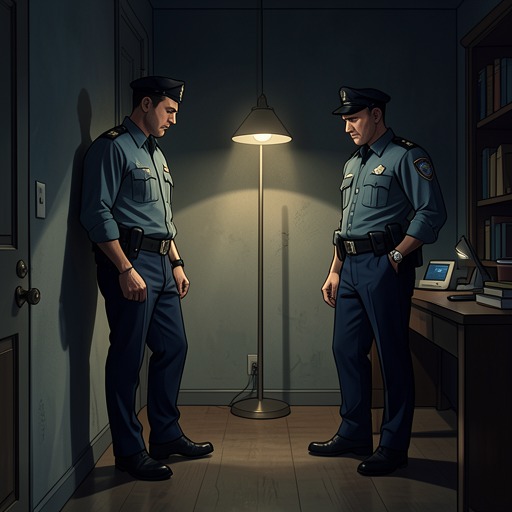
Jim is the older police officer and Jack the younger one. Their generations seem to inhabit different relationships with technology and work: Jim enters information carefully, checking each keystroke, while Jack types quickly and without looking. Jim tells stories where Jack produces reports. Even their disagreements about searching online become miniature contests over vocabulary, habit, and who understands the modern world. Their station work leaves them seated opposite each other behind computer screens, close in the room but often out of step.
That mismatch extends beyond computers. Jim’s ambitions for Jack have included hopes that his son might become a writer, a dream Jim himself once held. The possibility exposes a tender complication in parental love: Jim has imagined his son pursuing a path that might fulfill Jim’s own unrealized desire. The two men rarely discuss such feelings directly. Instead, the narrative presents the distance between them through their contrasting habits and the things they leave unsaid.
Their family history is marked by the death of Jim’s late wife, Jack’s mother. She remains a point of connection between father and son, remembered for her laughter and for her faith in planting an apple tree even when the future seemed bleak. When she became gravely ill, Jim grieved with anger and could not reconcile her goodness with her suffering. Jack had no answer to his father’s despair; he stayed beside him and held him as they cried. After her death, Jack promised to look after Jim. The promise became part of the bond between them, but also a shift in responsibility: the son was now trying to support the father who had once tried to hold the family together.
Their daughter and sister
Jack’s older sister, seven years his senior, is another persistent source of shared anxiety. She has struggled with heroin addiction and contacts the family for money, often saying she needs help getting home. Jim describes her as ill rather than using a stigmatizing label; Jack names her addiction directly. Their different language reflects different ways of carrying the same hope and fear, not a difference in how much either cares.
Jack has repeatedly tried to help her. He once withdrew the savings he had set aside to buy an apartment and paid for her treatment at a private clinic, then drove her there. She left the clinic after two weeks, and the money could not be recovered. Later, after she asked for money for a flight home, Jack sent it; she did not come. She also failed to attend their mother’s funeral after Jack sent money for her travel. Despite these disappointments, Jim and Jack continue sending help when she calls. Jim hopes that a call from an unknown number might be hers; Jack fears it might bring news that she has died. The pattern leaves both men caught between knowing that their help cannot control her choices and hoping that the next attempt will matter.
The story contrasts Jim’s continuing pursuit with Jack’s eventual decision to stop chasing his sister. Jim imagines her as a kite carried beyond his reach, still running beneath it to keep sight of her. Jack, who once spent his savings trying to secure her treatment, has come to recognize the limits of what he can do. That difference creates distance between father and son, even as their shared concern binds them together. Their recurring holiday expectation that she might come home, and their familiar efforts to soften one another’s disappointment, show how hope has become a family ritual.
Work, conflict, and concern
The hostage crisis intensifies the strain because Jack believes that someone among the witnesses knows what happened to the missing bank robber. Having been the first officer into the apartment, he is furious that the investigation has not located her and fears that she may be in danger. He also resents the prospect of specialists arriving from Stockholm and taking the case away from the local police. The incident matters to him both as an unresolved responsibility and as a chance to show what kind of officer he can be.
Jim understands the pressure, but his concern for his son makes it difficult to stay out of Jack’s work. After Jim intervenes in an interview, Jack’s frustration erupts. Jim does not answer the outburst, but later throws a coffee cup across the office. The gesture is not simply anger at the argument: Jim is distressed by his inability to help Jack, whose fury at the case and fear for the missing person are already weighing on him. Jim apologizes for getting involved and acknowledges that the investigation is driving him to distraction too. Jack says it is all right, though neither man believes the reassurance fully.
Their communication remains indirect, but it is not absent. When Jim cleans up the broken cup, Jack quickly leaves and returns with two more cups. He does not drink coffee, yet brings them because he understands that his father sometimes needs not to drink alone. Earlier, Jim had tried to invite his son to share a drink and received only a firm refusal. The later gesture is a quiet answer to that failed invitation: Jack cannot make their troubles disappear, but he can keep his father company.
Shared grief and the work of staying close
The bridge where a man jumped becomes a private point of overlap between their fears. Jack dreams, on his better nights, that he managed to save the man; Jim dreams, on his worse nights, that it was Jack who fell. Their images are different, but both reveal how the incident has joined professional guilt to personal fear. When Jim tells Jack they can only do their best, the words apply not only to the investigation but to their family life, where neither man can rescue the sister they love or undo the loss of the woman who held them together.
The relationship does not resolve into easy openness. Jim and Jack return to their keyboards, finishing and reviewing the witness transcripts for clues. They continue to use work as a way to remain side by side when direct conversation fails. Their care is visible in the cup Jack brings, in Jim’s effort to wipe the floor, in the way each fears losing the other, and in their shared, imperfect attempts to support the absent daughter and sister. The bond is sustained less by declarations than by repeated acts of presence: a son staying with his grieving father, a father worrying over his son, and two colleagues returning to the work in front of them.