Julia
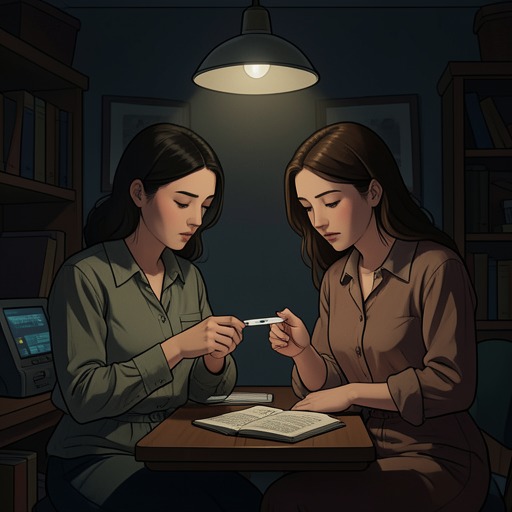
Anxious PeopleJulia, also known as Jules, is Ro’s pregnant wife and the younger half of a couple searching for a home. She arrives at the apartment viewing after more than twenty viewings in two weeks, tired of Ro finding fault with every place and eager for a home with more than one bedroom. Her urgency is comic, blunt, and rooted in ordinary discomfort, but it also makes the viewing a turning point: Julia is determined to make a home with Ro even when the apartment becomes the scene of a hostage crisis.
Identity and Introduction
Julia is introduced through the noisy, affectionate friction between herself and Ro. The pair are young, dressed distinctively, and already arguing as they enter the apartment. Ro repeatedly lifts a phone toward the ceiling because there is no signal, while Julia wants to know what Ro thinks of the place and says they should take it. The broken elevator has forced them to climb, leaving Julia breathless; even so, her attention is fixed on whether this apartment might finally meet their needs.
The search has become especially wearing because Julia wakes at night wondering whether the baby is moving or whether the sensation is gas, then has trouble falling asleep again. Ro and the birds snore, adding to the crowded discomfort of their current home. Julia is therefore prepared to move almost anywhere, provided the new apartment has an additional bedroom. Her enthusiasm is not presented as a careful assessment of the property: after two weeks and more than twenty viewings, the prospect of a workable home matters more than finding a perfect one.
The Apartment Search and Hostage Crisis
Ro introduces herself and Julia as a married couple when asking to borrow a tape measure. Julia’s own response to the apartment is less measured. She says she can put up with the birds, Ro’s taste in music, and many other irritations, but will not leave until they have bought the place; she is even willing to imagine giving birth on its carpet rather than abandoning the prospect. The outburst makes plain how far the search has tested her patience, and how much she wants a home large enough for their growing family.
That practical argument is interrupted when the Bank robber notices Julia’s pregnancy. Ro immediately steps in front of her, raises her arms, and tries to defuse the danger with a reassuring smile, pleading that the Bank robber not shoot and promising that they will do as instructed. The gesture reverses the couple’s usual comic quarrelling: in a crisis, Ro’s attention is on protecting Julia, while Julia’s pregnancy makes their future family suddenly visible to the people around them.
Later, Julia emerges from the bathroom and instinctively glares at Ro. In another moment, she is crying and apologizes, saying she knows she is the one in the wrong. The available account does not specify the disagreement behind the apology, but the brief exchange shows that their conflict is personal rather than a sign of indifference. Their names also appear together in the witness record as Jules and Ro, carrying their familiar intimacy into the formal aftermath of the crisis.
The Past Julia Shares with Ro
During the hostage episode, Julia tells Ro about a former fiancée and a trip to Australia. The former partner wanted to bungee-jump from a bridge and, more broadly, wanted to experience everything. Julia did not share that appetite for constant novelty. On the trip she realized that she could not live at that pace: she longed instead for everyday life and its ordinary routines, while her fiancée disliked being bored. Julia returned from Australia a week early, giving work as her reason, and kissed Ro for the first time.
Julia regrets bringing up the engagement and tries to close the subject, calling it a long story. She then explains the beginning of her relationship with Ro. Her former fiancée was still in Australia when Ro came into the shop where Julia was. Julia had spoken with her mother that morning about not knowing how Ro felt. Her mother laughed at Julia’s uncertainty and used tulips to point out how much attention Julia was already giving Ro. The comparison helped Julia recognize that her feelings had become difficult to deny, even if she was not ready to act on them herself.
When Ro made her laugh in the shop, Julia laughed so hard that she accidentally spat on Ro’s face; Ro laughed too. Ro then found the courage to ask Julia out for a drink. Julia accepted, but nerves made her drink too much. She went outside to smoke, argued with a security guard, and was not allowed back inside. The story is an untidy beginning rather than a polished romantic scene: its embarrassment and laughter make the eventual relationship feel like something chosen in real life, not arranged according to the bold, effortless style of Julia’s former fiancée.
Marriage, Parenthood, and the Future
Julia’s commitment to Ro coexists with genuine apprehension about becoming a parent. She worries that the child will be disappointed because she does not enjoy playing, did not enjoy it even as a child, and does not find other people’s children charming. She had expected pregnancy to change how she felt, but says that meeting her friends’ children has not made her like them more. Her concern is not that she does not love the child already; it is that the familiar picture of a naturally playful, endlessly amused parent may not fit her.
The novel’s account of the future gives Julia’s partnership a concrete continuation. Ro will lose her father and visit him each week, while Ro’s mother will find strength after the loss with the help of another man. Julia will give birth with her hand clasped tightly around Ro’s fingers; both mothers will need pain relief, one before the birth and the other afterward. The image answers Julia’s present anxiety not by making her into someone who loves every child or enjoys every parental convention, but by placing her and Ro together through a difficult, consequential experience.
Narrative Role
Julia’s story joins the apartment search to the larger question of what makes a home. She wants another bedroom because their present space is uncomfortable and a child is coming; her resolve to buy the apartment is therefore bound up with the practical work of building a shared life. The hostage crisis briefly turns that domestic decision into a matter of immediate vulnerability, while the story of her former engagement explains why ordinary life with Ro is something Julia actively chose.
Her contrast with the former fiancée is particularly revealing. Julia does not reject experience because she is incapable of feeling deeply; she recognizes that a life organized around constant newness exhausts her. What she wants is the accumulation of ordinary days, including their irritations, shared laughter, and responsibilities. Her doubts about parenting complicate rather than cancel that desire. By the time the narrative looks ahead to the birth, Julia’s imperfect confidence and her devotion to Ro belong to the same picture: she does not need to become an idealized parent to make a family with her.