Julia and Ro
Anxious PeopleJulia and Ro are a married couple preparing to have a child, and their relationship is shown through the friction of ordinary decisions rather than through easy agreement. At an apartment viewing, their arguments range from Ro’s long-lived pet birds to phone reception and the meaning of a spare room. Beneath the comedy is a shared problem: they need a home for their growing family, but do not approach that choice with the same urgency or confidence.
Marriage and Domestic Life
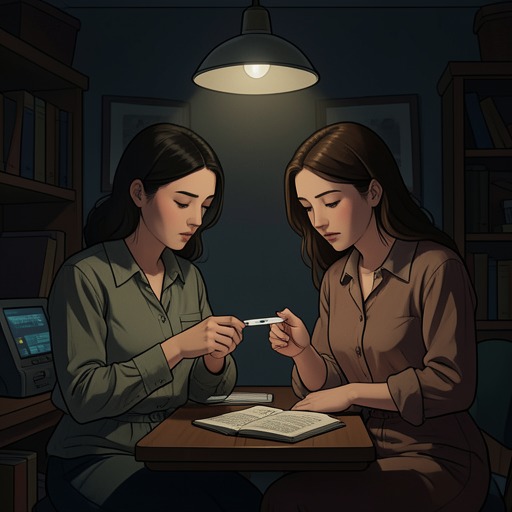
Julia is pregnant, and the couple are looking for somewhere with more than one bedroom. Their current apartment has become difficult to live in: Julia wakes during the night trying to work out whether the baby is kicking, then struggles to sleep because Ro and the birds snore. The search is pressing for her, not an abstract exercise in property preference. They have already viewed more than twenty apartments in two weeks, and Julia is ready to move somewhere larger.
Ro’s way of describing the pregnancy makes Julia impatient. Ro tells family and friends about it as if it were a shared team activity, while Julia’s account of their nights emphasizes the physical interruption and uncertainty of pregnancy. The difference does not suggest a lack of love: Julia is described as loving Ro intensely. It does show how one shared circumstance can feel different to each of them, and how affection does not prevent irritation from accumulating in daily life.
Arguments, Birds, and Habits
Ro’s birds are a recurring source of disagreement. They were pets when Ro and Julia got together, and Julia accepted them because she was in love and assumed they would not live for very long. They did. In an unsuccessful attempt to resolve the problem without confronting Ro, Julia once let the birds out of their cage while Ro was away. One died after falling from the window; Julia then tried to conceal what had happened by blaming the open cage on neighborhood children. The incident left the remaining birds in the cage and the underlying disagreement unresolved.
At the viewing, Julia raises the birds as an issue they need to decide. Ro refuses to have them put down and says she does not want to discuss it further. Their quarrel is not only about what to do with pets: it exposes the difference between Julia’s wish to make practical decisions and Ro’s resistance to treating the birds as a problem to be disposed of. Their arguments can also pass quickly into a different mood. Ro is hurt and uncertain about the apartment, but soon perks up at the thought of cheese and goes to fetch a tape measure.
Ro’s changing hobbies form another part of their domestic pattern. She can devote herself for months to subjects such as 1950s dresses, bouillabaisse, antique coffee services, CrossFit, bonsai trees, or a Second World War podcast, then abruptly move on. Julia calls the basement storeroom the Museum of Abandoned Hobbies. Ro’s shoe collection is the exception to this cycle: it has continued throughout their relationship and reached two hundred pairs. The detail makes their differences tangible: Ro accumulates interests and possessions, while Julia keeps track of what those enthusiasms mean for the space they share.
The Apartment Search
The viewing concentrates their disagreements in a single place. Ro repeatedly notices the lack of phone signal and complains that the apartment may force them to talk to each other. Julia turns the complaint back on her, suggesting that conversation might be a reason to live there rather than a drawback. When Ro describes a possible hobby room, Julia corrects her that it is a walk-in closet, already anticipating the question of whether Ro might use it for storing cheese. Their banter makes the practical stakes of the home search inseparable from knowledge of each other’s habits.
Ro initially dislikes the apartment, describing it as a poor fit and saying she has bad feelings about it. She recalls one of her past enthusiasms for interior design and the idea that people should sleep facing east, though she can no longer remember which way around the advice applied to them. Julia, by contrast, is eager to decide. Her impatience is sharpened by the broken elevator and by the weeks of unsuccessful viewings; Ro’s repeated objections make Julia suspect that her wife may not actually want to move. The scene leaves their disagreement open rather than resolving it through a neat compromise.
A Decision Interrupted
After Ro again questions the apartment, Julia changes the terms of the discussion. She declares that she can accept the birds and Ro’s taste in music, but is not leaving without buying this apartment, even if she has to give birth there. Her outburst gathers several recurring irritations into one decision: the birds, Ro’s habits, the prolonged search, and Julia’s desire to secure a larger home before the baby arrives. It is the clearest expression of her urgency, and a reversal of the earlier dynamic in which Ro’s reservations kept the couple from choosing.
The room falls silent. Zara, standing near the balcony door, notices the bank robber before the others do; Anna-Lena then recognizes the masked figure and the danger. The interruption occurs just after Julia’s declaration, so the apartment viewing shifts abruptly from a marital decision to a hostage crisis. The available scene does not establish whether Julia and Ro ultimately buy the apartment. What it does establish is that, at that moment, Julia has committed herself to it despite the disagreement between them.
The Relationship’s Pattern
Julia and Ro’s disagreements are sustained by familiarity as much as by incompatibility. Julia can anticipate the practical consequences of Ro’s hobbies and objects; Ro’s changes of mood and sudden enthusiasm are recognizable features of their shared life. They do not agree about the birds, the apartment, or even whether the absence of phone service is a benefit, yet they continue to make the search together. The humor rests on the specificity of their domestic negotiations, not on a suggestion that their differences are trivial.
Their relationship is therefore presented as loving without being frictionless. Julia’s insistence on finding a larger home and Ro’s reluctance to accept this particular one are competing responses to a consequential change in their household. The impending child makes the search urgent, while the familiar disputes keep that urgency from becoming simple consensus. Julia’s final declaration briefly settles the question for her; the robber’s arrival prevents the couple’s decision from being resolved on the page.