Man on the bridge
Anxious PeopleMan on the bridge is an unnamed father whose financial collapse ends in suicide and whose letter remains a quiet force in the lives of Zara and Nadia. His story joins economic risk to parental responsibility: he had meant to give his children a safer future, but the investments intended to provide it instead helped bring him to the bridge. The consequences continue long after his death, shaping the way survivors understand guilt, care, and the possibility of helping one another.
Identity and Family
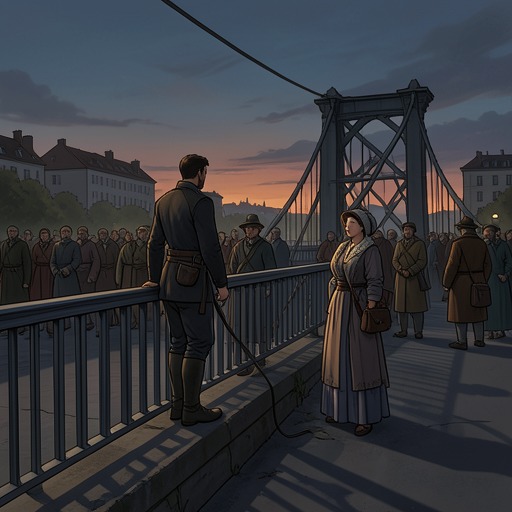
The narrative gives no personal name for Man on the bridge. Ten years before the later events, a teenage boy is the first person to see him on the bridge. The boy has grown up with a strong sense that people should be helped when possible and not abandoned without necessity. His mother is a priest and his father a policeman; the boy is later identified with Jack, whose work as a police officer carries that inherited ethic into adulthood. The encounter establishes Man on the bridge not only as a person in crisis but as the beginning of a chain of decisions made by people who see another person in danger.
He is a father of several children. Before his death, he drops them off at school and tells them he loves them. His reflections to the boy center on the uneven way parenthood is judged: a parent may do many things well, he explains, yet be remembered for one failure. He illustrates this through the familiar possibility of a child being hurt while a parent looks at a phone. His point is not that care is absent, but that one lapse can eclipse years of attention. That fear gives his family role both tenderness and pressure: he wants to protect his children, while believing that his mistakes may define him to them.
Work, Investments, and Collapse
Before his financial troubles, Man on the bridge had a good job, established a relatively successful business, and bought a comfortable apartment. He invested his savings in shares in a real estate development company, hoping that his children might eventually have better jobs, better homes, and less need to live in financial anxiety. Providing for them was, in his understanding, part of a parent's responsibility: children should have support to rely on as they grow, and somewhere to turn when they stumble.
The investment was not an isolated gamble. He entrusted money to a bank for what he understood to be secure investments, used those investments as security for loans, and then borrowed again to repay earlier loans. The bank presented this practice as ordinary. The resulting chain exposes the distance between the reassuring language of security and the vulnerability created by borrowing against assets. The account does not frame his financial failure as a simple personal defect; it places his choices within a system where risky practices were normalized and where the promised stability of real-estate investment could not protect him.
That collapse also sharpens the contradiction in his parental ambition. He takes on financial risk to spare his children the exhausting calculations and insecurity he hopes they will never face, but the attempt to secure their future becomes part of the crisis that overwhelms him. His explanation to the boy returns to the trust children place in adults: parents are expected to know what they are doing even when they do not. Man on the bridge says that he, like others, pretended to know. The admission makes the failure less a rejection of his children than a painful recognition of the limits behind the role he tried to perform.
The Bridge and the Letter
Ten years before the later hostage crisis, Man on the bridge writes to a woman at a bank who had explained moral hazard to him. He writes what he wants her to hear, mails the letter, takes his children to school, tells them he loves them, and drives alone to the water. He parks, climbs onto the bridge railing, and jumps. His actions leave two distinct legacies: an intimate message addressed to a bank employee and a public scene that becomes part of another young person's memory.
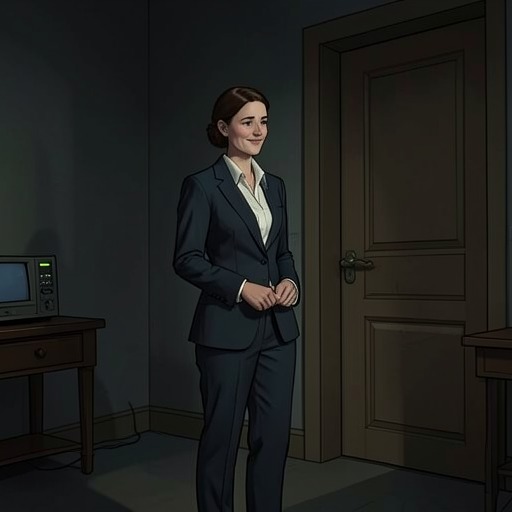
The bank employee is Zara. She carries his letter in her handbag for ten years. In the week after his death, she goes to the bridge and sees a teenage girl climb onto the same railing. A boy rescues the girl, while Zara remains hidden nearby, shaken and unable to intervene. She stays until an ambulance takes the girl to the hospital. Afterward, she walks onto the bridge and finds the girl's wallet and identification, which reveal her name as Nadia. The encounter links Man on the bridge's death to Nadia's survival, but it also leaves Zara with the letter and the knowledge of what she witnessed.
Aftermath and Narrative Significance
Man on the bridge and the Bank robber are explicitly described as unconnected: they never meet. Their shared point of contact is moral hazard, not a personal relationship. His experience gives that idea a human consequence. The phrase belongs to banking, but behind the chain of investments and loans is a father who believed he was building security for his children. His death makes the language of financial risk inseparable from the question of who bears the cost when supposedly secure arrangements fail.
The letter's long afterlife turns a private farewell into a delayed connection. Zara has kept it through the decade, and it is because of the letter that she first seeks help from a psychologist exactly ten years after Man on the bridge's death. She needs someone to read his words aloud and help her through the crisis they bring back. The letter therefore functions not as an explanation that settles everything, but as a burden she has carried without being able to speak fully about it.
Nadia's later work with children who have lost family members to suicide extends the consequences further. She attends a summer camp funded by a charitable organization for children bereaved in this way, where shared experience helps make grief and guilt less solitary. The boy who rescued Nadia is Jack, and his response belongs to the same ethic of practical help that shaped his upbringing. Man on the bridge does not know what follows his death, and the narrative does not suggest that these later acts undo it. Instead, his story shows how one person's crisis can remain present in the lives of witnesses and survivors, and how support may pass from one person to another in small, consequential steps.