Nadia’s psychologist’s office
Anxious PeopleNadia’s psychologist’s office is where Zara’s evasions take shape as both conversation and silence, and where, after ten years, she finally lets another person open the letter she has carried unopened. The room’s ordinary furnishings acquire unusual weight: photographs are moved or removed, a painting of a woman on a bridge becomes a prompt for thoughts of suicide, and a desk becomes the place where long-concealed histories begin to meet. Through these details, the office connects Zara’s private guilt to Nadia’s own past and to the work of supporting people who have lost someone to suicide.
Setting and furnishings
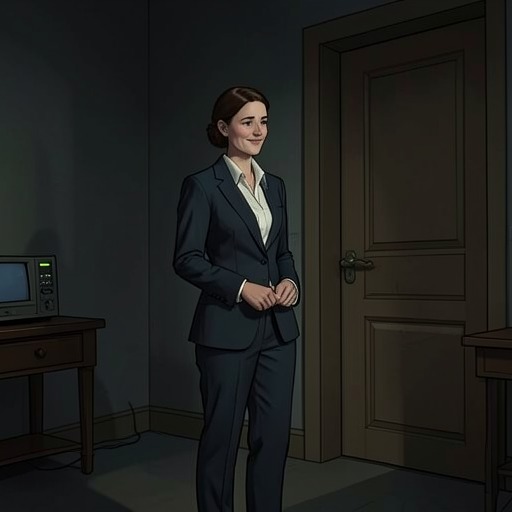
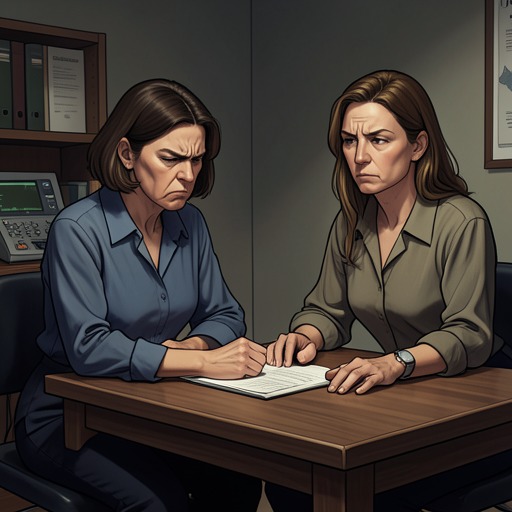
The office is a working consultation room organized around face-to-face conversation. Nadia sits opposite the people who come to her, while the desk, bookcase, and images in the room repeatedly draw attention away from the expected questions and toward what a patient is not yet ready to say. The story makes the room feel less like a neutral backdrop than a place where small gestures register: Zara rearranges objects, studies pictures, grips her handbag, and leaves without giving the explanation she has come close to offering.
A framed photograph of Nadia’s mother first prompts Zara to ask who the woman is and whether Nadia gets along with her. The question unsettles the professional routine from the opening exchange. After Zara discloses that she has cancer, Nadia removes the photograph from her desk before their next session. The change is a concrete sign that Zara’s words have affected her beyond the immediate appointment, even though Zara has not yet explained what lies behind them.
Another image—a painting of a woman looking out across an endless sea—becomes a recurring focus. Nadia painted it as a reminder to herself and has understood the woman’s gaze as either longing or fear. Zara sees a possibility Nadia had not considered: that the woman may be contemplating ending her life. The overlooked detail that the woman is standing on a bridge gives the image a significance grounded in Nadia’s own history. A picture that had seemed to face the horizon can also be read as a scene of danger.
Zara’s early visits
Zara’s manner initially makes the sessions difficult. In one meeting she asks Nadia to explain panic attacks in her own words rather than offer an expert definition. In another, after discussing her belief that democracy is doomed because people will believe a good story, she is asked about childhood, work, and feelings. The questioning eventually brings her to a sentence she says in a whisper: she has cancer. The silence that follows is so intense that both women become acutely aware of their breathing and heartbeats. The office holds a moment in which the conversation stops being an exercise in professional composure and becomes an encounter with fear.
Zara’s way of speaking can also turn the sessions into tests of Nadia’s reactions. She makes a joke about dolphins and the distinction between psychology and psychiatry; afterward, Nadia no longer wears her dolphin brooch. Zara does not simply accept the usual roles of patient and clinician: when the session ends, she declines to shake hands, moves a photograph, and rearranges three books. The room records her resistance in actions as well as speech. Nadia finds her difficult, but the difficulty does not cancel the distress that becomes increasingly apparent beneath Zara’s jokes and provocations.
At a later visit, Zara considers telling Nadia that her apartment-viewing habit is not a recent hobby but an obsession she has maintained for ten years. She carries a letter in her handbag and comes close to reaching for it while Nadia talks about the excuses people make to live with actions that conflict with their own moral code. Zara says nothing. She closes her bag and leaves; in the elevator, she stops it so she can cry in private. The office is thus a place where disclosure becomes possible without becoming immediate: the letter remains unopened, and the truth stays with Zara after the door shuts.
Nadia’s history and the bridge image
The room’s recurring bridge imagery is bound to Nadia’s own experience. As a girl, she was rescued by Jack after climbing onto a bridge railing. She later became a psychologist, working with people whose pain can feel like standing at the edge, and returned to the town after her training. Her office is consequently not only a professional setting: her work is shaped by an experience of having been close to death and then surviving it. The painting’s bridge, and Zara’s attention to it, bring that history into the room without Nadia initially knowing the connection between them.
Zara’s visits also carry a history Nadia cannot yet see. The week after the man jumped from the bridge, Zara witnessed a girl climb onto the same railing and saw a boy rescue her. She remained hidden until an ambulance took the girl away, then found the girl’s wallet and identification: her name was Nadia. Zara spent the following ten years watching Nadia’s life and career from a distance. She attended apartment viewings for the balconies’ views toward the bridge, and she became Nadia’s patient without revealing why the bridge mattered to her. The office is the point where that private surveillance and Nadia’s remembered survival finally approach one another.
The letter and the room’s changed purpose
When ten years have passed since the man’s death, Zara finally lets the envelope slip from her hand in Nadia’s office. She wants Nadia to read aloud what the man wrote and then keep her from jumping herself, but at first can only say Nadia’s name and begin a broken explanation. Nadia hesitantly opens the envelope and takes out a handwritten note, four words long. The scene does not make the letter a simple solution: its importance lies first in Zara allowing another person to see it, after years of carrying it unopened and fearing what it might confirm about her.
Jack enters the office cautiously after Nadia, and sees a photograph on the bookcase that Zara has always adjusted. It shows Nadia with children at a summer camp held for young people who have lost a family member to suicide. The organization behind the camp gives the bereaved a place to share the burden of guilt, shame, and silence; Nadia returns each year to listen, talk, and laugh with them. The photograph reveals that the office’s work extends beyond private appointments into continuing, collective support. The room’s images have followed different paths—from Nadia’s mother, to the woman on the bridge, to Nadia among the children she helps.
Narrative significance
The office brings together two kinds of silence. Nadia knows what it is to survive a suicide attempt but does not recognize, at first, the connection between her past and the woman sitting across from her. Zara knows the story of Nadia’s rescue but cannot explain that knowledge, and cannot open the dead man’s letter. Their meetings let those gaps narrow through repeated visits, uneasy humor, questions, and attention to objects rather than through an instant confession. In that sense, the office is a setting for delayed recognition as much as treatment.
The bookcase photograph also points beyond the encounter between these two women. After Zara leaves, the story reveals a donation to the camp organization from a woman who has resigned from her job, given away her fortune, and crossed a bridge. The office has been the place where Zara begins to relinquish the letter’s isolation; the camp represents support offered to other people who have been left behind. Together, they make the room part of a wider argument that guilt and grief need not be borne alone, and that help can begin with the modest acts of listening, staying, and allowing another person to witness what has been kept hidden.