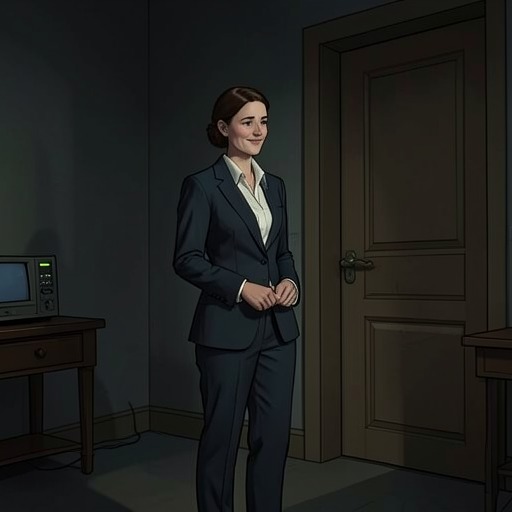
People are more than their past mistakes
Anxious PeoplePeople are more than their past mistakes is a moral principle that refuses to make a person’s worst act the whole measure of that person. The novel develops it through linked stories of financial ruin, inherited pain, and a mother’s disastrous attempt to protect her children. Its claim is neither that harm does not matter nor that good intentions erase consequences: people must answer for what they do, but they can also make different choices and be offered a way forward.
A Mistake Is Not an Entire Life
The novel first sets the principle against the story of the man on the bridge. He entrusted his savings to a bank, borrowed against investments described as secure, and took out further loans to pay earlier ones. When the financial crisis destroyed his savings and left him in debt, a second bank refused to lend to him. Its employee explained moral hazard by describing two people on a tree branch: the one nearest the trunk holds the saw, while the man, furthest from safety, has entrusted the bank with his money. The explanation exposes how institutions can protect themselves from the consequences of their own actions by transferring risk to others. The man’s protest that the first bank had lost his money does not change the refusal or undo his loss.
Ten years later, the bank robber and the man on the bridge have never met; their stories are connected by the idea of moral hazard, not by a personal relationship. The novel’s comparison does not equate their actions. Instead, it places institutional self-protection beside the ways individuals assign, inherit, or evade responsibility. The bank’s explanation to the man converts his trust into his fault; the bank robber’s childhood brings the same language of blame into a family, where responsibility is harder to separate from love.
Inherited Blame and the Bank Robber
As a child, the bank robber helped her mother by selling Christmas magazine editions after school and giving her the money for Christmas food. Her mother, crying and intoxicated, said that what had happened was not actually her fault and that the child should not have given her the money. The child did not fully understand the explanation, but recognized its connection to the money she had worked to earn. The incident is an early lesson in how a person can be hurt by someone they love without being able to turn that hurt into simple hatred.
The bank robber remembers that even after her mother’s funeral she could not become angry with her. She cleaned the house and found empty gin bottles hidden in places she had known about but had never revealed to her mother. In the daughter’s understanding, the chaos of addiction could not truly be concealed; it was passed down. Her mother had insisted that personality was only the sum of experience and predicted that a child from a broken home could not believe in lasting love. The daughter’s own life contradicts that prediction: she grows up, has daughters of her own, and tries to be a good mother, wife, employee, and person. Her fear of failure persists, but her childhood does not dictate every later choice.
That history helps explain, without excusing, the bank robber’s decision to hold up a bank. After losing her home and job, she stayed in a basement storeroom, borrowed blankets, and kept a toy pistol she found beneath them. For a week she did not know where she would sleep. When a small apartment became available for six thousand five hundred a month, she emptied her account and sold what she owned to pay for one month, hoping to keep a home and avoid losing her daughters. She had avoided confronting her former husband, employer, and lawyer because she did not want to expose the girls to adult conflict. At the hostage crisis, she calls herself an idiot, accepts that she has created chaos, and says she is ready to give up and release the hostages. The motive and the desperation make her choice legible; the novel explicitly does not treat them as an excuse for robbing a bank.
Understanding Without Excusing
The novel makes room for explanations while drawing a boundary around what they can justify. The bank robber’s wish to shield her daughters from conflict helps explain why she tried to solve her crisis alone, but it does not erase the danger and disorder caused by the robbery. Her own admission that the chaos is her fault marks a change from the childhood scene in which her mother could only say that events were not her fault. The contrast is not a claim that the daughter has escaped the past untouched; it shows her naming her responsibility even when fear and love shaped her actions.
A conversation between Zara and her psychologist broadens the issue beyond the bank robber. The psychologist observes that people need to believe they are helping the world, or at least not making it worse. When their actions violate their own moral codes, they may reach for a justification: conviction, necessity, or the belief that they had no choice. Such explanations help people live with themselves, but they can also conceal wrongdoing. The novel therefore holds two ideas together: a person is not reducible to a bad act, and a bad act does not become harmless because its author can explain it.
The Choice to Let Someone Continue
Jim’s response to the bank robber turns the principle into action. He sees that she has made a serious mistake and knows that surrender would lead to punishment. He also fails to see her only as a criminal, because he cannot separate her from the thought of his own daughter. Instead of catching her, he tells her he does not want to do so and directs her to ask the real estate agent for the other apartment’s keys. His decision is not presented as proof that the robbery was right. It is a choice to avoid making the robber’s worst act the only fact that can determine what happens next.
That choice carries a cost in Jim’s relationship with Jack. Jim saves the bank robber and deceives his son; Jack may never fully forgive him, though the two are able to move forward together. The possibility of a second chance is therefore not a clean resolution in which every consequence vanishes. Trust has been damaged, and the characters must live with that. The novel gives the same principle both its generous and difficult form: a person may be more than a mistake, while others remain free to remember the mistake and respond to it.
The narrator states the idea directly by rejecting the claim that personality is simply the sum of experience. People also consist of their next choices and their tomorrows. The emphasis on what comes next does not erase the past: the bank robber’s childhood, her mother’s addiction, and the harm of the robbery remain part of the story. Rather, the future prevents those facts from becoming a sentence that no later action can revise. The principle’s second chance is not innocence restored, but the possibility of acting differently—and of being seen as someone capable of doing so.