Pizza
Anxious PeoplePizza is both a meal and an accidental instrument of detection during the hostage crisis in The apartment. Its arrival gives the hungry occupants a shared practical concern, offers the police a possible way to pass a phone inside, and leaves Jack with the numerical discrepancy that helps him realize the Bank robber has already walked out.
From hunger to a shared request
The food question first comes from Estelle, who moves through the hall and asks whether anyone is hungry. She offers to make something from the freezer, explaining her care in the simple language of feeding people. The Bank robber accepts, but immediately worries that she cannot even afford to order pizza. Her remark links the hostage situation to the financial distress that brought her there: even while holding people in the apartment, she is acutely aware that she lacks the money to provide for them.
Ro’s suggestion of pizza turns that private worry into a practical question for everyone. Roger initially objects to ordering it at that hour, but the Bank robber’s admission that she has no money changes how he regards her. He asks what her plan is for getting out, shifting from judgment toward curiosity. The request for food does not solve the danger or erase the crime; it creates an ordinary subject around which the trapped group can speak, even as their confinement continues.
Ordering under pressure
Roger takes charge of the order. After he calls from the balcony for supplies, Jim, the police officer below, misunderstands and asks whether anyone needs medical help. Roger clarifies that the occupants are hungry, then returns inside and announces that they will make a list and throw it down. He asks each person what kind of pizza they want, beginning with the Bank robber, who says that anything will do. Zara challenges her to make a choice, turning the menu into another small test of whether she can act decisively.
The ordering process continues amid the disorder of the standoff. When a voice comes from inside the rabbit head, Roger cuts off the request and names a Capricciosa pizza; the person inside the head agrees to have the ham removed. Roger then needs something heavy enough to attach the note to. He chooses a lime and throws it from the balcony, where it hits Jack on the forehead. The pizza request and the note are part of the same improvised exchange with the police: food is requested, while a written message must be made to reach the street.
A possible channel to the hostage-taker
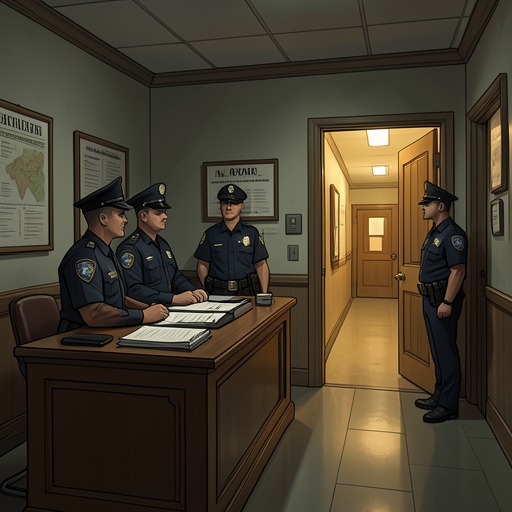
Outside, Jack and Jim are trying to find a way to contact the Bank robber. Jack worries that she might interpret a phone as a trap, particularly because the police cannot be certain how she will react. Jim proposes putting the phone in one of the pizza boxes. Jack accepts the suggestion and tells the negotiator that this is how they will bring it in. The plan makes the delivery more than a response to hunger: an ordinary container might carry a means of communication into the apartment without presenting the phone openly.
The pizza boxes later become part of Jack’s reckoning with who was inside. Looking at them, he counts the people he believes are present: Roger, Anna-Lena, Ro, Jules, Estelle, Zara, Lennart, the Bank robber, and the Real estate agent. The list totals nine. But Jack remembers that the note sent down with the lime asked for only eight pizzas. Jim considers whether the Bank robber simply does not like pizza; Jack instead recognizes that the headcount rests on an assumption.
The count becomes a clue
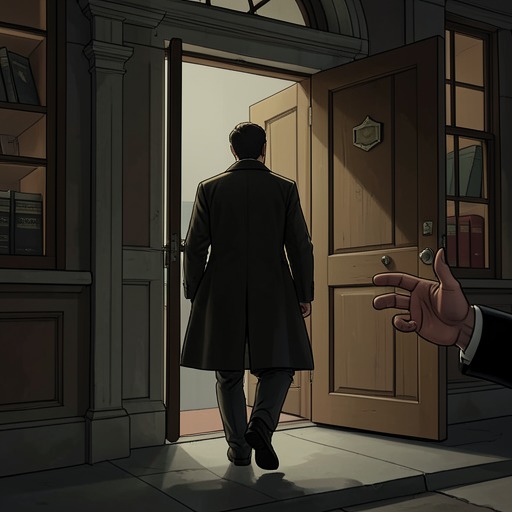
Jack concludes that there were eight people in the apartment, not nine. In his reading of the discrepancy, one person had been counted as present throughout even though that person was not there. He realizes that the perpetrator did not hide inside the apartment or escape during a later search; she had already walked out into the street. The pizza count thus supplies a concrete clue against the police’s mistaken picture of the hostage group and helps reveal the Bank robber’s disappearance.
The clue works because the food order records an expectation in a simple, countable form. The note asks for eight pizzas, while Jack’s list includes both the Bank robber and the Real estate agent as separate people. Reconsidering that total leads him to question whether the Real estate agent was an additional person at all. Pizza has moved from a meal the hostages need, to a proposed cover for a phone, and finally to evidence that the police have misunderstood who remained inside. Its role is modest but decisive: the crisis’s improvised logistics preserve the discrepancy that lets Jack see the escape.