Ro
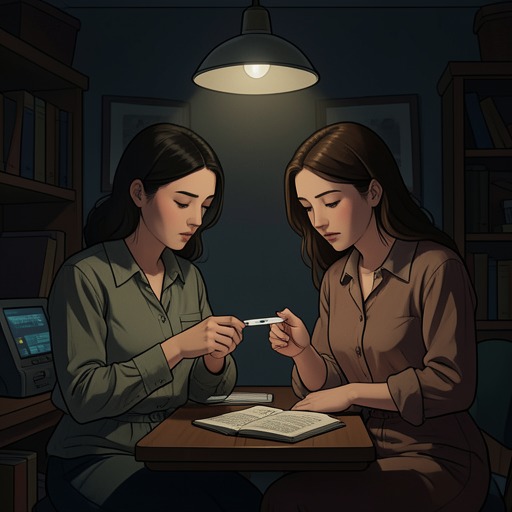
Anxious PeopleRo, Julia’s wife, is a pregnant prospective homebuyer whose abrupt changes of mood, comic candor, and instinctive loyalty shape the apartment-viewing scenes. Beneath her easy humor is a fear of making adult decisions without her ailing father’s guidance; the crisis reveals that uncertainty alongside her protective love for Julia and her capacity to find a way forward with help from others.
Identity and Introduction
Ro arrives at the apartment viewing with Julia, who is pregnant. The two are already bickering: Ro complains that there is no phone signal, while Julia insists they need to decide what to do about Ro’s birds. Ro’s nickname has stuck so completely that she uses it to introduce herself, and her conversation moves quickly between practical matters and digressions. She calls the walk-in closet a hobby room, then sets off to find a tape measure, apparently cheerful again almost as soon as the argument has passed.
That quickness is both a source of charm and a source of friction. Ro can change course in an instant, including when the thought of cheese lifts her spirits. During the viewing she asks Roger to lend her his tape measure, but he refuses, and she backs away from the dispute. When she reaches for a lime from the display bowl, Anna-Lena warns her that the fruit is only there for the viewing. Ro lets it go and returns to Julia, turning her discomfort into a string of half-formed reasons why the apartment feels wrong for them.
The birds are not a passing detail. Ro brought them into her relationship with Julia, who has struggled with their long lives and once secretly let them out of their cage; one died, and Julia blamed the open cage on visiting children. Ro refuses to have the remaining birds put down. Even after the viewing intensifies into a crisis, the birds remain part of the couple’s disagreements and, in the future imagined by the narration, part of their shared home.
Julia and the Story of Their Love
Ro and Julia argue noisily, but their conflict is bound up with affection and shared history. During the viewing, Ro decides that the apartment is not right for them and tries to persuade Julia to leave. Julia refuses: despite Ro’s doubts, she wants the apartment badly enough to insist they stay. Their disagreement makes visible a recurring difference between them: Ro is prone to retreat from a decision, while Julia can press for what she wants.
Their relationship began after Ro and Julia had each been in other relationships. On a trip to Australia with her then-partner, Julia realized she did not want a life of constant novelty and adventure. She returned a week before her companion, ostensibly because of work, and kissed Ro. The attraction had been building in the flower shop where Ro repeatedly came to buy tulips. Julia was struck not only by Ro’s beauty but by her ability to make her laugh; her mother had advised that humor, rather than beauty alone, helps sustain a lasting relationship.
The story of Ro’s family gives that humor a deeper history. Early in their relationship, white sheets hanging over a bedroom door startled Ro. She initially hesitated to explain why, but eventually told Julia that her family had fled across mountains in winter. As children, they carried sheets and were instructed to use them for concealment if aircraft approached. Her parents’ experience of danger and displacement did not make Ro solemn or withdraw her from ordinary life. Instead, the narration connects her family’s humor, including bad puns and crude jokes, to a determination to resist despair. Julia remembers that disclosure as part of the beginning of their life together.
Her Father, Parenthood, and the Apartment
Ro depends on her father’s judgment when she is unsure what to choose. She says he used to inspect anything she wanted to buy and knew how to fix whatever needed fixing. Now he has dementia and lives in a care home; the phrase used for that arrangement troubles her because it sounds less like living in a home than being placed in one. The broken taps, noisy ventilation, and loose window catches there sharpen her sense of what he once could do and what illness has taken away.
As she faces becoming a parent, Ro fears she cannot match the confidence and competence she associates with him. She worries that she should already know how to make decisions, even small ones such as whether to buy eggs, and admits she has been finding faults with apartments because she is afraid. Her anxiety is not simply about the condition of a property. Choosing a home feels like accepting responsibility for a future she cannot control, at a time when the parent she would normally consult is no longer able to guide her as before.
Roger responds by assessing the apartment rather than dismissing her fear. He points to its sound finances and the good condition of its kitchen and bathroom, while acknowledging that minor repairs, including loose baseboards, will be needed. His judgment gives Ro a practical basis for deciding in Julia’s favor. When Ro says she does not know how to repair the baseboards, Roger offers the reassurance she needs. The moment connects his own sense of lost usefulness with Ro’s fear of being unprepared: what he can still give is not a repair, but confidence in her ability to begin.
The Hostage Crisis and What Follows
When the bank robber asks the people in the apartment to lie down and be quiet, the others resist for their own reasons. Ro’s attention, however, shifts immediately to Julia’s pregnancy. She steps in front of her wife, raises her arms, and tries to calm the situation by signaling that they will cooperate. Her protective response is comic in its nervousness but serious in its purpose: in a room suddenly governed by danger, she places herself between Julia and the threat.
Later, when Jack interviews the witnesses, Ro and Julia are asked to speak separately. Jack’s wording about Ro having been in a closet prompts Julia to challenge what he means, and Jack has to clarify himself. Their exchanges retain the couple’s familiar teasing and quick correction even in the aftermath of an extraordinary event. Ro’s concern for someone else also persists: outside, she offers to find London something to drink after London says she does not like coffee. The small offer turns the group’s attention from the crisis toward ordinary companionship.
The ending looks beyond the viewing to the life Ro and Julia will make. Ro will visit her father every week as his dementia advances, and the narration anticipates his death. Julia will give birth with Ro beside her, their hands clasped; the story presents them as imperfect but good enough parents. They keep the birds, continue to argue and make up, and become neighbors of Estelle. Ro’s future does not erase her fear or loss. Instead, the movement from searching for her father’s approval to building a family with Julia gives her uncertainty a direction: home becomes something the two women make together, not a decision her father can make for her.