Roger
Anxious PeopleRoger is Anna-Lena’s husband, a retired engineer, and a practical man whose life has been organized around fixing things, negotiating purchases, and loving his family through small acts of service. At an apartment viewing where he initially treats other prospective buyers as rivals, he eventually urges Julia and Ro to buy the apartment instead. That change matters: Roger’s story is not simply about a man who knows how to make a good investment, but about what happens when he begins to recognize that his usefulness and his marriage cannot be measured by winning.
Identity and Background
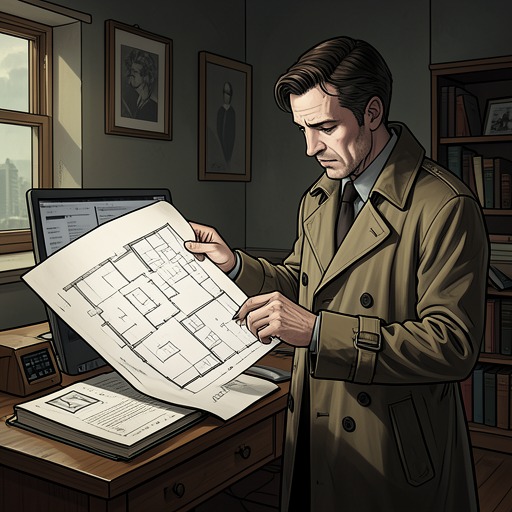
Roger has been retired for several years when he appears at the viewing with Anna-Lena. Retirement has not made him tranquil. He remains opinionated and alert to costs, defects, and opportunities, even when there is no urgent task awaiting him. Formerly an engineer, he has spent a working life building bridges. His expertise persists in the way he looks at buildings: a loose baseboard is a problem to identify, a wall is something to respect, and a renovation is something he can undertake himself.
He is also an experienced apartment investor. In the couple’s usual routine, Roger handles renovations, Anna-Lena chooses the decor, and they sell one apartment to buy another. He regards negotiation as a skill and has believed himself good at it. At viewings, he wants Anna-Lena to emphasize possible drawbacks—including renovation costs and damp—to discourage competing buyers. His suspicion of other bidders is practical, but it also makes the viewing feel to him like a contest: he tells Anna-Lena that they are surrounded by enemies as soon as they enter.
His attention to defects has an affectionate counterpart. Roger has been to every IKEA store in the country with Anna-Lena, and he understands that the little things matter in a long marriage. When she became interested in interior design, she settled on her bathroom cabinet as the anchor for each new scheme. Roger made sure its mirrored door opened and closed easily, removed the cabinet last when they moved, and installed it first in the next home. The care is precise and unshowy: he knows what matters to her and arranges his work around it.
Marriage and Family
Roger and Anna-Lena’s exchanges can sound abrupt, but their shorthand belongs to a marriage built over many years. At the viewing, her critical comments about other buyers and the apartment prompt his familiar rebuke, “For God’s sake, darling.” The phrase is at once exasperation and intimacy. They can argue with very few words, yet their shared habits—including their IKEA visits—also let affection go largely unspoken. Roger once suggested cake at the IKEA cafeteria because he knew the day mattered to Anna-Lena; its importance to her was enough to make it important to him.
Their shared history also includes sacrifices that were not evenly visible. Anna-Lena explains that her career kept advancing while Roger turned down promotions so he could take their children to nursery. She had expected that his opportunity would come the following year, but it never did. In retrospect, she describes years of parenting as climbing the same tree while barely seeing one another on the way up. The image captures their partnership and its cost: they continued together, but the promised moment when it would be Roger’s turn did not arrive.
Roger’s feelings about family life surface indirectly. He dislikes seeing pregnant couples at viewings because they tend to bid too much, and he resists the prospectus calling a small room a child’s room. Anna-Lena distracts him in IKEA by asking questions in the children’s section, trying to ease what the narration identifies as his grief. The evidence does not explain that grief further, but it shows that she recognizes it and responds with a familiar form of care.
The Viewing and Its Reversal
At first Roger and Anna-Lena approach the apartment as investors. They notice potential renovations and try to keep other buyers from making offers. Roger’s engineer’s eye makes his comments about the property concrete: he checks a baseboard, and he objects to the prospectus treating the small room as though it could only be for a child. He sees the apartment both as a structure that can be improved and as a purchase whose value depends on who else wants it.
The viewing unsettles that familiar arrangement. When Anna-Lena reveals her connection with Lennart, Roger is left without words. The revelation reaches beyond an ordinary dispute over the apartment: it exposes a private part of their life that she had not expected him to discover. The couple have long relied on simple words and practical gestures, and the scene makes plain how difficult it can be for Roger to respond when the habits that have carried their marriage no longer suffice.
Later, Roger recognizes that Anna-Lena hired Lennart to make him feel like a winner. The knowledge reframes their repeated maneuvering at apartment viewings as more than a strategy for securing bargains: it was also one of the ways she tried to protect his sense of purpose. Roger has come to feel that age has taken away his ability to serve a purpose, or to persuade the person he loves that he still can. The apartment itself cannot repair that hurt, but he can choose what to do with the knowledge.
Generosity and Change
When the bank robber apologizes for involving everyone and explains that she had intended to repay the money, Roger answers with a question about whether the interest would be fixed or variable. The practical joke-like turn is characteristic of him, but it also lets him respond without making the exchange about blame. Elsewhere, he knocks gently on the wall as he thinks of Anna-Lena as the structure on which his life depends. The comparison connects his engineering instincts to the dependence and affection he has trouble putting into words.
His clearest change comes when he encourages Ro to buy the apartment. Although he has spent the viewing trying to deter other bidders, Roger tells her that the property has no damp or mold, that its kitchen and bathroom are in excellent condition, and that the loose baseboards are easily fixed. He recommends the home honestly rather than using its shortcomings to gain an advantage. He tells Julia that it is a good apartment for children and that she and Ro should buy it, even after Julia offers to let him and Anna-Lena have it.
The decision does not erase Roger’s disappointment about the career he relinquished or the part he has played in the marriage. Instead, it shows him using his knowledge for someone else’s benefit. His practical ability remains valuable even as he revises what it is for: he can help Ro by telling her what is sound about the apartment, rather than by winning it for himself.
Bridges and the Ending
Roger’s professional history shapes how he understands the man who jumped from a bridge. Although Roger did not know the man and did not build that particular bridge, he was upset when television coverage seemed to assign blame to the structure. His belief that bridges exist to bring people closer together is both an engineer’s conviction and a description of the connections he values. Anna-Lena remembers his reaction and carries his perspective into conversation with the others.
At the end, Roger and Anna-Lena sit together on the steps, close enough that they are almost touching. She reaches toward his fingers; both want to apologize, but the word is difficult after so many years of climbing through life together. Rather than forcing a resolution into speech, Anna-Lena suggests that they go and look at a countertop at IKEA. The familiar destination offers no grand answer, but it gives them a next step they can take together. Roger’s ending rests in that modest movement: from competing over an apartment to sitting beside his wife, with their shared routines still available as a way back toward one another.