Stage blood
Anxious PeopleStage blood is a theatrical prop that becomes a crucial clue in the empty apartment. Its appearance initially seems to connect a large amount of blood with the Bank robber’s disappearance; once a police officer identifies it as artificial, Jack and Jim realize the scene has misled them and begin to reconstruct what happened.
Appearance in the Apartment
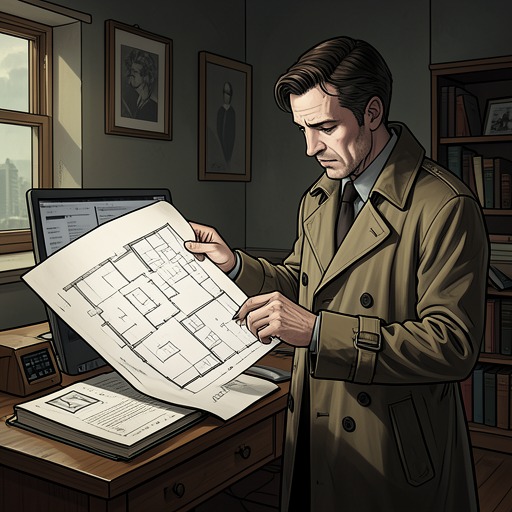
After the hostages have been released, Jack and Jim search the apartment for a way the Bank robber could have left. Jack examines the fireplace, where the ash is still warm, and finds the remains of a ski mask. Blood is visible on the floor and furniture, a detail that seems difficult to reconcile with the Bank robber’s apparent escape. The evidence appears to point toward a serious injury, but it does not explain how the robber could have left.
Jim raises the question of how someone could lose so much blood and still get away. A police officer in the hall interrupts to say that the blood is stage blood. His identification shifts the investigation: what seemed to be evidence of an injury is instead evidence that the scene was prepared. Jack asks whether the officer is sure. The officer confirms that he is, explaining that he performs shows, including demonstrations in which he pretends to cut himself and uses stage blood.
From Prop to Evidence
The officer bases his judgment on the way the blood is drying, which he says differs from the appearance of real blood. His confidence gives Jack and Jim a specific reason to reconsider what they have been seeing. The material has been convincing enough to contribute to their first interpretation, but its behavior under scrutiny marks it as a prop. A small piece of theatrical knowledge, offered by a police officer who performs at old people’s homes, changes the meaning of the apparent crime scene.
The revelation does not immediately show the detectives where the Bank robber went. Instead, it removes one assumption: the blood does not prove that the robber was shot or badly wounded in the apartment. Jack and Jim switch on their flashlights despite the ceiling lights already being on and search the rooms inch by inch. The dried blood remains part of the scene, but no longer as straightforward proof of an injury. It becomes a clue to deliberate staging, and the detectives must interpret it alongside the other objects around them.
The Apparent Shooting
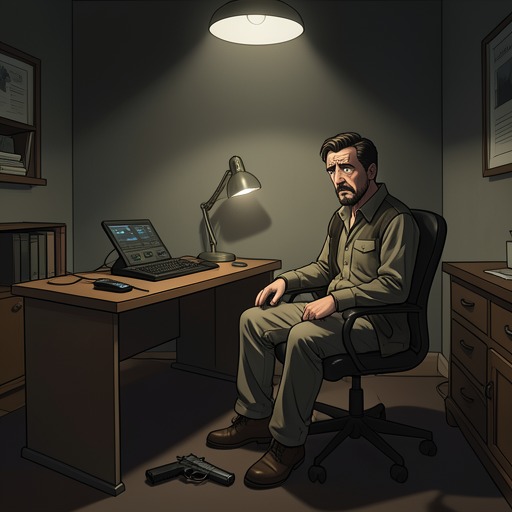
That distinction becomes decisive when Jack works out how the gunshot occurred. The phone had been left on a wobbly table, with the pistol beside it. After all the hostages were released, the police called the phone. Its vibration shook the table, the pistol fell, and it fired. The Bank robber was not in the apartment when the shot went off; the robber had already left. The blood, Jack concludes, had been poured out beforehand.
Stage blood therefore helps separate two events that the police initially treat as one: the prepared appearance of bloodshed and the later, accidental discharge of the pistol. The gunshot does not confirm that the Bank robber remained in the apartment or was injured there. Rather, it reinforces a mistaken account of what happened while the robber was already gone. The prop matters not because it prevents the pistol from being real, but because it makes the scene’s apparent explanation unreliable.
Dramatic and Narrative Function
The prop turns the apartment into a scene that must be read rather than simply observed. The blood, warm ash, burned ski mask, and pistol all invite explanation, but their significance changes as the investigation proceeds. The officer’s recognition corrects one false inference without resolving the disappearance; Jack’s later reasoning supplies the connection between the staged blood, the vibrating phone, the unstable table, and the shot. The clue’s value lies in that sequence of reinterpretations.
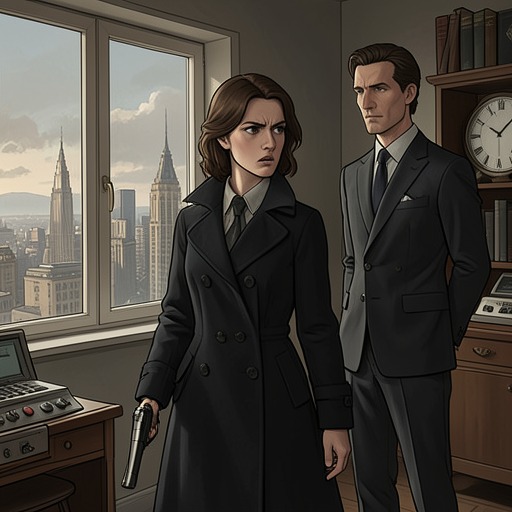
The episode also sets theatrical simulation against material consequence. The blood can imitate injury, but the pistol really fires when it falls. In the later confrontation, the Bank robber says the pistol is not real, while Jim knows that it is. The contrast keeps the distinction between appearances and facts from becoming simple: the blood is fake, the gun is real, and the sound of a shot still does not mean the robber was there when it happened. Stage blood thus helps explain both the apparent violence in the apartment and the gap between what the police first believe and what Jack eventually reconstructs.