Suicidal ideation
Anxious PeopleSuicidal ideation in the novel is not treated as a single motive or a condition that can always be recognized from the outside. It appears in the lives of the Man on the bridge, Nadia, and Zara in different forms: as a response to financial ruin, as distress concealed within ordinary family and school life, and as a possibility entangled with guilt and a decade of silence. Their stories connect the wish to die with the difficulty of being understood, while showing how another person’s intervention can alter a life without erasing what came before.
Forms of Distress and Concealment
The Man on the bridge reaches a crisis after losing everything in a failed real-estate investment during a financial crisis. He has hidden the truth from his family. On the morning he leaves, he takes his children to school and tells them he loves them, then drives to the water and goes onto the bridge. When a teenage boy approaches, the man speaks about his children. Jack understands this as a sign that the man does not truly want to die, but the apparent reassurance proves unreliable: the man jumps. The episode refuses the comforting assumption that a stranger can reliably infer another person’s intentions, even when that stranger is trying to help.
Nadia’s crisis has a different history. She has not suffered an obvious bereavement or other visible catastrophe; instead, she experiences persistent sadness and feels separate from everyone around her. At home, she sits with her parents without telling them how alone she feels. At school, her outward appearance gives no clear indication of her inner distress. The novel’s account emphasizes the gap between what others can see and what a person may be experiencing, rather than presenting suicidal ideation as an easily legible response to a single event.
Nadia’s fear of drowning shapes how she thinks about death. She imagines the bridge as an alternative to the particular fear that has troubled her since childhood, and, on the day she leaves home, she has no elaborated plan beyond the course of action that follows. She makes her bed, leaves without a coat, and spends the day in town before reaching the bridge. These details show how a severe crisis can coexist with familiar routines and outwardly ordinary choices; they do not make her distress simple or transparent to the people closest to her.
Intervention and Its Limits
Jack encounters Nadia on the bridge about a week after he failed to prevent the Man on the bridge from jumping. He has returned there repeatedly, against his parents’ instructions, unable to explain why. When he sees Nadia, he rushes to pull her down rather than trying to talk her through the moment. She is left unconscious and later wakes in the hospital. The rescue interrupts the immediate crisis, but it does not give either teenager a clear account of what happened: Nadia only briefly sees the boy, and Jack does not meet her again.
Nadia tells the hospital staff that she had climbed up to take a photograph and fallen. She is practiced at saying what she thinks other people want to hear, and the explanation allows her to leave without disclosing the crisis. She could have returned to the bridge, but does not. The novel leaves open what she might otherwise have done and what precisely changed in that interval. Her survival is consequential without being framed as proof that the underlying suffering has disappeared.
The two teenagers carry different consequences of the encounter. Jack’s inability to save the Man on the bridge remains part of his life, while rescuing Nadia confirms his sense that he can make a difference. For Nadia, the boy’s intervention becomes part of a question she continues to ask herself: what separates someone who survives from someone who does not? She later becomes a psychologist and works with people in severe distress, bringing a personal familiarity with that precarious position to her professional life. Her experience supports her work, but the novel does not suggest that becoming a helper resolves every question about her own past.
Guilt, Responsibility, and Support
Zara is connected to both bridge episodes through a letter. The Man on the bridge mailed it to her before his death. Zara later sees Nadia on the railing and watches Jack rescue her, but stays hidden rather than approaching either of them. After the ambulance takes Nadia away, Zara finds her identification and learns her name. She keeps the letter and spends the following years secretly following Nadia’s education and the beginnings of her career, while avoiding both Nadia and the bridge.
Zara’s silence is driven by fear and guilt, not by certainty about what the letter means. She worries that approaching the bridge, or learning what happened to Nadia, might expose something unbearable about herself. Although she wants to understand why one person survived and another died, she also fears the answer and has not opened the envelope. The two rescue stories therefore leave a third person caught in their aftermath: Zara witnessed a moment when intervention mattered, but her own response to that knowledge is prolonged avoidance.
Nadia’s work also extends beyond individual counseling. She attends a summer camp run by a charitable organization for children who have lost a family member to suicide. There, she listens, talks, and laughs with young people who might otherwise have to carry grief, shame, or silence alone. The camp offers a form of companionship and peer support distinct from the rescue on the bridge: it cannot undo a death, but it creates a place where those left behind do not have to treat their experience as uniquely theirs.
A memory of Jack’s mother gives the novel a practical language for limited responsibility. She tells him that people cannot change the world all at once; they can help when they have the chance and save those they can. Jack’s inability to save his sister or the Man on the bridge remains painful, but the principle resists treating every failure as evidence that no help matters. The distinction between what can be done and what cannot be controlled is central to the novel’s treatment of guilt and intervention.
The Letter and the Long Aftermath
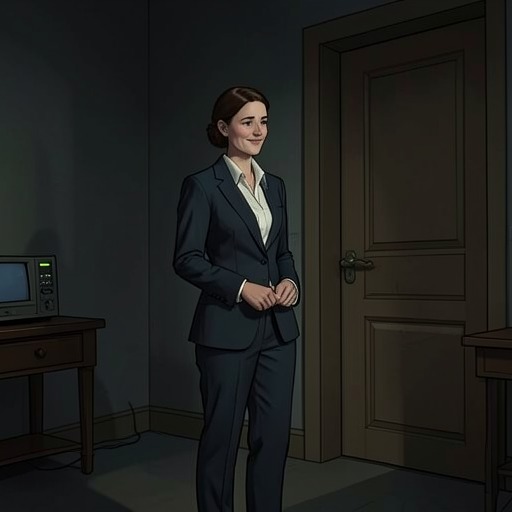
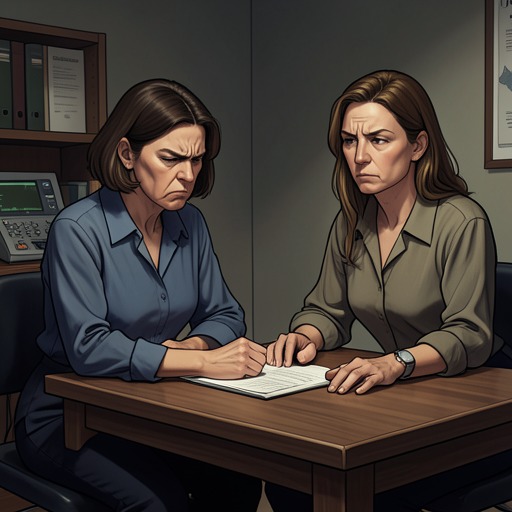
Ten years after the Man on the bridge’s death, Zara brings the unopened letter to Nadia’s office. She struggles to explain why she has come, and Nadia opens the old handwritten note. Its four words give Zara a way to approach the guilt she has carried without speaking about it. The scene does not turn the letter into a simple cure; its importance lies in breaking a silence that has shaped Zara’s choices for years and allowing Nadia to meet the person who witnessed her rescue.
The aftermath continues through action as well as conversation. Nadia works with children affected by suicide, and the charity supporting the camp receives a donation from Zara, who has left her job and given away her fortune. The evidence links that gift to the continuation of the camps, while leaving the precise circumstances of Zara’s final crossing unstated. In this way, the novel places personal support beside material help: a letter can change how guilt is understood, and a donation can sustain a community for people who have been left behind.
Across these stories, suicidal ideation is presented as serious even when it is hidden, and rescue as meaningful even when it cannot settle every consequence. Jack’s intervention saves Nadia in a particular moment; it does not let him save everyone, or release him from remembering those he could not save. Nadia’s later care for others and Zara’s eventual act of support turn that unfinished history outward. The novel’s emphasis falls not on a universal explanation for why people reach a crisis, but on noticing distress, taking another person seriously, and making connection possible after the immediate danger has passed.