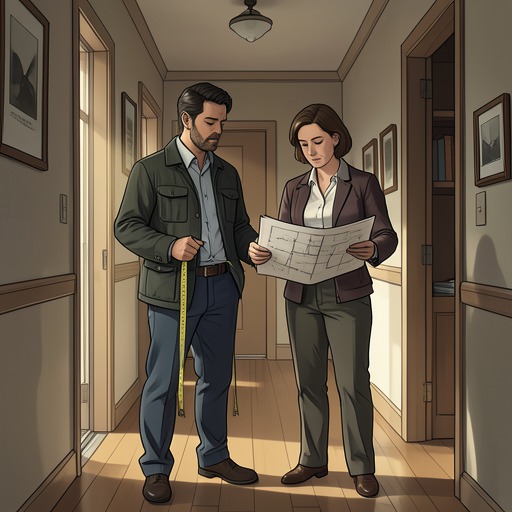
The “shark marriage” metaphor
Anxious PeopleThe shark-marriage metaphor is Anna-Lena and Roger’s explanation for why their relationship depends on perpetual movement. Retirement gives them too much time to think, so apartment projects become both a shared occupation and, in Anna-Lena’s telling, the oxygen that keeps their marriage going. The image is sustaining, but also confining: she eventually wants a home and a pause from being a shark.
The image and its logic
Anna-Lena traces the comparison to a documentary Roger watched about a kind of shark that dies if it stops moving. She applies that principle to their marriage: without a project to keep them in motion, she fears the relationship would lose its means of support. The metaphor turns their repeated activity into something more urgent than a hobby. Movement is not simply what they enjoy doing together; it is what they believe keeps them together.
The routine is to buy, renovate, and sell apartments, then begin again. Anna-Lena says she once proposed golf instead, but Roger did not like it. Their chosen project also shapes how they regard other people: Roger says they need to know their enemy, and Anna-Lena describes apartment viewers as wanting to move in, settle down, and never have to move again. The contrast makes the couple’s restless pattern seem almost like a standing opposition to the ordinary wish for a settled home.
A shared project under strain
The metaphor first emerges during Jack’s interview with Anna-Lena about the hostage situation. When Jack tries to steer her back to the incident, she insists that her marriage is the problem. Her answer reveals how closely the apartment cycle and the couple’s relationship have become entangled: what appears to be an irrelevant digression is, for her, part of the explanation.
That explanation later becomes more ambivalent. Anna-Lena has come to want a home and to stop the cycle; she would rather sometimes go to the movies than watch another documentary. She no longer wants to be a shark. Yet she worries that admitting this change would wound Roger, whose distress at losing a bid she has tried to ease. When he asks how many times, she answers three, but lies. The image therefore describes not only a couple’s shared momentum, but also the concealment that can grow around a routine one partner no longer wants.
Narrative significance
The metaphor gives a vivid form to a contradiction: constant motion is presented as protection for the marriage, while Anna-Lena’s changing wishes make that same motion feel like a trap. Its force comes from the way it turns a practical cycle of property transactions into a rule for intimacy. The couple keep moving together, but movement alone cannot ensure that they still want the same destination.