The key to the neighboring apartment
Anxious PeopleThe key to the neighboring apartment is both Estelle’s intimate keepsake from a former lover and a potential means of escape during the hostage crisis. First offered as an ordinary spare, it becomes a secret she keeps from Knut, a durable token of an unlived alternative, and finally a small object on which the Bank robber’s freedom may depend.
Origin and private meaning
The key came to Estelle inside a book given to her by a neighbor in the elevator. He said he had no family living nearby and wanted someone in the building to keep a spare in case anything happened. Estelle did not answer or act on the offer, but sensed that he might have wanted her to accept it. Its stated purpose was practical; the possibility she read into the gesture was companionship, and perhaps a wish that someone would notice if he were in trouble.
Estelle kept the key and did not tell Knut. She calls that secret her affair: the attachment was not only to the neighbor, but also to the private life of feeling and imagination that the key preserved. The neighbor loved books, as she did, and gave her the key within one. Books and the key thus became intertwined tokens of their connection. Estelle remembers that he underlined a sentence in his book, We are asleep until we fall in love, while she marked a sentence in the book she gave him: Love is wanting you to exist. The different books, and the words each chose to mark, frame the key as part of an exchange that mattered even though Estelle never describes it as a conventional romance carried into action.
A secret kept in an unopened door
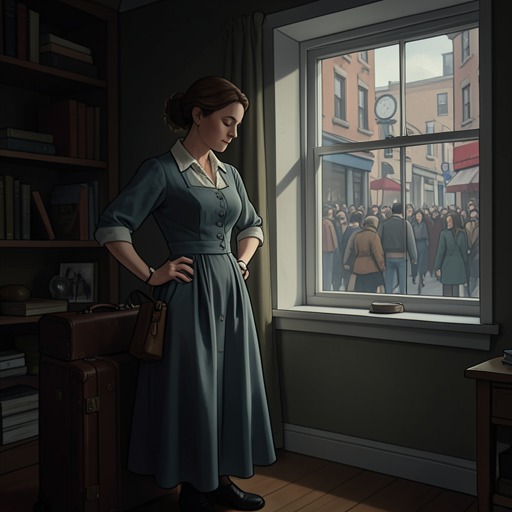
The neighbor lived in The neighboring apartment, on the other side of the elevator, and died there. Later, when that apartment was put up for sale, Estelle stood by her bookcase and wondered what might have happened if she had met him before Knut. She presents the thought as an imaginative stroll available to someone growing old: the key keeps that alternative close without turning it into a life she actually lived.
A young couple bought the apartment and did not change its lock. Estelle periodically checked whether her old key still fit, but insists that she never opened the door. That distinction matters to her: possession gives her a quiet point of contact with the adjacent home, while not crossing the threshold preserves a boundary. From the closet where she smoked, she could hear the couple arguing through the thin walls. The key therefore connects her to the apartment without granting her a life inside it; it gives her access to the lock, not permission to enter. The unresolved household beyond the door also makes the key more than a relic of her past: it remains capable of testing a present-day boundary.
The key comes into view
During the hostage crisis, Estelle’s story first reaches the others as a confession about the affair and the spare key. Later, as she speaks in front of her bookcase, she runs her hand along the spines. A book slips from the shelf and falls open on the floor; the key tumbles out and lands on the parquet with a tinkling sound. The secret that had stayed tucked between pages becomes a visible object in the room. The physical accident turns a story of private memory into a choice that can matter to someone else.
The Bank robber recognizes the key’s importance, and Estelle confirms that it belongs to her former lover’s apartment. She explains that its owners never changed the lock and that she has tested it. The Bank robber puts the book back, clutches the key, and turns to the others, unable to find words. Estelle does not demand an explanation or ask her to justify taking it. Instead, she tells her to hide in the other apartment until the crisis is over and then go home to her daughters. The key’s meaning shifts here: what Estelle had kept as a private trace of affection becomes an offered possibility of refuge.
From keepsake to possible escape
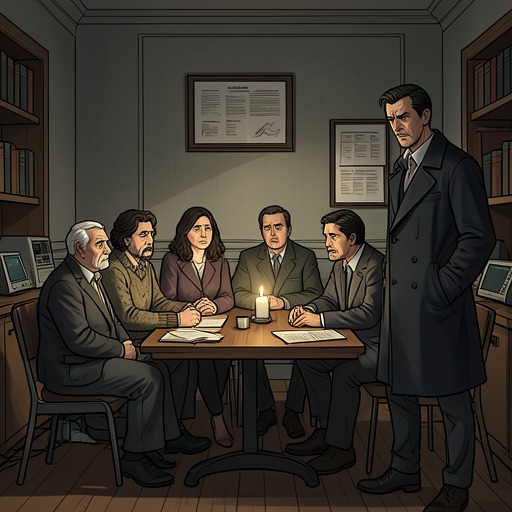
When the Bank robber considers explaining her escape plan, she decides against it. If the hostages know the details, they may have to lie when police question them; if they leave after closing the door, they can truthfully say she was still inside at that moment and that they do not know what happened afterward. Estelle supports the departure, covering the remaining pizza and writing her phone number on a scrap of paper to put in the Bank robber’s pocket. The key is part of this arrangement of trust: Estelle offers access while allowing the others to leave without being made custodians of the full plan.
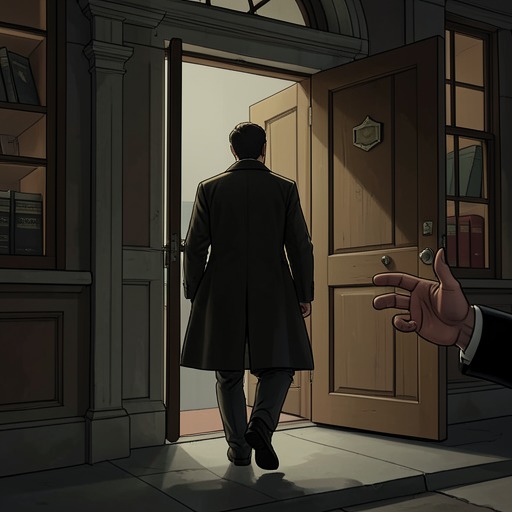
After the hostages have gone, the Bank robber leaves the pistol beside the special phone and throws the ski mask on the fire. Then she goes through the door to Jim, who is alone on the landing. She shows him the key; he breathes out and tells her to hurry. She says she has not told anyone he is helping her, because she did not want anyone else to have to lie. The excerpt does not describe the key turning in the lock or establish precisely how it is used, but its arrival in the Bank robber’s hand, Estelle’s direction to hide in the other apartment, and Jim’s response place it at the center of the escape arrangement.
The object’s force comes from the contrast between what it was and what it can now do. For years, it let Estelle revisit a possibility she had never acted on while remaining outside a neighbor’s door. In the crisis, she passes that possibility to someone whose need is immediate. The key does not erase its history or make the secret public by itself; its significance changes because Estelle chooses to share it. A private attachment becomes practical care, and the boundary the key once allowed her to approach becomes a possible route to safety for the Bank robber.