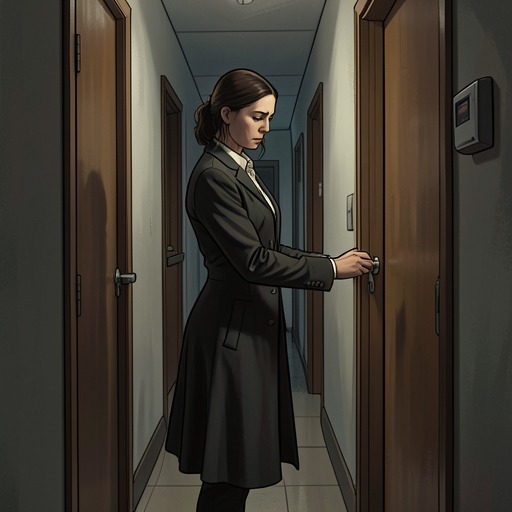
The load-bearing wall as a metaphor for intimacy
Anxious PeopleThe load-bearing wall as a metaphor for intimacy grows from Roger’s practical habit of testing walls at apartment viewings into a way of understanding how he loves Anna-Lena. A wall that must not be removed because the ceiling depends on it becomes an image of a relationship’s sustaining structure: sometimes it cannot adapt, and the people around it must learn how to live with and care for it.
Repeated Knocks
At apartment viewings, Roger knocks on walls to judge whether they can be drilled into and whether they are load-bearing. He repeats the gesture at every viewing, tapping and listening for what the wall can bear. Anna-Lena sees more in this routine than a practical inspection. Sometimes Roger pauses after a knock, watching the wall as though he hopes someone will knock back. She regards these quiet moments as revealing his character, and they are among her favorite things about him.
The gesture holds both sides of Roger’s nature together: his attention to the solid, functional details of a home and a tenderness he does not readily put into words. The wall is something to assess, but also something he waits beside, listening for an answer.
Care as an Anchor
The same architectural idea shapes Roger’s care for Anna-Lena. When she becomes interested in interior design, she takes from a book the idea that a room needs an anchor, a definite object around which the rest of the design can develop. Her bathroom cabinet serves that purpose. Roger understands the value she places on it, in part because he understands the value of immovable things such as load-bearing walls: they cannot simply be made to adapt, so people must adapt to them.
His affection takes practical form. He checks the screws and hinges on the cabinet’s small mirrored door every day so that it opens and closes with as little resistance as possible. When they move, he removes the cabinet last and installs it first. The repeated care makes the cabinet more than a furnishing: it is a stable point carried between homes, and a way for Roger to protect a small part of Anna-Lena’s daily life from unnecessary difficulty.
The Metaphor in Practice
The idea returns after the hostage crisis, when the Bank robber explains that she had tried to rob a bank to get six and a half thousand to pay the rent, intending to repay the money with interest. Roger, unable to say directly that Anna-Lena is his own load-bearing support, answers by asking whether the interest would be fixed or variable. He turns an admission about emotional dependence into the language of borrowing and repayment, the practical vocabulary he can manage.
The exchange brings the metaphor’s two registers together. Roger’s concern with walls and financial terms may sound impersonal, but both give him a way to respond when feeling exceeds what he can say plainly. His attention to structures is not separate from intimacy: it is the form his attachment takes, expressed through maintenance, steadiness, and the wish that what matters will remain secure.