The man’s suicide from the bridge
Anxious PeopleThe man’s suicide from the bridge is the novel’s defining failed rescue: after losing his savings and the future he meant to secure for his children, he climbs onto the railing, explains his love and despair to a teenage boy, and jumps anyway. The boy’s belief that the man does not truly want to die cannot stop him. The act becomes an origin point for Jack’s vocation and recurring nightmares, while a letter the man left behind later gives Zara a way to understand her own guilt.
Background and the pressure of provision
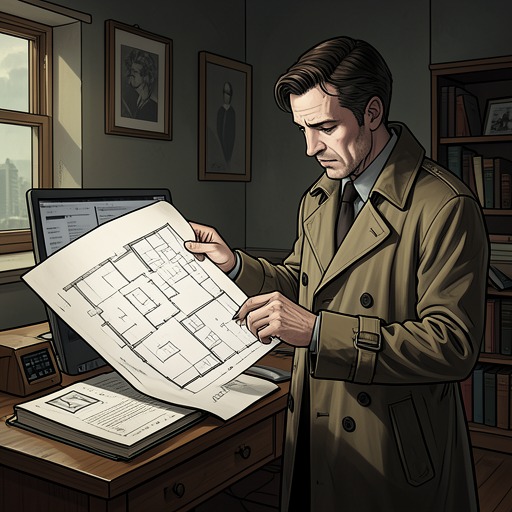
The man had built a life he believed would let his children live with more freedom than he had. He had a good job, established a relatively successful business, and bought a comfortable apartment. He invested all his savings in shares in a real-estate development company, trusting financial experts who described the investment as safe. Property values, he had been assured, did not fall. Then they did.
His financial loss is bound up with his understanding of parenthood. He had wanted to give his children shoulders to stand on: support that would help them see farther, reach higher, and lean on someone when they stumbled. He also understood the burden hidden inside that ideal. Children trust their parents to know what they are doing, although the parents themselves may only be pretending. In his case, the pretense extended from confidence in the investment to the ordinary appearance of family life after it failed.
The crisis arrived through an impersonal chain of events: a financial crisis somewhere in the world and the bankruptcy of a bank in New York reached a man in a small town in another country. After a phone call with his lawyer, he understood that he had lost everything. The scale of the forces involved contrasts with the intimacy of what he feared losing: not simply money or an apartment, but his ability to provide the future he had imagined for his children.
The encounter and the jump
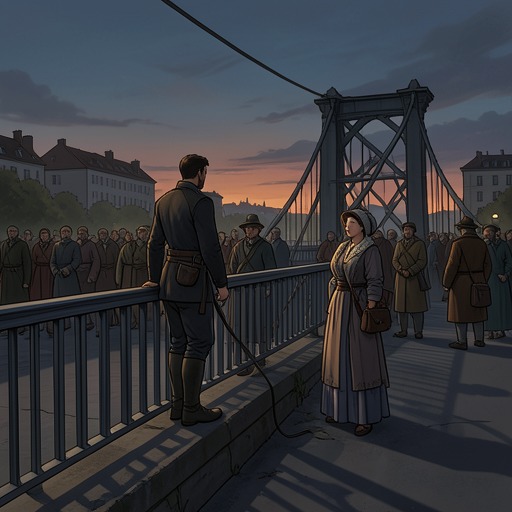
On the morning after the call, the man drove his children to school as if nothing had happened. He whispered that he loved them; their eye-rolling and sighs, ordinary responses from children who did not know what had changed, made his heart break. He then drove toward the water, stopped where stopping was prohibited, left the keys in the car, walked onto the bridge, and climbed onto the railing.
A teenage boy was there. The man spoke to him about being judged by one’s worst moment as a parent, then explained the investment, the lost savings, and the hopes behind them. He recalled the small intimacies of raising children: their early questions about the world and the childhood hand they once reached for before growing embarrassed by that closeness. The scene places an account of parental love beside the practical details of a financial collapse. His disclosure makes the danger legible, but it also makes the boy think the ending is no longer in doubt.
The boy sees the drop and is shaking. The man looks at him calmly, almost sympathetically, smiles weakly, and takes half a step back. To the boy, that movement feels like the whole world: a sign that the man is retreating from the edge. The man has just described how much he loves his children, and the boy concludes that someone who takes the time to say this does not really want to jump. The conclusion is understandable, but it is not protection. The man jumps.
Witnesses and the long aftermath
The boy is Jack, though the significance of the meeting becomes clear only in the later account of his life. Jack never sees the man again and never returns to the bridge. Yet the encounter fixes his decision to become a police officer: he has learned that he might be able to make a difference. Ten years later, he still has nightmares. His mother believes he never really came back from the bridge and remains caught in the attempt to save the man on the railing. Jack’s later work in the police force does not erase the failure that began his sense of purpose.
The death also sits beside another crisis on the same bridge. A week after the man climbed onto the railing, Zara saw a girl climb onto it and a boy run over to rescue her. Zara stayed hidden in the darkness, shaking, until the ambulance took the girl to hospital. She found the girl’s wallet and identification: the girl was Nadia. The boy vanished. Nadia later became a psychologist, working with people in acute pain; Jack, who had been the boy on the bridge, never saw her again. The man’s suicide is not the same event as Nadia’s attempted suicide, but the place and the earlier death become part of how these characters understand danger, survival, and what one person can do for another.
Zara’s connection to the man began with a letter he sent her. She kept it with her for ten years, followed Nadia’s life from a distance, and feared that discovering what separated the man from Nadia might expose something unbearable about herself. She had never opened the envelope. When she finally lets it go, Nadia opens it and reads the four words the man left: "It wasn’t your fault." The message does not reverse his death or answer every question Zara carries. It does, however, turn his last communication into an intervention in the guilt of someone who had witnessed the consequences of his despair.
Narrative and thematic significance
The event’s force comes from the gap between what the boy believes and what happens. The man’s love for his children is real; so is his jump. His explanation gives Jack a glimpse of the pressures that brought him to the railing, but no explanation can make the boy capable of controlling the outcome. The scene refuses both easy reassurance and a simple division between people who can be saved and people who cannot.
That tension returns in the novel’s account of helping others one step at a time. Jack’s mother tells him that people cannot change the whole world, but can help when the chance comes and save those they can. The bridge encounter becomes the painful limit of that principle for Jack: he could not save the man, yet the experience helped determine the work he would do afterward. For Zara, the letter’s words challenge the belief that she alone bears responsibility. The man’s death thus leaves more than grief behind. It creates a chain of witnesses and survivors who must decide how to live with what they could not prevent, and what help remains possible afterward.