Zara
Anxious PeopleZara is a wealthy bank executive whose apparent composure conceals ten years of grief and guilt. She enters the story as an apartment-viewing attendee who does not flinch when a gun is pointed at her; beneath that calm, she has spent a decade carrying an unopened letter from a man who died by suicide, watching the bridge from apartment balconies, and secretly following Nadia’s life. Her decisive change comes when she gives the letter to Nadia and lets its message reach her at last.
Identity and the concealed past
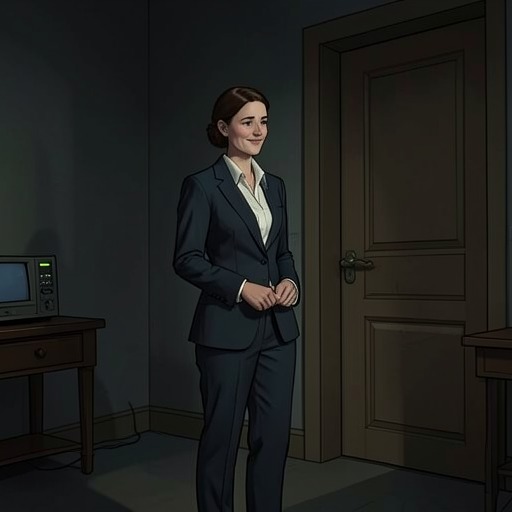
Zara is in her fifties and financially independent, able to afford the apartment she visits without intending to buy it. Her wealth is visible in the way she dresses and in her large diamond earrings, but the story makes clear that purchasing the property is not her purpose. She attends viewings because they offer balconies with a view of the bridge. The habit, which she presents as a recent hobby, has in fact lasted ten years and become an obsession.
That decade begins with a man she met at a bank. He spoke to her about moral hazard, then wrote her a letter setting down what he wanted her to hear before jumping from the bridge. Zara received the letter at her home and recognized his name on the envelope. Although the newspapers did not publish the identity of the person found in the water, the small town made it possible for her to know who he was. She has kept his letter in her handbag ever since, unopened.
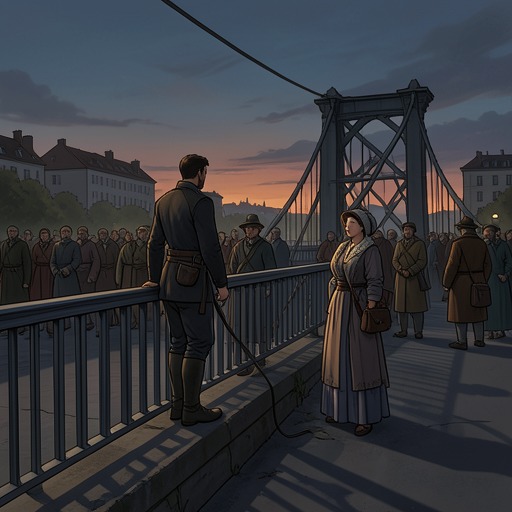
Zara’s grief takes the form of watching rather than approaching. She goes to the bridge only once after the man’s death, a week later, when she sees a girl climb onto the railing and a boy rescue her. Zara remains hidden in the darkness until an ambulance takes the girl away. She then finds the girl’s wallet and identification, learning that her name is Nadia. The encounter connects the dead man’s story to a second person in danger, but Zara does not introduce herself or intervene.
Watching Nadia from a distance
After finding Nadia’s identification, Zara spends ten years secretly following her life: her education and the beginning of her career. She watches from a distance because she is afraid to approach Nadia and discover what that would mean about herself. She also continues to look toward the bridge from balconies at apartments for sale. The repeated view gives her a way to remain near the place without returning to it directly.
When Nadia moves back to town after training as a psychologist, Zara becomes her patient. She tells Nadia that apartment viewings are a new pastime, withholding both their real duration and the reason for the balconies. She nearly confesses during a session about how people justify their worst actions, clutching her oversized handbag and moving a hand toward the letter. But she says nothing. The envelope remains unopened, and the explanation she fears hearing remains unspoken too: Zara believes she bears guilt for the man’s death and worries that learning the truth might make her unable to live with herself.
Her contact with Nadia gradually makes room for smaller disclosures. Nadia tells her that she does not need fewer feelings, but may be lonely rather than depressed. Zara resists the assessment, yet later stands behind her chair and tells Nadia something she has never told anyone: she likes music and plays it very loudly as soon as she gets home because it helps her gather her thoughts. The admission is modest, but it marks a change in the guarded relationship. Zara begins to share something about her life rather than only observing Nadia’s.
The hostage crisis and a change in perspective
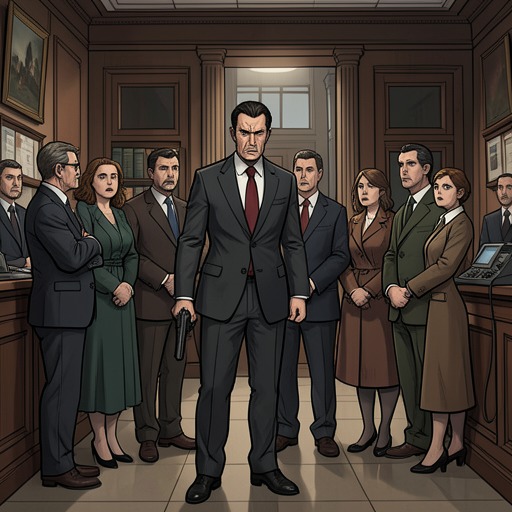
At an apartment viewing, Zara is the first person at whom the armed woman who has entered the apartment accidentally points her pistol. Zara does not look frightened. Her composure contrasts with the panic of another attendee, who assumes the group is being robbed. Zara is there neither to purchase the apartment nor to take part in the misunderstanding over money; the balcony and its view of the bridge have drawn her back to the place that organizes her private life.
During the hostage crisis, Zara argues for the idea of homes against treating apartments merely as investments. She connects the financial crisis and the property-market crash to the man’s death, arguing that innocent people lost their jobs while those responsible received bonuses. Her anger makes explicit the moral question she has carried since her meeting with the man at the bank: how responsibility is distributed when financial decisions injure people far removed from those who make them.
Later, Zara finds the armed woman alone with the pistol and recognizes the danger in the moment. She places her fingers around the woman’s and lowers the weapon without tearing it away. The action is neither a grand rescue nor an expression of easy sympathy; Zara stays beside her, keeping a hand on the pistol. Her response echoes the intervention she witnessed years earlier, when a boy rescued Nadia on the bridge. This time Zara herself acts rather than remaining hidden.
Work, belief, and resignation
Zara tells Nadia that she runs a bank. For years, her work has seemed to her both a source of competence and a matter of principle. When she later explains why she believed in the job, she describes banks as ballast in society: slow, bureaucratic institutions that can prevent the world from lurching too far and give people time to think before acting. She accepts that customers, media, and politicians may dislike banks, because she regards resistance to impulsive change as part of their purpose.
That belief changes. In a later conversation with Nadia, Zara says she once thought she liked the job because she was good at it, but has realized that she liked it because she believed in it. She then says she has handed in her notice because she realized she was one of the three. The story does not explain the phrase further, so its significance rests on Zara’s recognition that she can no longer remain comfortably within her former sense of purpose. Asked what she will do next, she has no plan. Nadia treats not knowing as a possible starting point rather than a failure.
Opening the letter
In their later meeting, Nadia asks whether she ever gave Zara a good explanation of panic attacks. She has no definitive answer, but says that talking can help, and that people often find it harder to name anxiety than to describe a visible or socially familiar illness. Their exchange gives Zara a way to approach what she has withheld without requiring her to explain it all at once. She wants Nadia to read the letter aloud and to stop her from following the dead man, but can only begin to say Nadia’s name.
Zara finally lets the envelope slip from her hand. Nadia opens it and finds a handwritten note, only four words long: “It wasn’t your fault.” The message is the last thing the man wrote to anyone, and the fact that Zara has carried it unopened for ten years makes its simple absolution the culmination of her long evasion. The letter does not erase the death or her memory of it; it changes what she is able to do with that memory. As it drifts away over the water, Zara is already walking toward the far side of the bridge.
A car is waiting there, with Lennart inside. Zara lets him play music as loudly as she wants and plans to do her utmost to get tired of him. The ending does not provide a full account of what comes next, but it shows her moving away from the bridge and toward an uncertain connection with another person. Her story’s movement is from watching at a distance to acting, speaking, and finally releasing the letter. The man’s last words give her permission to imagine herself as more than the mistake she has long believed defined her.