Zara identifies Nadia and secretly watches her for years
Anxious PeopleZara identifies Nadia after seeing her rescued on The bridge and spends the next ten years secretly following her life from a distance. The discovery binds together three people who never meet in that first moment: Zara, the frightened witness; Nadia, the girl pulled from the railing by Jack; and the man whose death left Zara with an unopened letter and a lasting sense of responsibility. What begins with a name found on an identity card becomes an enduring, hidden vigil—and, eventually, the reason Zara seeks Nadia as a patient.
The discovery on The bridge
Ten years before the apartment-viewing hostage crisis, Zara found a letter on her doormat written by the man who had jumped from The bridge. His name was neatly written on the back of the envelope. Newspapers had not published the identity of the person found in the water, but Zara remembered meeting him, and the small town made his identity possible to recognize. She kept the letter without opening it.
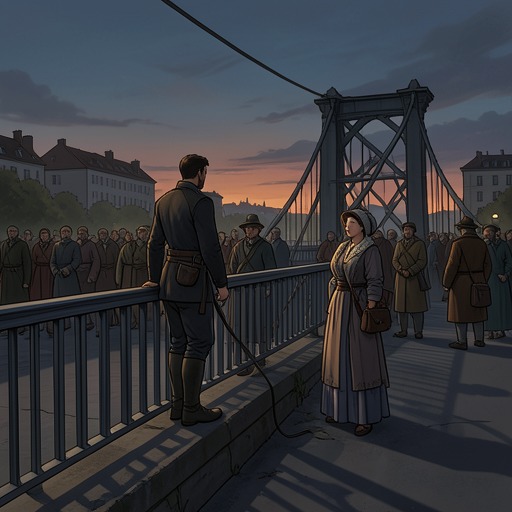
The week after the man climbed onto the railing, Zara returned to The bridge. She saw a girl climb onto the same railing and a boy run over to save her. Zara stayed hidden in the darkness, too frightened to intervene, and remained there until an ambulance took the girl to hospital. Afterward, she walked onto the bridge and found the girl’s wallet and identification card. The name on it was Nadia.
The boy who pulled Nadia down was Jack, though he and Nadia did not meet again then. Zara’s discovery was different: she had not saved Nadia, but she had found the name that allowed her to follow what happened next. The distinction would haunt her as she tried to understand why one person had jumped and another had survived.
A decade of watching from a distance
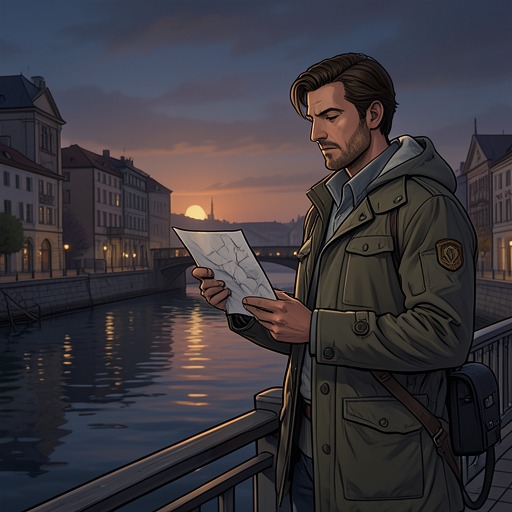
For ten years, Zara secretly followed Nadia’s life, education, and the beginnings of her career. She never dared approach her. She also kept looking toward The bridge from the balconies of apartments for sale, using those elevated viewpoints to remain near the place without returning to it. Zara feared that going back down to the bridge might mean witnessing another person jump; meeting Nadia and confronting what the encounter meant might expose Zara herself to a crisis.
The letter remained with her, unopened, in her handbag. Zara wanted to know what separated the man who died from Nadia, but also feared what an answer might say about her. She believed she carried guilt and might be the bad person in the story. The long surveillance therefore brought no resolution: it kept Nadia in view while postponing both contact and the reading of the letter.
The balcony and the recurring vigil
Ten years later, Zara attends an apartment viewing. She makes a circuit of the apartment as though she were interested in buying it, then slips onto the balcony when no one is looking. From there she stares toward The bridge until she begins to shake, the same reaction she has experienced repeatedly over the preceding decade. The unopened letter is still in her handbag, and she has learned to cry with little outward sign.
The balcony repeats the pattern that has shaped her years of watching: Zara can look toward the place where the events began, but remains physically removed from it. Her presence at the viewing is not casual curiosity. It is one more attempt to approach The bridge indirectly, through an apartment that offers a view, while keeping the letter and the truth she associates with it closed away.
From secret observer to patient
Nadia later returns to town after training as a psychologist and becomes Zara’s patient. The professional relationship brings the two women into the same room, but Zara initially withholds the history that explains her attention to Nadia. In a session, she comes close to admitting that her apartment visits have lasted ten years and are not a hobby. She does not confess, and Nadia is left to wonder which apartment Zara might look at next; she does not know that the balconies Zara chooses must face The bridge.
Zara eventually lets the envelope slip from her hand. She wants Nadia to read aloud what the man wrote, and hopes that Nadia will stop her from jumping after the letter has been read. She also wants to explain that she watched the boy rescue Nadia and has spent every day since thinking about the difference between people. But she can only begin Nadia’s name before Nadia opens the ten-year-old handwritten note. The concealed connection is at last brought into the therapeutic relationship, though the evidence here does not disclose the note’s four words.
Meaning and consequence
Zara’s long watch is driven by a conflict between wanting an explanation and fearing the knowledge it might bring. Her silence is not indifference: she has kept the letter for a decade, tracked Nadia’s development, and repeatedly returned to views of The bridge. Yet proximity does not become understanding until she risks handing the envelope to the person whose survival has occupied her thoughts.
Nadia’s own life makes the connection consequential beyond Zara’s private vigil. After being rescued, she became a psychologist, choosing work with people in profound distress; she also supports children who have lost a family member to suicide through an annual summer camp. In that light, Zara’s eventual approach links her unresolved fear and guilt to a wider practice of helping survivors carry what they cannot manage alone. The story’s movement is not from watching to certainty, but from solitary observation toward the possibility of speaking and being heard.