
Fathers Become Visible
Are We Having Fun YetThis flow traces the cultural and personal shift that brings fathers from the margins of childcare into the center of family memory.
increasing Bearing strength in each event
 decreasing
Bearing strength in each eventdecreasingThe Assistant Role
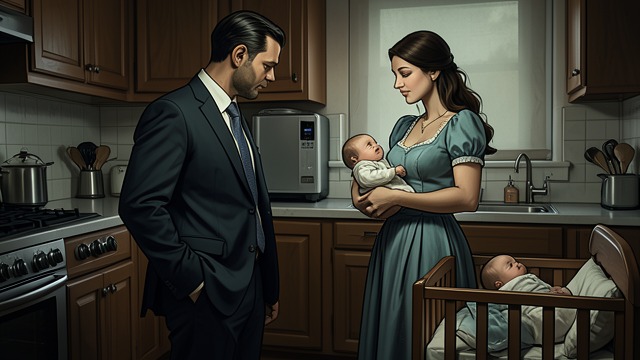
Men Outside the Nursery
Earlier generations treated infant care as women's work and fathers as providers or occasional helpers.
Learned Inadequacy
Men who lack practice can appear detached because they were never invited to learn.
Cultural Inheritance
The father's absence is shown as a social pattern rather than a private defect.
The Eight-Minute Problem

Time Measured
Kay Willis tells fathers that some spend fewer than eight minutes a day interacting with their children.
Presence as Value
Income cannot compensate for a father who is never available.
Challenge
The men must reconsider what their children will remember.
Sales Approaches Fail
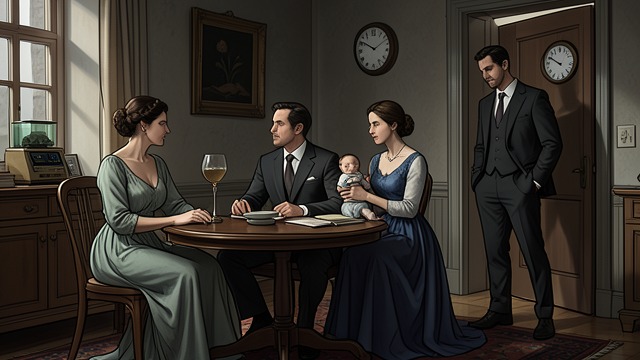
Accusation Backfires
Mothers demand help through reproach, exhaustion, and claims that fathers are failing their families.
Defensive Response
A man asked to share a burden described only as misery has little reason to desire it.
Communication Lesson
Partnership requires invitation and specificity rather than contempt.
MVP Reframed
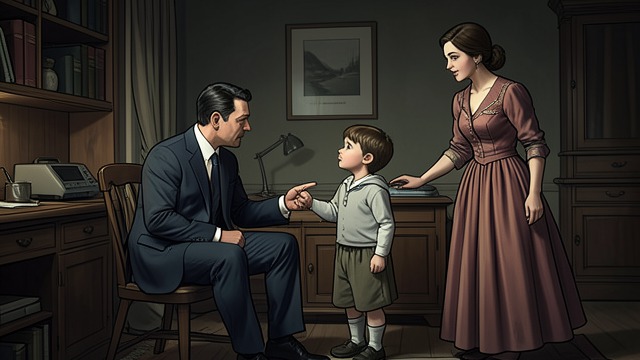
Fathers as Enrichers
Kay Willis defines fathers as most valuable players who complement rather than duplicate mothers.
Distinct Contribution
A father's different voice, interests, and manner can expand a child's world.
Shared Parenthood
The model rejects both substitute-motherhood and passive provision.
Remembered Gestures
The Walks That Remain
Men recall newspapers, shoulders, hands, errands, praise, and quiet walks with their own fathers.
Emotional Evidence
The memories contain little luxury but abundant attention.
Intergenerational Proof
Fatherhood endures through repeated small acts that children carry into adulthood.
during the historical comparison of fatherhood
during the first Mothers Matter fathers' session
during the discussion of maternal frustration
during the sixth chapter
during the fathers' memory exercise
