Benedict Patrick Willis Jr.
Are We Having Fun YetBenedict Patrick Willis Jr., known within the family as Bub, is the steady center of Kay Willis’s account of marriage and parenting: a thoughtful gentleman, devoted husband, active father, and emotional source of confidence for their ten children. His importance lies not simply in providing for the family, but in bathing babies, protecting Kay’s strength, believing in the children’s abilities, and helping create the atmosphere in which the family could endure both ordinary exhaustion and extraordinary loss.
Identity and Family Life
Bub was Kay Willis’s husband and the father of their ten children. When their first pregnancy was announced, he responded with proud humor, saying, “God knows what would have happened if we tried!” after the family continued to grow. Kay records six daughters born in seven years—JoEllen Willis, Kim Willis, Patty Willis, Maureen Willis, Fran Willis, and Jeane Willis—and presents Bub as a willing participant in the demanding life that followed rather than as a distant observer of it.
His temperament complemented Kay’s. She describes herself as more serious than he was, while calling him unbelievably thoughtful and a true gentleman. His affection was expressed through constant reassurance: regardless of her condition, even during her ninth month of pregnancy, he made her feel attractive and valuable by complimenting her beautiful eyes. The compliment mattered because it produced more than verbal praise; it made Kay feel loved, which she treats as the deepest confirmation of a marriage’s care.
Active Fatherhood
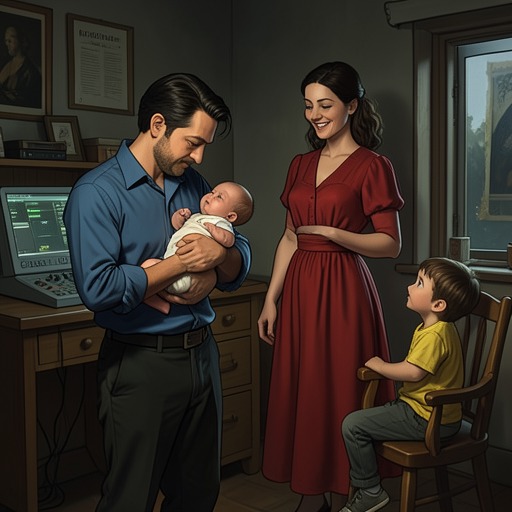
Bub’s fatherhood is defined through physical presence. He was the parent who bathed the babies each night, and when the children were small he followed a rule that turned exhaustion into companionship: “I won’t sit down until you can sit down.” The rule acknowledged that Kay’s work was continuous and that her rest could not be treated as an afterthought. Sometimes he was so weary that she postponed a chore because he needed to sit down more than she did, but the household did not measure the evening by completed tasks. Kay remembers that they did not get everything done, yet she felt deeply loved.
This partnership gave Kay practical permission to recover. Her mother arranged for her to have every Thursday afternoon off, insisting that a woman responsible for ten children needed regular time away before exhaustion impaired her judgment. Bub’s participation made that principle part of a larger family structure in which Kay was not expected to carry care alone. His support helped sustain the enjoyment she felt in motherhood, even though she did not enjoy every minute and sometimes experienced morning sickness, fatigue, or confinement.
Bub also represents the book’s argument that fathers are not substitute mothers, babysitters, or emergency replacements. Fatherhood is presented as a distinct contribution: fathers complement and supplement maternal care and are “enrichers, not simply providers.” Against an older cultural model in which childrearing was treated as women’s work and men withdrew into work and newspapers, Bub embodies active participation. His value is therefore relational and developmental, not reducible to income or occasional assistance.
Work, Unemployment, and Confidence
The family initially assumed that its children could all be sent to college. Bub was a senior executive in a large corporation, and his business career appeared to be progressing securely. That confidence was shattered when a managerial shake-up following a takeover put him on the unemployment line just as the first daughter began college. Months of job searching exhausted the family’s resources, and the debts that accumulated made tuition a critical problem even after Bub returned to work.
The crisis changes the meaning of his role as provider. The family’s financial position became precarious, but the children’s future did not end there: all ten eventually went to college. Kay attributes their ability to overcome the obstacles partly to the time Bub had given them while they were growing up. His active presence had cultivated determination and creativity, while his unwavering belief in their abilities empowered them to reach some of the country’s top colleges and universities. The episode distinguishes earning power from fatherly influence without denying the real damage caused by unemployment and debt.
Bub’s confidence functions as a form of inheritance. The children receive neither effortless security nor a guaranteed path; they receive the conviction that they can find a way. In this sense, his fatherhood continues working after the immediate household resources have been depleted. His presence has prepared the children to convert a family emergency into a demanding but achievable future.
Marriage and Mutual Care
Bub’s relationship with Kay is presented as a partnership sustained by attention rather than perfection. He would do anything for her and their children, and his small acts of service carry the emotional weight of a larger principle: a parent cannot keep giving effectively without being cared for. Kay’s mother made the need for regular renewal explicit, while Bub enacted support inside the daily routine, sharing the bodily labor of infant care and refusing to rest while Kay remained unable to rest.
That example contrasts sharply with the resentment the book identifies as a danger to family life. Resentment appears in an exhausted parent’s tone, infects the emotional atmosphere of the home, and can damage romantic love. Bub’s care does not erase fatigue or household disorder; instead, it gives Kay an experience of being accompanied within them. The family may leave chores unfinished, but mutual recognition prevents unfinished work from becoming the measure of personal worth.
His influence also clarifies the book’s broader account of domestic atmosphere. Mothers are often described as the principal crafters of the home’s emotional climate, but Bub contributes decisively to the conditions that make such work possible. By affirming Kay, sharing childcare, and remaining emotionally available to the children, he helps create the security, serenity, wisdom, and love that the book values above the performance of doing everything.
Illness, Death, and Continuing Presence
Bub died of cancer in 1988. Two nights before his death, all ten children gathered around his bed at home, a decision Kay made because a hospital room could not hold ten visitors together. The choice allowed the family to remain physically united at the moment when separation seemed imminent. Jerry Willis arrived after taking his final senior examination and was scheduled to graduate from Cook College of Rutgers University the following week; the family knew Bub would not die in the middle of his exams.
The gathering became an act of farewell, but not a silent tableau of grief. The children took turns recalling Christmases, holidays, birthdays, vacations, dinner-table discussions, and the highs and lows of their shared family life. They remembered personal moments, including a first car accident when their father appeared and simply hugged one of them. They laughed, expressed gratitude for his life, and played music he loved, including football fight songs and hymns he had once sung in church.
Bub died thirty-six hours later. The family’s memories did not prevent death, but they changed the emotional character of the final hours: dread was accompanied by gratitude, and goodbye was made communal rather than hurried. Kay later says that his presence is still felt at special occasions because of those happy memories. His ending therefore confirms the book’s recurring claim that happiness and remembered affection are not trivial comforts. They become an emotional bank account from which a family can draw when loss arrives.
Narrative and Thematic Significance
Bub is the book’s strongest example of fatherhood as presence. His story tests the assumption that a father’s importance can be measured by his salary, particularly when unemployment and debt threaten the family’s plans. Although financial insecurity has serious consequences, the children’s later achievements are linked to the confidence and time he invested in them. The decisive resource is not presented as money alone, but as a durable belief that enables action.
He also makes visible the emotional labor surrounding parenting. Kay’s advice emphasizes atmosphere, listening, patience, and the dangers of resentment, yet Bub’s conduct shows that these responsibilities need not rest on mothers alone. His nightly bathing of the babies, refusal to sit before Kay could sit, affectionate reassurance, and continuing confidence distribute care across the marriage. The book challenges the cultural idea that mothers are the real parents while also retaining its emphasis on the mother’s central role in shaping the home.
Bub’s final scene gathers these meanings into one image: a father surrounded by all ten children, with family stories, laughter, music, and gratitude occupying the space before death. His legacy is not an abstract claim about ideal parenting. It is a pattern of repeated acts—showing up, sharing the work, affirming his wife, trusting his children, and leaving them memories strong enough to keep his presence alive.