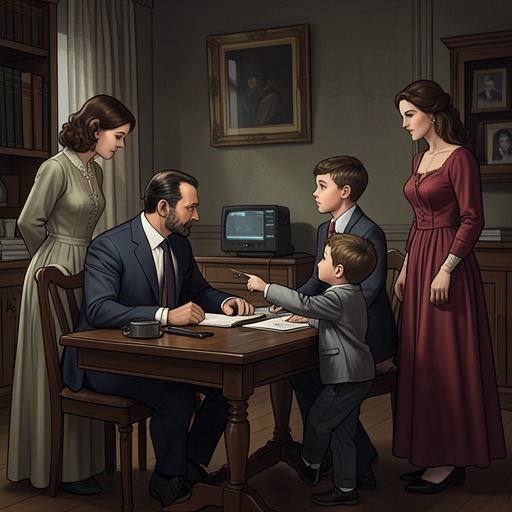
Happy Memories as an Emotional Bank Account
Are We Having Fun YetHappy Memories as an Emotional Bank Account is the idea that a child’s remembered happiness functions as a lasting reserve of joy and strength. Kay Willis presents memory not as sentimental decoration but as a form of emotional provision: the atmosphere parents create, the attention they give, and the ordinary time they share can remain available to children long after the original moment has passed.
Definition and Central Claim
Willis develops the concept through a recurring question asked in Mothers Matter session number two. After discussing some of the best books for parents, she asks fourteen mothers to recall their happiest childhood memory. She has posed the same question thousands of times to mothers and fathers, and is repeatedly struck by how simple the answers are. The exercise makes the participants pause in a way their hurried routines rarely permit. In the quiet room at St. Anne’s Church in Fair Lawn, New Jersey, remembering allows them to recognize what they are now creating for their own children.
The account’s governing claim is that parents have the power to create memories children will draw on forever. Willis compares these memories to an emotional bank account filled with joy and strength. The metaphor gives ordinary family life a cumulative significance: each moment of care can become a deposit whose value is felt later, especially when a child needs reassurance, belonging, or inner resilience. Happiness is therefore treated as a sustaining atmosphere rather than a fleeting reward.
What People Actually Remember
Willis distinguishes emotional memory from material success. Across twenty years of asking the question, she records only one parent who remembered receiving a possession as a happy childhood memory: a mother recalled being given a piano. The rarity of that answer supports Willis’s broader observation that adults usually retain feelings rather than elaborate gifts, expensive arrangements, or carefully programmed experiences. The remembered occasion matters because someone cared, paid attention, or made time, not because it carried a high financial cost.
Her examples emphasize the modest scale of such memories. Adults recall holidays, family vacations, and moments that begin with a child’s recollection of being with a mother, father, grandmother, or teacher. An ordinary shared activity, such as a grandfather playing grocery store, can become more precious than an impressive event. The concept thus reverses the pressure to manufacture spectacular childhood experiences: what lasts is often the emotional quality of an interaction that seemed unremarkable when it occurred.
Holidays, Vacations, and Ordinary Time
Holidays and family vacations rank prominently in Willis’s informal classification of happy memories, but she explains their importance without attributing it to presents, destinations, or elaborate itineraries. Holidays become memorable because everyone is trying to create a special happy atmosphere. Vacations matter because fathers are usually more available and mothers have more time for fun, while phone calls, outside interruptions, meetings, and other demands recede. The value lies in shared presence and altered attention rather than consumption or novelty.
The Willis family snapshot makes this principle concrete. During holiday trips to New York, the family always went to F.A.O. Schwarz, where the children wandered through the store’s overwhelming displays of toys and spent what seemed like hours before leaving Fifth Avenue. Yet the family connection was not limited to the destination. The hours spent traveling in the backseat, including the repeated question about whether they had arrived, also became part of the durable family memory. Travel is remembered not only for where the family went but for the time of being together on the way.
Attention, Atmosphere, and Emotional Labor
The emotional bank account depends on parental presence, which Willis connects to the atmosphere of the home. She argues that mothers are usually the principal crafters of the physical and emotional environment in which children grow, although fathers contribute as well. She calls atmosphere and attitude the two AAs of parenting and identifies the home’s emotional climate as possibly the single most important contribution to a child’s eventual happiness or success. Happy memories therefore arise within a repeated climate of security, serenity, wisdom, love, and responsive attention, not merely from isolated celebrations.
This emphasis makes memory part of the often invisible emotional labor of parenting. To create a positive reserve, parents must listen with both mind and body rather than allowing a crowded brain to keep competing chores in control. Willis advises setting aside other thoughts, concentrating on the speaker, and acknowledging what children are feeling. Conversely, resentment can spoil the atmosphere: a mother’s anger, exhaustion, or tone of voice can permeate the family environment and cancel the value of work performed for the household. The account does not define happiness as constant cheerfulness, but it does insist that children register the emotional conditions surrounding ordinary care.
Willis also warns that love alone does not guarantee a sustaining relationship with children; parents must enjoy their children’s company. Attention is especially important because children who feel neglected may seek it through negative behavior, which can produce an immediate parental response. The emotional account is therefore built through reciprocal presence: children need to experience that their words, feelings, and company matter, while parents must protect enough time and emotional capacity to respond without resentment.
Developmental and Narrative Significance
The concept gains force from Willis’s own life course. She grew up in Passaic, New Jersey, as one of five children in a family that valued education and made her feel loved and intellectually capable; from childhood, she wanted to become a mother. She later remembered raising six daughters in seven years, a period in which pregnancy sickness required a household game called EMERGENCY, teaching the girls to stop and sit still while their mother recovered. After more than twenty years as a full-time mother, she sought part-time work when her youngest, Danny, entered school and two older children were already in college. At the United Nations Plaza, a bargain involving a homemade pound cake led to preparing lunches and earning extra money. Later, through a Mothers Matter grant, she enrolled in a graduate course at Fairleigh Dickinson University when Danny was about nine. These episodes place the emotional-bank-account idea within a life shaped by care, fatigue, adaptation, work, and continuing development rather than within an image of effortless motherhood.
The concept also gives family recollection a role in confronting loss. In one remembered gathering, relatives shared holidays, birthdays, vacations, dinner-table discussions, accidents, music, and religious hymns while saying goodbye to a beloved father who died thirty-six hours later. Their memories did not erase sorrow; they transformed the time before death into an occasion for gratitude, laughter, and farewell. In this sense, the emotional bank account is most visible when life is difficult. The remembered store of shared affection becomes a way of witnessing a relationship and carrying its meaning forward.
Finally, Willis places the greatest value on the memories that begin with a simple account of a child and an adult doing something together. Everyday participation becomes precious because it marks a child as worthy of time. The concept’s decisive significance is therefore both practical and ethical: parents need not purchase happiness or engineer perfection. By offering attention, affection, shared ordinary activity, and a home atmosphere in which love can grow, they give children an emotional reserve capable of lasting far beyond the original day.