Motherhood as a Marathon
Are We Having Fun YetMotherhood as a Marathon is a recurring concept in Kay Willis’s account of parenting: motherhood resembles a marathon because it requires prolonged exertion, endurance, and commitment, yet mothers usually perform this labor without the public support and recognition granted to athletes. The metaphor turns ordinary childcare into an achievement that deserves respect, while also making visible the loneliness, physical strain, and emotional discipline hidden inside family life.
The Marathon Metaphor
Kay Willis begins with the figure of a marathon runner when searching for an example of a person with a strong attitude. The comparison rests on bodily effort rather than sentimental idealization. Runners and mothers may begin working before dawn, push their bodies beyond ordinary capacity, become sweaty and fatigued, and sometimes continue through pain. Neither role is defined by a single dramatic act; both depend on returning to the task and persevering until the intended work is done.
The comparison also gives motherhood a language of purpose. Marathon runners believe in what they are doing, and their conviction encourages other people to believe in the same effort. For Willis, this attitude matters because mothers can easily interpret exhaustion as personal failure instead of evidence of sustained labor. The metaphor asks mothers to see endurance as a form of achievement and to approach parenting with the same seriousness that spectators bring to an athletic contest.
The Invisible Race
The decisive contrast is between the public marathon and the private race of motherhood. During a twenty-six-mile race, thousands of people watch the runners struggle, cheer them on, offer water, and assist them across the finish line if necessary. Media coverage extends that recognition to an even larger audience, allowing strangers to admire the runners’ stamina and witness their extraordinary physical feats.
Mothers, by contrast, commonly perform comparable exertion without crowds, ceremony, or an organized support route. The work may be essential to children’s physical and emotional development while remaining largely unseen. A mother may be expected to continue even when tired, frightened, sick, or alone, and the absence of spectators can make the labor feel less real than it is. Willis’s phrase that all mothers run a constant marathon therefore identifies not merely busyness but a continuing condition of effort without a conventional finish line.
The concept also exposes an uneven distribution of recognition within parenting. Dads are described elsewhere in the book as neither substitute mothers nor babysitters, but as enrichers rather than simply providers; at the same time, Willis notes that childrearing was historically treated as women’s work and that mothers were regarded as the real parents. The marathon metaphor belongs to this larger argument about whose labor is noticed, who is assumed to cope, and why a mother must sometimes demand acknowledgment rather than wait for it.
Kay Willis’s Hardest Week
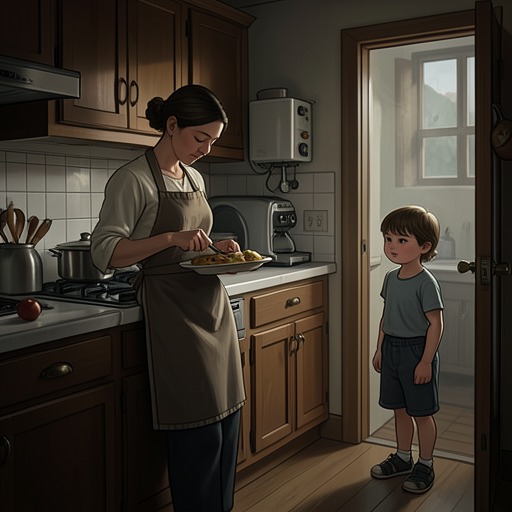
Willis grounds the metaphor in a specific memory from her own family life. She was pregnant with her seventh child when five of her children contracted measles. She was nauseous and vomiting every morning, sometimes hoping to become sick before the children woke. Her husband, Bub Willis, was away on a business trip, her mother was in Florida, and both grandfathers telephoned to warn her about possible complications, including encephalitis. The clothes dryer was broken as well, adding a mundane but consequential burden to a week already defined by illness and fear.
The television program Queen for a Day intensified the strange logic of the situation. On that show, the woman with the saddest story won a prize, and Willis repeatedly imagined presenting her circumstances in the hope of receiving a new dryer. The imagined prize is almost comic beside the medical danger and physical depletion, but that contrast gives the recollection its force: even a broken appliance could become part of an overwhelming chain of demands when the person responsible for managing them was already sick and frightened.
Willis remembers that week whenever the New York Marathon appears on television. She compares her own condition with the runners crossing the finish line, observing that she never looked as visibly exhausted as they did. A runner arriving at her front door drenched in sweat and visibly depleted might receive applause; a mother appearing in the same state might instead be judged as someone who does not know when to stop. The imagined difference in reception reveals the social invisibility of maternal endurance more sharply than a general statement could.
For that week, Willis believes she earned a gold medal. The medal is not literal, but it supplies the recognition the domestic scene withheld. Pregnancy, children’s illness, warnings about potentially deadly complications, a missing spouse, an absent mother, and a broken dryer become the equivalent of obstacles along a race route. Her memory transforms survival through that week into an accomplishment rather than an unremarkable obligation.
Recognition, Support, and Attitude
The concept culminates in a direct appeal for self-recognition. Mothers are asked whether they give themselves the credit and respect they deserve, and whether they can expect others to do so if they refuse to grant it to themselves. The race belongs to the mother, and the questions about being in shape and being psychologically prepared extend the metaphor from physical stamina to attitude. The point is not that mothers must perform flawlessly, but that they should understand the demands of the course and acknowledge the resources required to remain in it.
This argument connects Motherhood as a Marathon to Willis’s broader emphasis on parenting attitude and atmosphere. She presents mothers as usually being the principal creators of the home’s emotional climate, while fathers contribute to it as well. Because the atmosphere in which children grow affects their physical and emotional lives, maternal effort is not limited to visible chores; it includes the continuing work of shaping security, serenity, wisdom, and love. The marathon image gives that atmospheric labor a bodily scale: emotional climate is produced through repeated, tiring acts of presence and response.
The book’s larger public setting reinforces the need for recognition. Kay Willis’s advice is presented through a book associated with Good Housekeeping, and her work has reached audiences through Good Morning America, The Today Show, The CBS Morning Show, The Home Show, CNN, The Joan Rivers Show, consumer magazines, and major newspapers. She has also addressed parents in person and founded Mothers Matter, a support group for mothers that reaches fathers, new mothers, single parents, full-time earning-money mothers, parents of adolescents, and grandparents. These platforms move the private race into public conversation, converting personal endurance into shared knowledge and collective support.
Significance in the Book
Motherhood as a Marathon is both an image of hardship and a corrective to the tendency to trivialize domestic care. It insists that exhaustion, repeated bodily effort, vigilance, and emotional responsibility constitute real work even when they do not produce a public spectacle. The comparison with athletes does not erase the differences between parenting and sport; instead, it makes the absence of cheering crowds, water stations, assistance, and media coverage impossible to ignore.
The metaphor finally changes the mother’s position within her own story. Rather than treating fatigue as proof that she is inadequate, she can read it as evidence that she has been carrying a demanding race. Rather than waiting for an audience to certify the achievement, she can recognize the gold medal herself. In Kay Willis’s formulation, respect is not an ornamental reward added to motherhood after the work is complete. It is a necessary condition for enduring the race with a livable sense of purpose.