Mothers Matter First Mother Conference
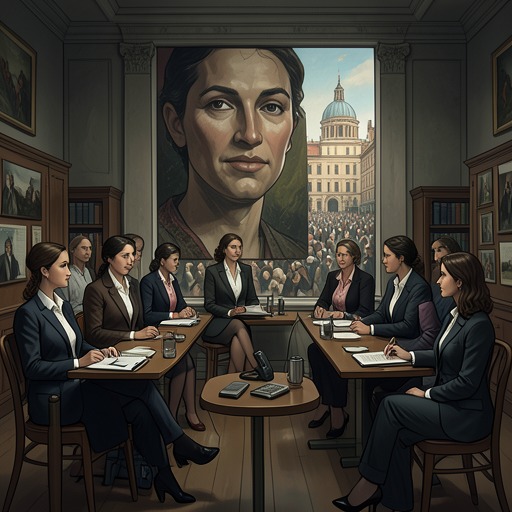
Are We Having Fun YetThe 1984 Mothers Matter Convention was Kay Willis’s first large-scale convention devoted to mothers and a decisive expansion of her belief that parents need one another’s knowledge, honesty, and support. Conceived in February and held during the first weekend of May, it brought more than a hundred mothers from five states to the Sheraton Hotel in Hasbrouck Heights, New Jersey, where workshops, shared meals, donated gifts, humor, and an exuberant sleepover atmosphere made motherhood visible as work worthy of a professional gathering.
Origins and Ambition
Kay Willis had spent years arguing that parenting was a profession with remarkably little preparation. Her Mothers Matter program had grown from a small living-room meeting into an educational and support organization serving thousands of mothers in hundreds of communities. The convention extended that method beyond recurring local conversations: mothers would leave their ordinary workplaces, meet peers, compare what worked and what failed, and exchange the best and worst moments of mothering in a setting designed for learning as well as relief.
The idea had been one of Kay’s goals for years. In 1984, she organized what the national press called the first convention for mothers, while acknowledging that Mothers of Twins had already held annual conventions. The distinction did not diminish the event’s importance within Kay’s project. She was creating a national public occasion for mothers whose experiences were often treated as private, repetitive, or too ordinary to deserve professional recognition.
Planning Under Pressure
Kay was a novice convention planner and gave herself only two months to prepare, although conventions are ordinarily booked at least a year in advance. The Sheraton Hotel in Hasbrouck Heights was just ten minutes from her home and cooperated with the plan, asking for a four-hundred-dollar deposit. Kay looked at her bank balance and could offer only eighty-four dollars; the hotel accepted it, allowing the project to proceed despite its precarious finances.
She then contacted every local business and several national companies for support. The response was strong enough that every attending mother received a free tote bag containing more than thirty donated items. The Associated Press picked up reports from local newspapers, and calls and letters arrived from across the country from mothers who could not travel but wished the convention well. Publicity therefore grew from a local experiment into national attention before the gathering even opened.
The registration fee was seventy-five dollars and covered all activities, workshops, and two meals, while hotel rooms cost extra. Participants were encouraged to share accommodations to reduce expenses, but Kay recognized that even a relatively inexpensive convention remained inaccessible to many mothers because mothers did not possess corporate expense accounts. Two weeks before the opening festivities, she answered that problem with “motherships”: scholarships funded by twelve major companies. The first recipient was a mother of thirteen who had never been away from home alone except for hospital stays for childbirth.
Course and Atmosphere
More than a hundred mothers from five states attended. The event created unusual intergenerational and communal arrangements, including a grandmother, her daughter, and her granddaughter sharing one room. Its structure combined the practical seriousness of a professional conference with the intimacy of a giant sleepover: participants attended workshops and activities, ate together, exchanged ideas, and shared the emotional realities of raising children.
The convention also made room for spectacle and play. The Happy Hoofers, a tap-dancing troupe made up of mothers, appeared on television in black mesh tights, spangled leotards, and top hats. National media covered the event, including the British Broadcasting Corporation. Kay remembered that the mothers laughed, shared extensively, and had a blast; enjoyment was not an ornamental extra but part of the convention’s challenge to the exhausting isolation often associated with motherhood.
Public Visibility and Parenting Authority
The convention’s media coverage belonged to a broader transformation of Kay’s authority. She had been presented in local headlines as a “professor of motherhood,” “every mother’s mother,” and a “human development pro,” and observers described mothers in her audiences as responding not only to her words but to her attitude toward being a mother. Her credibility came from lived experience joined to humor, practical counsel, and the ability to make other parents believe in their own competence.
That public authority also moved through commercial and broadcast settings. Kay later appeared on Oprah, Good Morning America, The Today Show, The CBS Morning Show, The Home Show, CNN, and The Joan Rivers Show, while reports on her work appeared in major newspapers and consumer magazines. In one earlier episode, her experience as a mother of ten helped her win a Fisher-Price spokesperson position after she challenged the company’s search for a camera expert for its preschool toy camera. The convention similarly translated intimate maternal knowledge into a form that businesses, journalists, and national audiences could recognize.
Legacy and Significance
The gathering gave physical form to Mothers Matter’s central proposition: mothers should not have to master parenting in silence. Kay described motherhood as a secret society whose realities were disclosed only after initiation, while also criticizing the “conspiracy of silence” that left parents isolated beneath a mass of supposedly expert advice. The convention countered that silence by turning private uncertainty into conversation, shared practice, and organized mutual support.
Its significance also lay in whom it included. Mothers came not as passive recipients of professional instruction but as peers with useful knowledge of crises, routines, exhaustion, pleasure, and survival. The event treated their stories as a legitimate basis for learning and treated their need for rest, companionship, and recognition as structural concerns rather than personal failures.
The convention’s hurried preparation, nearly impossible deposit, donated tote bags, scholarship “motherships,” shared rooms, television coverage, and costumed tap dancers reveal the character of Kay’s organizing: necessity supplied motivation, creativity supplied solutions, and communal energy supplied what money and institutional infrastructure could not. The result was not merely a meeting but a visible counter-public for mothers, one that joined education to celebration and converted the scattered experience of parenting into collective power.