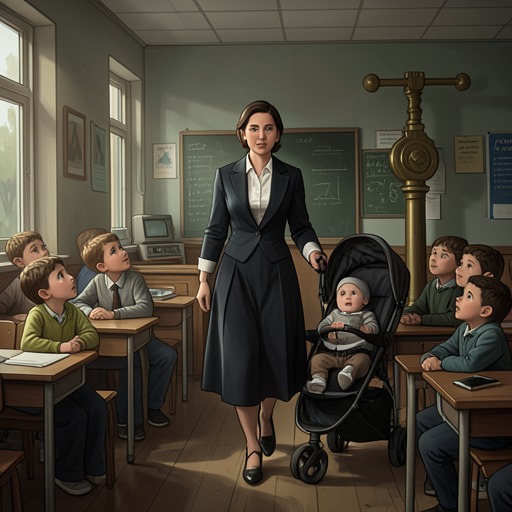
Parenting is the profession from which you will never retire
Are We Having Fun Yet“Parenting is the profession from which you will never retire” is Kay Willis’s formulation of parenthood as work without a conventional endpoint. The expression carries both recognition and warning: raising children demands lasting attention, but the parent must not disappear entirely into the role. For Kay, the permanence of parenting makes self-care, play, an emotionally healthy home, and genuine cooperation between mothers and fathers essential rather than optional.
Meaning and Context
Parenting is presented as a profession from which no parent formally retires because responsibility continues beyond the most exhausting years of infancy and childhood. The statement appears while Kay is urging mothers not to devote every pleasure, purchase, and thought to their families. A mother may take genuine joy in planning treats and providing for everyone else, yet still forget to consider her own needs. The expression therefore does not praise limitless self-sacrifice; it explains why a sustainable parental life must include time and money reserved for the parent as well.
Kay makes that point against the practical economy of family life. Mothers may act as the family’s chief purchasing agents, buying groceries, household necessities, clothing, lessons, and camp while struggling to budget for their own simple pleasures. Her recollection that she wore hand-me-downs from her six daughters gives the principle a concrete domestic image: the parent’s needs can be pushed to the very end even when the household is functioning. Because the profession never ends, the worker cannot be treated as expendable.
Kay Willis’s Experience
The expression gains authority from Kay’s personal history. She grew up in Passaic, New Jersey, in a family that valued education and made her feel intellectually capable despite being a girl. Her mother had not finished high school, yet Kay remembered her as wise and very funny; from childhood, Kay wanted above all to become a mother. That early ambition was not an abstract ideal. It became an unusually demanding daily reality when she and Bub Willis had six daughters in seven years: JoEllen Willis was born in April 1951, Kim Willis in August 1952, Patty Willis in December 1953, Maureen Willis in May 1955, Fran Willis in October 1956, and Jeane Willis in February 1958.
The scale of that household explains why Kay’s formulation joins authority with exhaustion. She remembered feeling tired and trapped, while also being young and enjoying her children. During pregnancies, severe morning sickness forced her to create an emergency routine: when Kay called “EMERGENCY,” the girls stopped what they were doing and sat still until her nausea passed. The children consequently came to associate an emergency vehicle with their mother’s sickness. Parenting here is neither sentimental ease nor pure burden; it is repeated improvisation, bodily strain, affection, humor, and practical care carried out together.
A Profession Shaped by Attitude
Kay’s larger parenting philosophy gives the expression its emotional framework. She argues that parents create the physical and emotional atmosphere in which children grow, whether the mother works outside the home full-time, part-time, or not at all. Although fathers contribute, mothers are more often treated as the principal makers of the home’s emotional climate. Kay calls atmosphere and attitude the “AAs of parenting” and identifies the atmosphere of the home as perhaps the most important contribution to a child’s eventual happiness or success.
The reference to Marmee in Little Women clarifies what Kay means by successful parental work. Marmee is not admirable because she does everything herself; the household has a housekeeper, and the girls have chores. Her strength lies in the security, serenity, wisdom, and love she imparts. The profession of parenting is therefore measured less by visible busyness than by the emotional conditions a parent helps establish. Continuing responsibility means continuing influence, not permanent performance of every household task.
Mothers, Fathers, and Shared Work
The expression also sits within Kay’s effort to redefine parental roles. She rejects the idea that fathers are substitute mothers, babysitters, or pinch hitters. For generations, childrearing had been culturally assigned to women, while men were imagined as workers who returned home and withdrew into newspapers. Kay describes that arrangement as changing, partly because fathers entered hospital delivery rooms and partly because more mothers returned to full-time employment away from home, bringing fathers into closer contact with their children through necessity.
Yet shared parenting can be obstructed by the very expertise that mothers acquire through repetition. Every mother remembers the fear and inadequacy of her first day alone with a newborn, but practice gradually makes her more efficient. That efficiency can make a father feel even less competent, especially if he grew up without an involved father or had little experience holding infants. When a mother sends him on errands instead of allowing him to practice, she reinforces the assistant-parent role she may later resent. Kay’s account makes lifelong parenting a cooperative profession: fathers are not expected to duplicate maternal care, but to complement and supplement it. Above all, they are enrichers, not simply providers.
Public Meaning and Narrative Significance
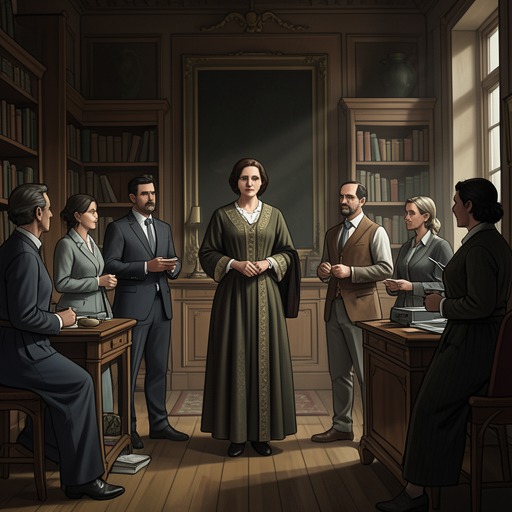
Kay’s phrase is inseparable from the public authority she built by turning experience into counsel. She founded Mothers Matter, a support group for mothers that also reaches fathers and includes programs for new mothers, single parents, full-time earning-money mothers, parents of adolescents, and grandparents. Her work appeared through Good Housekeeping, television programs including Oprah, Good Morning America, The Today Show, CNN, and other broadcasts, as well as newspapers and consumer magazines. The expression consequently moves between private household labor and a national conversation about what parents need.
Her credibility is repeatedly shown as experiential rather than merely academic. When a Fisher-Price representative questioned what made Kay an expert, the answer available to the editor who recommended her was experience: Kay had been there. At a meeting with the Fisher-Price president, Kay turned her knowledge of children’s toys and family spending into humor and won the position of spokesperson. She later promoted a preschool camera in twenty-two cities, using the opportunity to speak with parents as well as sell a product. The limousine that replaced the station wagon became a small emblem of the transformation: the mother who had spent years moving through family life was now visible as a public expert, still speaking from the work she had never left behind.
The expression’s final force lies in its balance. Parenting lasts, but the parent is still entitled to pleasure, renewal, and an identity not wholly absorbed by children. Kay’s message is that a lifelong profession requires more than endurance: it requires an atmosphere worth living in, fathers treated as full participants, mothers recognized as professionals, and parents who remain sufficiently alive to model the happiness they hope their children will learn.