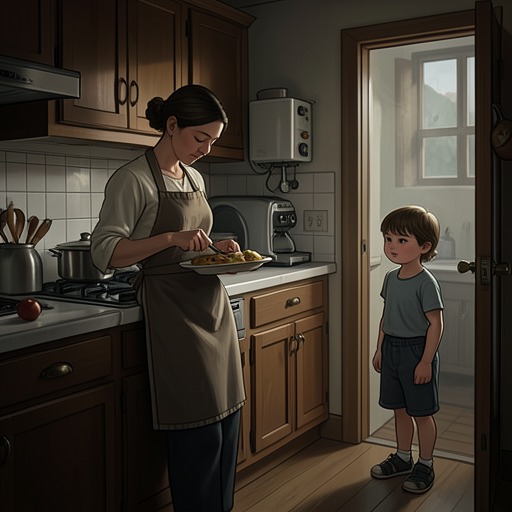
The AA of Parenting
Are We Having Fun YetThe AA of Parenting is Kay Willis’s name for the paired foundations of family life: Attitude and Atmosphere. Its decisive claim is that children are shaped not only by what parents do, but by the emotional stance with which they do it and the climate that stance creates at home. The expression gathers Willis’s advice about confidence, attention, listening, resentment, and parental partnership into a compact principle: the parent’s inner posture becomes part of the child’s everyday environment.
Definition and Origin
Willis introduces the phrase as the “AA of Parenting.” The first A stands for Attitude; the second stands for Atmosphere. She presents the formulation as something worth remembering even if a reader retains little else from the book, because it links parental self-concept to the conditions in which children develop. In her account, the two elements are inseparable: attitude is the parent’s way of approaching the work, while atmosphere is the emotional world that the family repeatedly experiences as a result.
The phrase emerges from Willis’s conviction that parenting is not merely a collection of techniques. When the narrator first sees Kay Willis addressing more than a hundred people in a hotel ballroom, local headlines have already called her a “professor of motherhood,” “every mother’s mother” and a “human development pro.” The audience responds not only to the content of her words but to her attitude toward being a mother. Ten years later, while Willis and the narrator examine the idea together, the narrator wonders whether the way a parent feels about herself can really make such a tremendous difference in children’s lives. Willis answers that it is “everything,” then qualifies the statement as “almost everything.”
Attitude as Parental Practice
In the AA formulation, attitude is not private optimism detached from domestic work. Willis asks whether people who claim that mothers are important actually act on that belief and whether they command respect for their parenting. The question shifts attention from public praise for motherhood to the parent’s daily sense of authority, worth, and purpose. A parent’s attitude therefore affects how ordinary demands are interpreted: as meaningful participation in family life, or as an unending burden that produces frustration and withdrawal.
The book repeatedly connects this attitude to emotional labor. Willis warns that a mother can persevere through a long list of obligations while becoming so tense that she no longer recognizes her own state. Resentment appears in the voice used with a toddler who clings to a leg and repeats “Mommy” for ten minutes. She contrasts an angry response with crouching down, making eye contact, and answering softly, “What, dear?” The example does not deny the child’s irritating behavior or the mother’s exhaustion; it shows how the parent’s immediate emotional posture changes the interaction and may stop the behavior before it escalates.
For Willis, resentment is a spoiler because it can cancel the value of work performed for the family. Even diligent care is undermined when resentment permeates the atmosphere in which the family is meant to be nurtured. Exhaustion and what she calls fun deprivation can also blind a parent to a good thing when it occurs. One mother becomes angry when her husband plans a family vacation in Hawaii without consulting her, resenting the gift because she does not want to fly so far with children. The example illustrates how an emotional state can reverse the apparent meaning of an event: a vacation becomes another demand, and generosity becomes a source of anger. Willis further describes resentment as a romance killer, because anger and love cannot easily coexist side by side.
Atmosphere and the Child’s Environment
The second A names the emotional climate that surrounds children. Willis argues that parents create the atmosphere in which children grow both physically and emotionally, regardless of whether the mother works outside the home full-time, part-time, or not at all. Fathers contribute, but she says mothers more often craft the home’s emotional climate. Atmosphere is therefore treated as an active parental contribution rather than as an accidental by-product of household life.
Willis calls Attitude and Atmosphere the “AAs of parenting” and urges parents to store the concepts in their busy minds so they can retrieve them often. The home atmosphere, in her formulation, may be the single most important contribution to a child’s ultimate happiness and success. The emphasis places repeated moods and interactions alongside more visible forms of care. Food, schedules, and supervision remain part of family life, but the emotional setting in which those acts occur determines whether children experience home as secure, tense, dismissive, or welcoming.
Her reference to Marmee in Little Women clarifies what this atmosphere consists of. Marmee is presented as a beautiful mother not because she does everything herself—she has a housekeeper, and the girls have chores—but because she imparts security, serenity, wisdom, and love. The example separates maternal worth from total domestic control. Atmosphere is not created by eliminating every task or difficulty; it is created by the qualities that organize the family’s experience of those tasks and difficulties.
Listening, Fathers, and Shared Climate
The AA principle extends beyond mothers’ self-management to the participation of fathers. Willis rejects the idea that dads are substitute mothers, babysitters, or pinch hitters. She describes fathers as enrichers rather than simply providers and stresses that they complement and supplement maternal care instead of supplying a carbon copy of it. This language makes the family atmosphere a shared project, even while the book observes that mothers have traditionally carried more responsibility for creating it.
Willis explains that childrearing was culturally treated as women’s work for generations, with fathers returning from employment, putting on slippers, and retreating into newspapers while women and children occupied another plane. She identifies two changes that brought fathers closer to children: fathers’ admission to hospital delivery rooms, allowing them to participate from the beginning, and the return of many mothers to full-time employment away from home, which involved fathers in childcare through necessity. The AA framework thus registers a historical movement from isolated maternal responsibility toward more active paternal participation, while still acknowledging that mothers have not always succeeded in persuading men to share parenting equally.
Listening is one practical expression of the atmosphere Willis seeks. To listen well, she says, the parent’s mind and body must both be present. Mothers suffer from “crowded brain syndrome,” in which so many thoughts occupy the mind that there is no room for anything else. Willis advises setting aside chores and concentrating on the speaker, because chores will continue waiting; only then can parents hear what children are saying, understand it, and acknowledge their feelings. Attention is therefore not a decorative virtue within the AA system. It is a concrete way of making the home emotionally habitable.
Public Authority and Significance
The expression also explains how Willis’s personal experience becomes public parenting authority. Her work is associated with Mothers Matter, the support group for mothers that she founded, and she presents herself as someone whose advice comes from having lived through parenting rather than from detached theory. She appears on Oprah, Good Morning America, The Today Show, The CBS Morning Show, The Home Show, CNN, and The Joan Rivers Show, while reports on her work reach major newspapers and consumer magazines, including Good Housekeeping. The AA of Parenting is consequently not confined to a private family conversation; it becomes a portable message carried through support groups, books, television, and journalism.
Her successful Fisher-Price campaign demonstrates how that authority can move into commercial media without being reduced to technical product knowledge. When the company seeks a spokesperson for a preschool camera, Willis argues that a mother may sell more toy cameras than a camera expert. At her meeting with the company president, she jokes that she spends so much money on toys annually that she has been putting Fisher-Price on her tax return for years, and she gets the job. She later travels through twenty-two cities, using the opportunity to discuss toys while sharing her message with parents. The episode gives the AA principle a distinctive public shape: experience, humor, and an accessible maternal identity make Willis persuasive across settings that range from a hotel ballroom to television and advertising.
Ultimately, The AA of Parenting recasts parenting success as a matter of emotional conditions rather than flawless performance. It asks parents to examine the attitude they bring to care, the atmosphere their repeated responses create, and the effects of resentment, distraction, or absence on the people around them. Its force lies in the connection between inner feeling and social environment: a parent’s mood does not remain private when it enters a child’s home, while a deliberate atmosphere of security, serenity, wisdom, love, and attentive listening can become a lasting form of care.