
The World’s Borders and Unequal Power
Around the World in Eighty DaysThis flow traces how routes, laws, and colonial authority shape who can travel freely and who remains exposed to coercion.
increasing Bearing strength in each event
 decreasing
Bearing strength in each eventdecreasingAn Empire’s Transport Grid
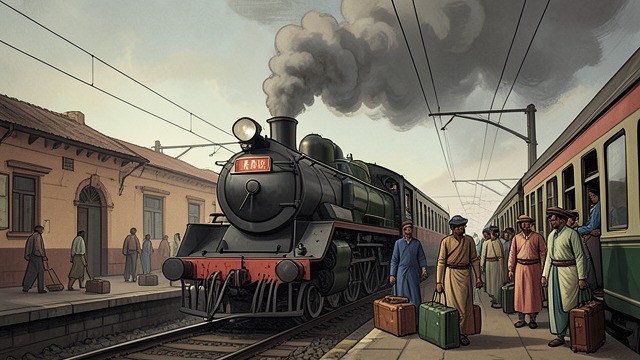
An Empire’s Transport Grid
Infrastructure across India
Railways and steamers connect major places under British rule, making long-distance movement faster than before. Fogg’s timetable depends on this network.
Progress unevenly distributed
The line remains incomplete, and local territories do not all fall under the same authority. The travelers’ route reveals a landscape shaped by both infrastructure and political limits.
Custom and Coercion

Custom and Coercion
A contested ritual
The party encounters Aouda’s planned suttee, which local elites present as customary and voluntary. The guide explains that force, drugs, and the threat of social exclusion leave her little choice.
Authority has limits
The British government cannot effectively prevent the ceremony in this territory. The episode exposes the gap between formal claims of protection and the reach of political power.
Law Protects and Punishes
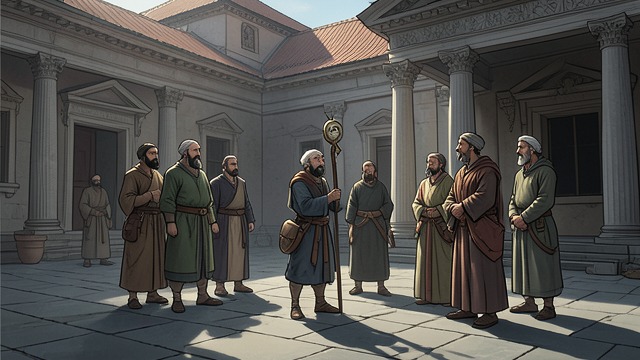
Law Protects and Punishes
A temple offense prosecuted
The court punishes Passepartout for violating a sacred place, invoking laws meant to protect Indian religious customs. The rule is applied even as the travelers have intervened to prevent a killing.
Competing judgments
The hearing treats the temple charge as a legal matter and does not address the rescue at Pillaji. Law’s formal consistency sits uneasily beside the different moral claims surrounding the two events.
Fix Beyond British Territory
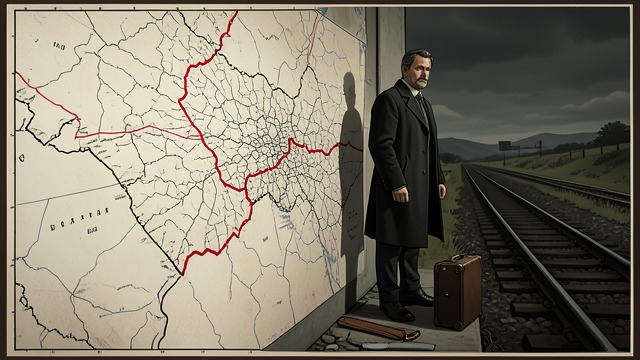
Fix Beyond British Territory
Jurisdiction changes
Fix can pursue Fogg more effectively while the party remains on British soil. Once Fogg leaves for Japan, the simple warrant is no longer enough and extradition would cause delay.
Borders limit police power
The detective’s authority depends on geography as much as evidence. The journey turns legal jurisdiction into another boundary the party must cross.
A Journey Through Unequal Worlds
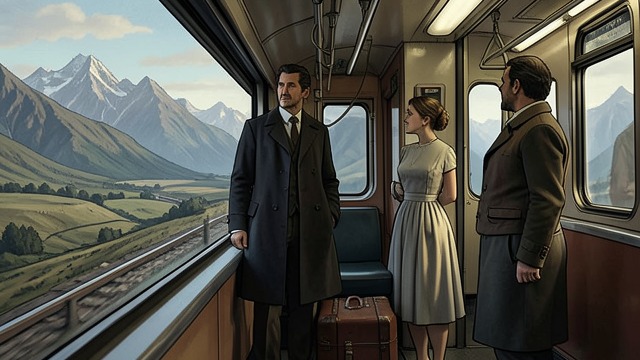
A Journey Through Unequal Worlds
Movement depends on systems
Fogg’s return relies on railroads, military posts, private vessels, and local guides. The traveler who can pay for alternatives moves through spaces that remain dangerous or inaccessible to others.
The journey’s moral counterpoint
Aouda’s vulnerability and the rescue of passengers remind the party that mobility is not shared equally. The novel’s fast routes cross societies whose inhabitants face conditions the timetable cannot solve.
October, on arrival in India
23 October, Bundelcund
25 October, Calcutta
November, after Hong Kong
December, across the United States
