Andrew Speedy
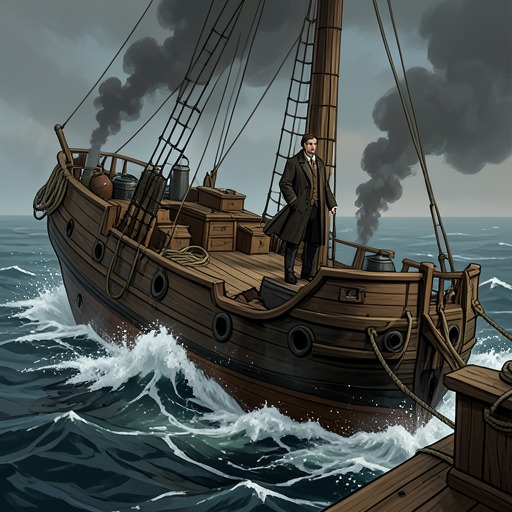
Around the World in Eighty DaysAndrew Speedy is the captain of the Henrietta, a trading vessel whose intended voyage to Bordeaux becomes Phileas Fogg’s last sea passage toward Liverpool. A forceful, visibly formidable shipmaster, Speedy is first outmaneuvered by Fogg’s influence over the crew, then persuaded to accept a costly settlement. His brief encounter with Fogg turns the ship from a privately commanded vessel into the means of Fogg’s desperate race for England.
Identity and Command
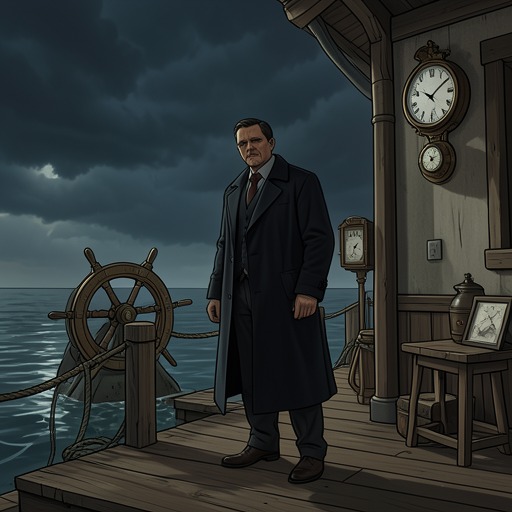
Speedy introduces himself as a captain from Cardiff. The narrator describes him as about fifty, with large eyes, an oxidised-copper complexion, red hair, and a thick neck; his voice growls. The description gives him an imposing, almost elemental presence, and his terse manner reinforces the impression of a man accustomed to command. When Fogg boards, Speedy says the vessel will put to sea in an hour, establishing both the ship’s immediate readiness and the narrow opportunity Fogg has found.
Speedy’s destination is Bordeaux, and he is explicit that he will go there. Fogg’s need to reach Liverpool does not alter the captain’s announced course. Speedy’s resolve is practical rather than abstract: he commands the vessel and expects its voyage to proceed according to his decision. That apparent certainty makes the later change of command a sharp reversal.
The Change of Command
Fogg first takes passage for Bordeaux, although his real aim is Liverpool. In the thirty hours that follow, he uses banknotes to win over the sailors and stokers, an occasional crew who are already not on good terms with Speedy. They transfer their allegiance to Fogg as a body. Speedy is shut up under lock and key in his cabin, while the Henrietta turns toward Liverpool. Fogg’s position is not merely that of a passenger with a different destination: he has gained command of the vessel, and Speedy has become his prisoner.
At noon the next day, Fogg is on the bridge checking the vessel’s position. Speedy, confined below, gives loud cries of anger. The contrast is direct: the man who had declared where his ship would go cannot leave his cabin, while the passenger who had asked about the voyage now directs it. The narrator adds that Fogg manages the craft with evident skill and had been a sailor, making his command more than a financial arrangement; he can also handle the vessel he has taken over.
When Speedy learns that they are 707 miles from Liverpool, his anger remains pronounced. He calls Fogg a pirate, a response that captures the sharp gap between Speedy’s view of the seizure and Fogg’s calm, purposeful conduct. Speedy’s confinement and the redirection of his ship are real losses of authority, even though the arrangement will soon change again.
The Settlement
Fogg’s plan requires the Henrietta to be burned for fuel, and Speedy reacts with disbelief at the prospect of losing a vessel he values at fifty thousand dollars. Fogg answers by handing him a roll of bank-bills amounting to sixty thousand dollars. The payment transforms the exchange: Speedy’s anger gives way, in an instant, to acceptance. The narrator notes that the ship is twenty years old and presents the transaction as a bargain for Fogg; Speedy, however, is not left with nothing.
Speedy asks whether he will still have the iron hull, and Fogg agrees that he may keep both hull and engine. Speedy accepts, counts the banknotes, and puts them in his pocket. His outcome is therefore divided. He has lost command of the voyage and the ship’s working use, but receives sixty thousand dollars and retains its iron hull and engine. The money does not undo the forceful takeover; it gives Speedy a concrete reason to accept the destruction of the vessel’s remaining fittings rather than continue resisting.
Narrative Role
Speedy’s part in the journey is brief but decisive: his vessel offers Fogg a route toward Liverpool when time is running short, and the captain’s refusal to sail there forces Fogg to secure control by other means. The episode turns on successive changes in what Speedy can command. At first he sets the destination; then Fogg commands the crew and confines him; finally, payment brings Speedy’s consent to the vessel’s sacrifice. The sequence makes money both the instrument of Fogg’s seizure and the means of settling with the man who has been displaced.
Speedy is not developed beyond this encounter, and the account does not follow what he does after accepting the payment. Within the episode, however, his insistence on Bordeaux, furious response to confinement, concern for the Henrietta’s value, and final attention to the hull and engine give his change of position a clear material shape. He exits the immediate struggle with the proceeds of a bargain, while the Henrietta’s remaining value is converted into the fuel Fogg needs to continue.