Fogg takes command of the Henrietta
Around the World in Eighty DaysFogg takes command of the Henrietta after its captain refuses to carry him to Liverpool. By winning over the ship’s sailors and stokers, he turns a blocked passage into a risky eastward voyage and reveals a practical command of the vessel that the journey had not yet shown.
Background and Reversal
An hour after leaving the Hudson, the Henrietta passed the lighthouse at the river’s entrance, rounded Sandy Hook, and put out to sea. It skirted Long Island and passed Fire Island as it headed east. Fogg wanted to reach Liverpool, but Andrew Speedy would not take him there. Fogg therefore booked passage to Bordeaux—a destination that gave him time aboard the vessel, but not the route he needed.
How Fogg Takes Command
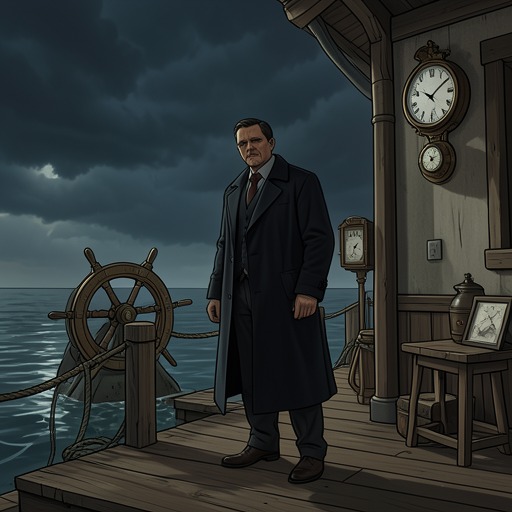
During the thirty hours he had been aboard, Fogg shrewdly used his banknotes to win over the sailors and stokers. They were an occasional crew and were already on poor terms with Andrew Speedy; they transferred their support to Fogg as a body. By the following day at noon, Fogg was on the bridge checking the ship’s position. Andrew Speedy was locked in his cabin, loudly protesting, while Fogg commanded the vessel toward Liverpool.
The change of command is presented as a calculated reversal rather than a contest of strength: Fogg converts the crew’s dissatisfaction with their captain into the means of redirecting the ship. His handling of the Henrietta also makes clear that he had been a sailor. The captain had estimated a speed of eleven to twelve knots, and the vessel confirmed that prediction.
The Voyage Set in Motion
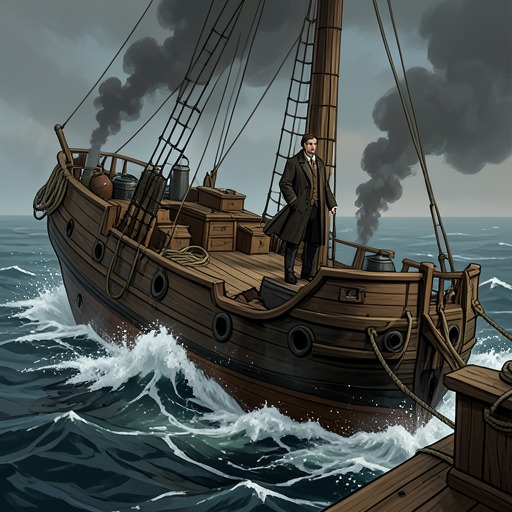
The takeover put the Henrietta on a course that might cover the three thousand miles from New York to Liverpool in nine days, but the passage remained conditional on the sea, the wind, and the ship’s machinery. In the first days, the north-east wind held steady, the sails were raised, and the vessel made smooth progress across the waves. Fogg had secured the route he needed, not certainty of arrival.
The change affected his companions differently. Aouda was anxious, though she said nothing; Jean Passepartout regarded Fogg’s manoeuvre as glorious. Their contrasting responses register the immediate cost and audacity of the decision: the ship was moving toward Liverpool under a new commander, but the crossing still exposed the party to forces Fogg could not control.