Fort Kearney
Around the World in Eighty DaysFort Kearney is a railway station backed by a military garrison, and a crucial point in the American journey of Phileas Fogg. When Sioux raiders threaten a train and seize passengers, the fort offers a nearby refuge for those left behind and a base from which a rescue can be organized. The rescue succeeds, but the train has gone: Fort Kearney thus becomes both the setting for Fogg’s act of duty and the place where his party must abandon its expected rail connection and improvise a new route.
Railway Station and Garrison
In the novel, Fort Kearney is identified as a station on the Pacific Railroad, with a military post close enough to matter in a crisis. During the attack on the train, its garrison is only two miles away. That proximity gives the station strategic importance: it is a possible refuge for the train if it can get there, and a source of armed assistance if the passengers can reach it. The fort is not described as a destination for sightseeing or as a developed portrait of military life; its significance comes from its position within a travel network where distance and timing determine what help is possible.
The station also marks a vulnerable point in the route. The train is stopped before it reaches Fort Kearney, and the conductor warns that the passengers will be lost unless the train is halted within five minutes. The danger is not confined to the stationary cars: if they pass the fort, the Sioux raiders will control the stretch between Fort Kearney and the next station. The railway’s movement, normally the means by which Fogg keeps to his schedule, has become a liability. Its passengers cannot simply continue toward the next connection, and the nearest garrison is close but not close enough to protect them without action.
The Rescue and the Fort’s Role
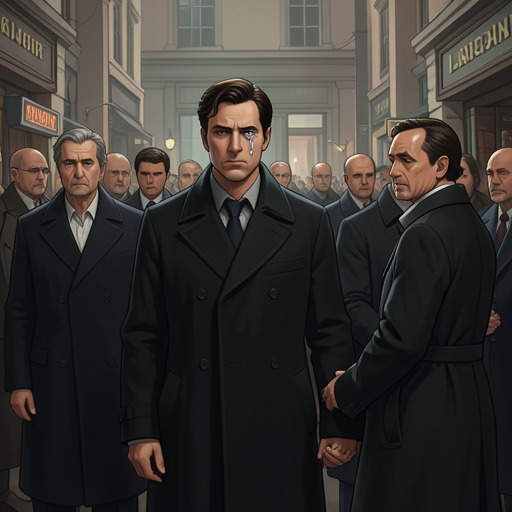
As the struggle continues, the Fort Kearney garrison prepares for the possibility that the Sioux raiders will attack the station itself. The commanding officer is there, and a hundred soldiers have taken up defensive positions. Fogg reports that three passengers have disappeared. When the captain hesitates over whether to risk sending men after them, Fogg offers to go alone. His decision makes the fort more than a point on the railway map: it is the place where the danger to other travellers collides with the cost of keeping his own journey on schedule.
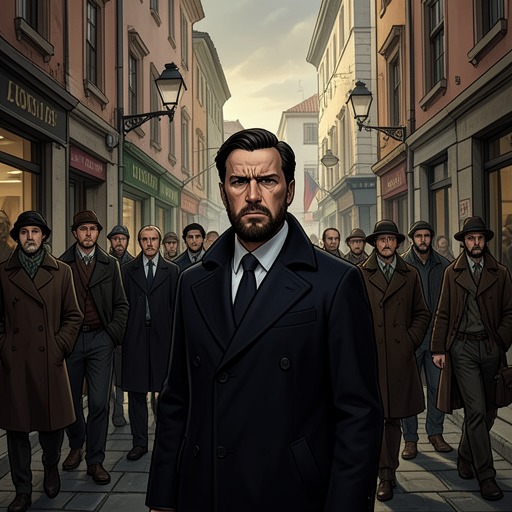
The rescue party eventually returns with Fogg at its head. The missing passengers, including Passepartout, have been recovered after a confrontation with their captors ten miles south of Fort Kearney. Before Fogg and the soldiers arrived, Passepartout and the other captives had begun struggling against the raiders; Passepartout himself felled three with his fists. The fort’s soldiers help complete the rescue, and the returning party is welcomed with joyful cries. Fogg distributes the reward he had promised the soldiers, linking the successful return not only to his personal intervention but also to the garrison’s participation.
Delay and Change of Route
The rescue does not restore the party’s original timetable. By the time Fogg, Passepartout, and the other travellers return, the train has left Fort Kearney. When Fogg asks when another will pass, Fix tells him that the next train is not due until evening. The quietness of Fogg’s response contrasts with the seriousness of the lost connection: the rescue has saved lives, but the missed train threatens the onward schedule.
Fix calculates that the interruption has put them twenty hours behind. Since the party had expected to reach New York with eleven hours to spare before the steamer’s departure, he proposes trying to regain eight hours by travelling on a sledge with sails. Fort Kearney is consequently the point from which the journey’s means of transport must change. The railway carries the travellers across long distances, but it cannot answer every interruption; after the train is gone, the party depends on a proposed overland alternative.
Narrative Significance
Fort Kearney concentrates the novel’s tension between schedule and responsibility. Fogg’s rescue decision threatens the carefully measured journey: even a single day’s delay would cause him to miss the steamer at New York and lose his wager. Yet he does not leave the captured passengers to their fate. The fort gives that choice a concrete geography: a garrison lies nearby, the captives are farther south, and the train that would preserve the itinerary cannot be held for the rescue party.
The place also exposes the limits of travel infrastructure. The railway promises rapid passage toward the East, but a crisis, a missing passenger, and a departed train break its sequence of connections. The party must adapt rather than simply resume its planned ride. From Omaha, the Pacific Railroad reaches its terminus, and onward travel continues by another railway; the route therefore depends on multiple links, not on one uninterrupted line. Fort Kearney matters because it is where those dependencies become visible: the journey advances through transport systems, but its direction is repeatedly shaped by what happens to people along the way.