Jean Passepartout—Fix
Around the World in Eighty DaysJean Passepartout and Fix are linked by a widening gap between what each knows: Passepartout reads Fix’s pursuit as a clumsy effort to verify Phileas Fogg’s wager, while Fix is tracking Fogg as a suspected robber and ultimately uses deception and opium to obstruct him. Their encounters turn an apparently genial shipboard acquaintance into a test of loyalty, with Passepartout’s trust in his master surviving even the possibility that Fogg is guilty.
An Acquaintance Misread
Passepartout first meets Fix at Suez, where Fix presents himself as an obliging person who has offered to guide him. The encounter leaves Passepartout with a favorable impression. After leaving Suez aboard the Mongolia, he enjoys the voyage, takes his meals in the forward cabin, and is pleased to find Fix on deck the following day. He approaches him warmly, recalling their conversation on the quays. At this point, their contact seems like a continuation of friendly travel companionship rather than an encounter between a detective and the servant of the man he is following.
The misunderstanding deepens aboard the Rangoon. On October 30, with the ship due at Singapore the next day, Fix comes on deck and acts astonished to find Passepartout there. Passepartout is genuinely surprised in turn: he had left Fix at Bombay and now finds him travelling toward Hong Kong. He asks whether Fix, too, is going around the world. Fix says that he will stop at Hong Kong for at least a few days, concealing the larger purpose of his pursuit.
Passepartout notices that Fix keeps appearing along Fogg’s route, but he interprets the pattern in a way that protects his confidence in both men. He concludes that Fix must be an agent of the Reform Club, sent to make sure Fogg carries out the wager. In his mistaken account, Fix’s surveillance is intrusive but not criminal; its target is the journey’s credibility, not Fogg himself. Passepartout decides not to tell Fogg, reasoning that his master would rightly resent the club’s distrust. Instead, he plans to tease Fix with hints that suggest he has seen through the supposed spy’s mission. His confidence in this explanation makes him less prepared for the truth when Fix finally discloses it.
The Detective’s Disclosure
In Hong Kong, the apparent friendship becomes a deliberate strategy. With the Carnatic’s repairs completed, Passepartout learns that the ship will leave that evening rather than the following morning and intends to tell Fogg. Fix decides that he must act before the departure. He invites Passepartout into a tavern on the quay, choosing a setting where he can talk with him privately and, as he hopes, detain Fogg in Hong Kong for several days.
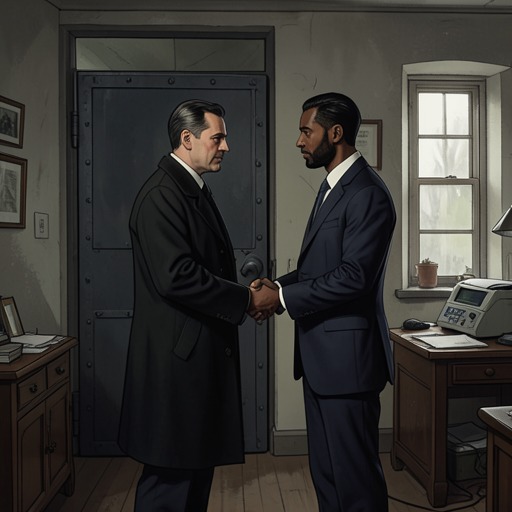
The tavern is also an opium-smoking house. Around thirty customers drink beer and spirits and smoke long red clay pipes packed with opium and rose essence. Those overcome by the drug slip beneath the tables; waiters carry them by head and feet to a large, cushioned camp-bed, where twenty people already lie stupefied. This is the setting in which Fix tries to break Passepartout’s mistaken account of their relationship. He places a hand on Passepartout’s arm and asks whether Passepartout has guessed who he is. Passepartout believes he has, but still thinks Fix is connected to the Reform Club.
Fix corrects him: he is a police detective sent from the London office. He has tracked Phileas Fogg to Hong Kong, but the arrest warrant he requested from London has not yet arrived. Until it does, he wants Passepartout to help keep Fogg there. Fix offers to share the £2,000 reward from the Bank of England, turning the appeal into an explicit invitation to exchange loyalty to Fogg for money. His proposal exposes the real asymmetry between the men: Fix knows the purpose of his pursuit, while Passepartout has been interpreting every sign through a mistaken story of club surveillance.
Loyalty Against the Offer
Passepartout does not accept Fix’s claim easily. He struggles against the suspicion it raises because he does not want to believe his master is guilty, and he asks what Fix wants from him only after making an effort to withstand the doubt. Even while allowing that Fix might be telling the truth, he refuses to assist him. He invokes his own experience of Fogg’s generosity and goodness and insists that service to his master rules out betrayal, whatever the reward. His refusal is not based on proof that Fogg is innocent; it stands even under the possibility that Fix has correctly identified the robber.
That distinction gives the relationship its moral force. Passepartout is not choosing between two equally understood versions of events. Fix supplies an accusation and a financial inducement, but Passepartout’s judgment rests on conduct he has personally witnessed. Loyalty, for him, is an obligation formed through service and experience, not a calculation that can be revised in exchange for gold. Fix, by contrast, treats Passepartout’s closeness to Fogg as a practical obstacle to be overcome. When Passepartout refuses, Fix does not persuade him further; he changes tactics.
Deception and Separation
Fix tells Passepartout to consider that nothing has been said and proposes that they drink. Passepartout becomes increasingly affected by the liquor. Seeing that he must separate him from Fogg at all hazards, Fix uses the opium already present on the table: he slips a pipe into Passepartout’s hand. Passepartout puts it to his lips, lights it, draws several puffs, and falls unconscious with his head on the table. The intimacy of the earlier shipboard acquaintance has become an instrument of control: Fix has gained access to Passepartout by appearing familiar, then exploits that access to silence him.
Fix leaves after paying the bill, believing that Fogg will not be told of the Carnatic’s departure and that, even if Fogg learns of it, he will have to travel without Passepartout. The immediate consequence is separation rather than cooperation. Passepartout later finds himself on the way to Japan with no money, though his passage has been paid in advance; he has five or six days to decide what to do. When he reaches Yokohama, he goes ashore and wanders without direction, feeling alone among the crowds. The evidence does not show a reconciliation between him and Fix at this point. Instead, their Hong Kong encounter leaves a lasting plot consequence: Fix’s deception breaks the servant’s link to Fogg just as Passepartout’s refusal has made clear that he will not willingly sever it.