Kholby–Allahabad Railway Gap Crossing
Around the World in Eighty DaysThe Kholby–Allahabad Railway Gap Crossing turns an apparent promise of uninterrupted rail travel into a practical test of Phileas Fogg’s composure and resources. When the train stops, the line proves unfinished: fifty miles separate Kholby from the railway’s resumption at Allahabad. Fogg treats the interruption not as a crisis but as an obstacle to be solved, securing an elephant and continuing overland with Sir Francis Cromarty and Passepartout.
The Break in the Route
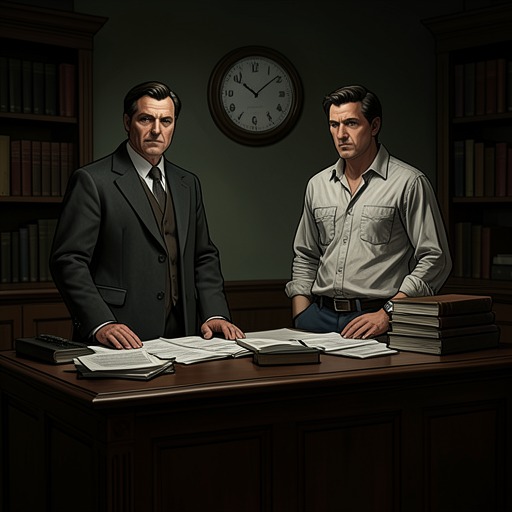
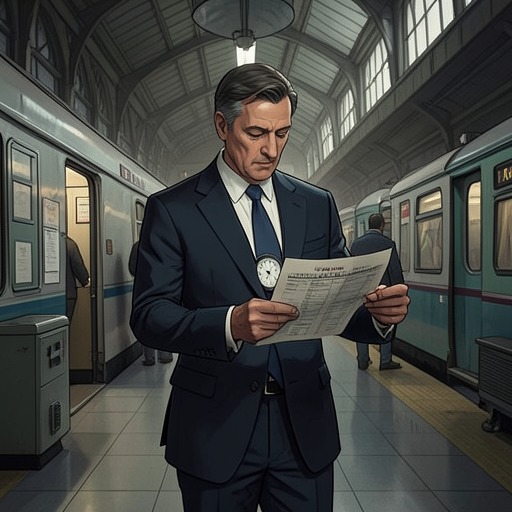
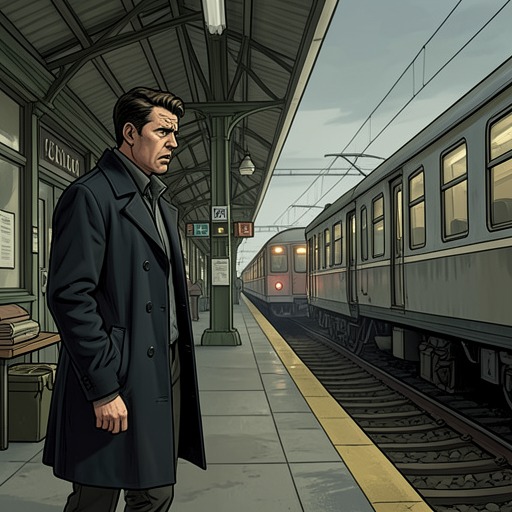
The interruption comes at eight o’clock, when the train halts in a clearing about fifteen miles beyond Rothal, among bungalows and workmen’s cabins. The conductor tells passengers to get out. Fogg looks to Sir Francis Cromarty for an explanation; Passepartout, after rushing from the carriage, returns with the news that there is no more railway. At Kholby the conductor confirms the reason: construction is incomplete, and a stretch of fifty miles remains before the line begins again at Allahabad. The gap exposes a difference between the railway as announced and the railway as travelers can actually use it. The conductor says passengers are expected to provide their own transportation between the two ends of the track. Sir Francis is furious, and Passepartout is so frustrated that he would willingly strike the conductor. The immediate burden of the incomplete connection falls on the passengers, who must find a way across country before they can resume their journey by rail.
Fogg’s Response and the Elephant
Fogg answers the news with characteristic calm. When Sir Francis points out that the delay is greatly to his disadvantage, Fogg says that it was foreseen. He first proposes going on foot. Passepartout, meanwhile, remembers his magnificent but fragile Indian shoes and looks for another means of travel. After a moment’s hesitation, he reports that an elephant belonging to an Indian nearby can be obtained. His discovery changes the problem from an impassable interruption into a costly, if feasible, alternative route. Fogg initially offers the owner one thousand pounds to buy the animal outright, but the offer is refused. Sir Francis takes him aside and urges him to think before going further. Fogg explains that he does not act rashly: a twenty-thousand-pound wager is at stake, the elephant is necessary, and he will secure it even if he must pay twenty times its value. He then raises his offers through twelve hundred, fifteen hundred, eighteen hundred, and finally two thousand pounds. At that price the owner yields. Passepartout is appalled at the sum, while Fogg has converted the wager’s immense stakes into a concrete decision about transport.
Organizing the Overland Crossing
Buying the elephant is only part of the solution. The party also needs someone able to guide it, and a young Parsee offers his services. Fogg accepts and promises a generous reward, giving the guide a direct incentive to assist. The animal is equipped with a saddle-cloth and two howdahs attached to its sides; the narrator notes that the howdahs are uncomfortably constructed. The contrast is practical: the party has obtained a means of travel, but not a comfortable substitute for the train. Fogg pays the owner with banknotes from his carpet-bag, a payment Passepartout watches with such distress that it seems to deprive him of his strength. Fogg also offers Sir Francis a place on the elephant. Sir Francis accepts gratefully, since adding another traveler is not expected to tire the large animal. Provisions are bought at Kholby. Fogg and Sir Francis take the howdahs on opposite sides, Passepartout sits astride the saddle-cloth between them, and the Parsee takes his place on the elephant’s neck.
Meaning Within the Journey
The party leaves Kholby at nine o’clock, heading through dense palm forest by the shortest route. The crossing thus begins with a strict sequence of adjustments: the train’s schedule gives way to a costly purchase, a hired guide, improvised seating, and a route chosen to reconnect with the railway. The evidence establishes their departure and their intended destination, not the details of their eventual arrival, so the crossing’s significance here lies in how they respond to the gap. The episode also gives Fogg’s punctuality a material dimension. His self-command does not make the railway complete or remove the fifty miles; it enables him to treat the failure of the planned network as a problem requiring money, judgment, and rapid organization. The wager makes the elephant’s exceptional price intelligible: what would ordinarily be an extravagant purchase becomes, for Fogg, a means of protecting a much larger stake. Passepartout’s alarm supplies the human counterpoint to his master’s measured calculation, while Sir Francis’s warning makes clear that the decision is deliberate rather than casual. The setting is India under a changing political arrangement: the British Crown exercises authority over much of the country, while the East India Company, once powerful, has passed from control. The railway gap is not explicitly attributed to that political history, but the unfinished line sharply qualifies the image of a country already joined by modern transport. At Kholby, the travelers encounter the limit of the advertised connection directly. For Fogg’s journey, speed depends not only on railway timetables but on whatever can bridge the distance the railway has yet to cover.