Saville Row
Around the World in Eighty DaysSaville Row is the setting of Phileas Fogg’s home and daily routine, and the point from which he and Passepartout leave to begin their journey. Its importance lies in the contrast it establishes: the measured life of a comfortable London house gives way to movement across the world, while Fogg carries his habits of precision with him.
Setting and Character
In 1872, Fogg lived at No. 7, Saville Row, Burlington Gardens, in a house associated with the death of Sheridan in 1814. He was a conspicuous member of the Reform Club who seemed to avoid attention, and little was known about him beyond his polished manner. The narrator describes him as certainly English, though whether he was a Londoner remained uncertain; people likened his head to Byron’s, imagining a bearded, tranquil figure who seemed unlikely to age.
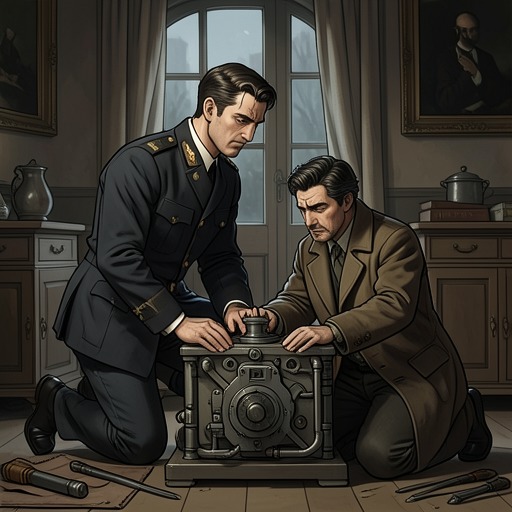
The house was comfortable rather than sumptuous. Its domestic arrangements were simple enough for one servant, but Fogg expected exceptional promptness and regularity. On 2 October he dismissed James Forster for bringing shaving water at eighty-four degrees Fahrenheit instead of the required eighty-six. Fogg then waited for his replacement, due between eleven and half-past, seated upright and watching a complicated clock that displayed the time down to seconds as well as the days, months, and years.
The Daily Routine and Passepartout’s Arrival
Fogg’s schedule made the house an instrument of exact timekeeping. At half-past eleven he was due to leave Saville Row for the Reform Club, and his habits allowed little room for deviation. When Passepartout entered his service, Fogg noted that the new man was four minutes slow, stated the exact time of his appointment—twenty-nine minutes after eleven on Wednesday, 2 October—and accepted him without further ceremony.
The first evening in the house established the new arrangement through two closing doors: Passepartout heard Fogg leave, then heard Forster depart in his turn. The servant was left alone in the Saville Row home, with the former household routine ended and his own service just begun.
Departure and Narrative Significance
When the journey began, Fogg and Passepartout locked the street door twice and went from the end of Saville Row by cab to Charing Cross. At the station, Fogg handed Passepartout a carpet-bag containing twenty thousand pounds. He also gave twenty guineas to a woman who had asked him for alms, explaining that he was glad to have met her; the gesture moved Passepartout. The departure thus presents both Fogg’s substantial financial means and an act of generosity within the same brisk sequence of practical arrangements.
Saville Row is more than an address: it gives the story’s first concrete image of Fogg’s order, from the measured household to the precisely timed departure. The street marks the transition from a life organized around a fixed daily circuit to a journey through changing places. Later, at Bombay, Fogg again keeps to his schedule and declines to spend time seeing the city’s notable sights, extending beyond the home the same disciplined separation between travel and sightseeing first established at Saville Row.