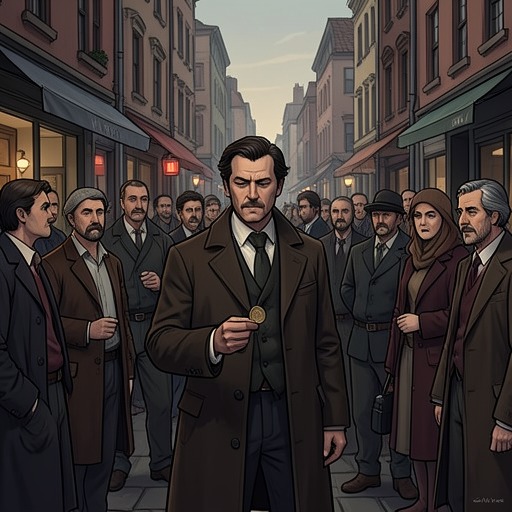
The unforeseen does not exist
Around the World in Eighty Days“The unforeseen does not exist” is Phileas Fogg’s quiet answer to the possibility that chance might defeat his eighty-day wager. The phrase states his confidence as an absolute, but the journey’s uncertain weather, accidents, and improvised decisions give it a continuing, increasingly ironic significance.
The wager and the assertion
Stuart challenges the proposed journey by naming disruptions that cannot simply be wished away: bad weather, contrary winds, shipwrecks, railway accidents, and even the possibility that travelers might pull up the tracks, stop trains, and attack passengers. Fogg accepts that such hazards are included in the wager. When Sullivan points out that a single accidental delay could cost him twenty thousand pounds, the sum he has deposited at Barings Bank, Fogg replies with the expression itself. He then maintains that a well-used minimum is sufficient. The line is therefore not casual optimism: it is the governing claim behind a journey whose deadline and financial stake leave little room for delay.
A certainty tested by events
The phrase claims that the unforeseen does not exist; the voyage supplies a more complicated reality. Near the end of the journey, the Henrietta may cover the three thousand miles from New York to Liverpool in nine days, between December 12 and December 21, but only if the sea remains manageable, the wind does not turn east, and neither the vessel nor its machinery suffers an accident. The narration itself keeps those conditions open rather than treating the schedule as assured. Fogg’s plan is precise, yet its success still depends on forces outside his command.
Meaning in retrospect
The expression gains force from the contrast between Fogg’s composure and the contingencies around him. At Hong Kong, Fix resolves to make a clean breast of his true purpose to Passepartout, an unforeseen development in the detective’s pursuit. Aboard the Henrietta, Fogg’s passage toward Liverpool likewise follows a change in command and depends on uncertain sailing conditions. These episodes do not make the phrase a literal description of events; they reveal it as Fogg’s principle of action, set against a plot in which risk, surprise, and last-minute choices remain real. Its confidence gives the wager its momentum, while the journey tests that confidence at every turn.