
The Conservatory as the Affair’s Setting
AsylumThis flow traces the Conservatory’s transformation from Max’s restoration project into a private stage for desire and loss.
increasing Bearing strength in each event
 decreasing
Bearing strength in each eventdecreasingMax’s Restoration Project
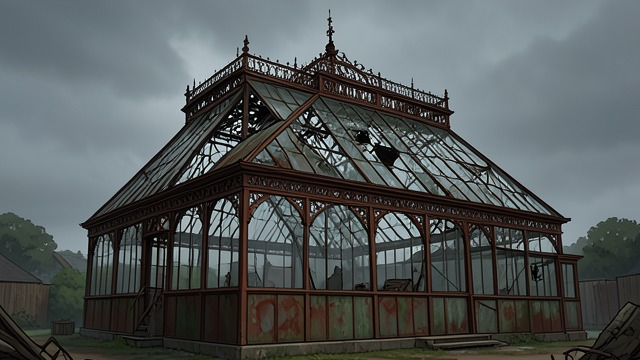
A Victorian Glasshouse
A Neglected Structure
The Conservatory is dilapidated when Max arrives, yet its ornate structure appeals to his affection for Victorian architecture. He hires Edgar, a skilled sculptor and carpenter among the parole workers, to restore it.
Different Investments
Max imagines the garden as a long-term project and an expression of order. Stella’s later memories transform the same structure into a place associated with her own desire and choices.
The First Encounter
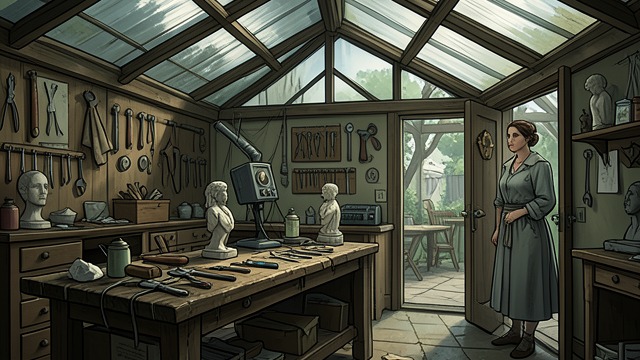
Work Becomes Intimacy
The Workbench
Stella visits Edgar as he repairs the glasshouse and begins talking with him. She watches him work and accepts his attention, even as she recognizes that concealing these visits from Max is a form of deception.
A Private Symbol
The Conservatory becomes an image Stella carries back into the house: a structure stripped to its frame and being rebuilt by Edgar’s hands. That image helps her turn a risky attraction into a story of renewal.
A Place of Loss
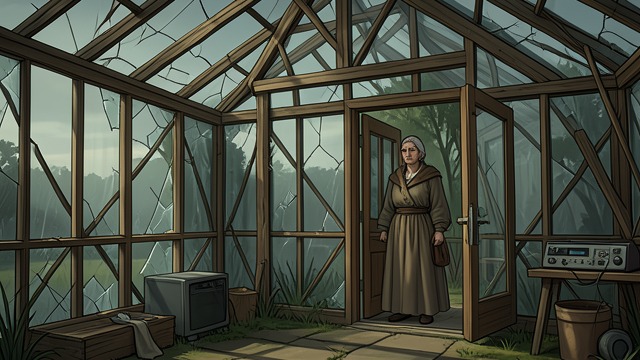
The Unfinished Garden
Abandoned Work
Once Edgar is gone, the Conservatory’s incomplete framework seems desolate to Stella. She returns to the place where they first had sex and grieves for both the lover and the future she imagined.
Memory’s Structure
The restored and damaged elements of the building mirror Stella’s attempt to preserve a coherent account of the affair. Its physical incompletion stands for a relationship interrupted before either lover could make it safe or stable.
The Raphaels’ first year at the hospital
Early summer 1959
After Edgar’s escape
