
The Hospital Dance as a Social Stage
AsylumThis flow follows the dance from a managed institutional ritual to a recurring test of Stella’s identity and attachments.
increasing Bearing strength in each event
 decreasing
Bearing strength in each eventdecreasingThe First Dance

Staff and Patients Together
A Temporary Community
The hospital dance brings parole patients and staff into the Central Hall, where official distinctions are meant to soften for an evening. Peter Cleave watches from the edge, skeptical of the cheerful social performance.
Edgar and Stella
Edgar asks Stella to dance, and she responds to the sexual charge between them. Their public closeness becomes the hidden beginning of a relationship that threatens the very hierarchy the dance temporarily suspends.
The Dance Recalled
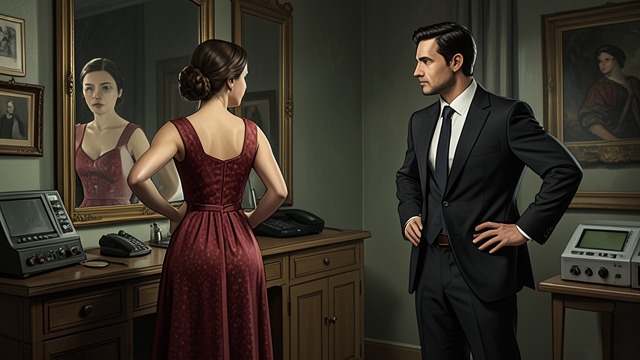
A Memory That Reorients Desire
The Morning After
Stella repeatedly recalls Edgar’s erection against her during the dance. The memory makes clear to her that her private desire was reciprocated and intensifies the risk of seeing him again.
Public Gesture, Private Meaning
The dance becomes a secret symbol shared by the lovers. What staff saw as a routine social event carries for Stella the force of a first mutual declaration.
The Last Hospital Dance
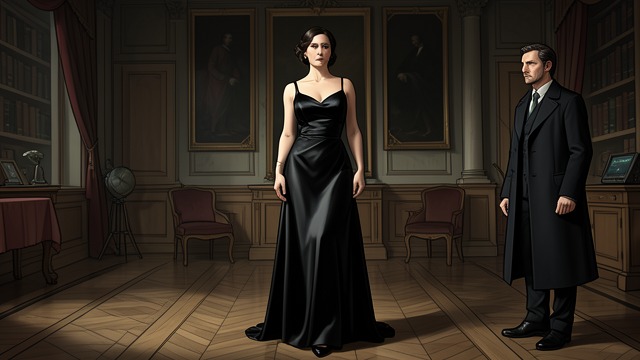
A Performance of Composure
The Black Dress
Stella wears the same black silk evening dress she wore to the first dance. Peter reads it initially as defiance and a statement of dignity, while she has privately invested it with her connection to Edgar.
A False Farewell
She attends, dances, and maintains her composed public image. Peter later realizes that the dress was meant for Edgar, not the hospital community, and that he had mistaken performance for recovery.
Early summer 1959
During the affair’s early weeks
The summer before Stella’s fatal overdose
