
The Asylum as Prison and Refuge
AsylumThis flow traces the changing meanings of the hospital as a place of confinement, order, treatment, and unwanted shelter.
increasing Bearing strength in each event
 decreasing
Bearing strength in each eventdecreasingA City Behind Walls
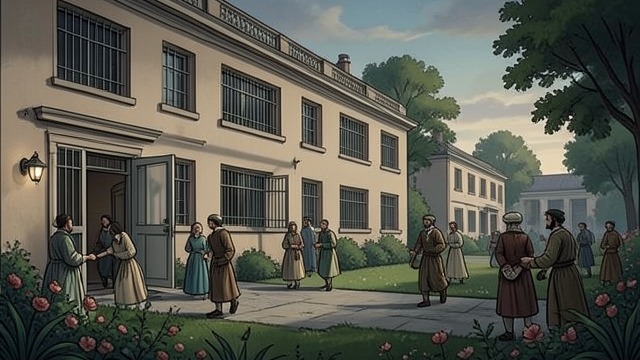
The Hospital’s Enclosure
Architecture of Control
The hospital’s barred windows, outward-opening doors, and surrounding Wall make its custodial purpose visible. Gardens and terraces soften, but do not remove, the institution’s authority over patients.
Community Inside
The hospital also contains work, social rituals, friendships, and routines. Its residents are not reducible to their diagnoses, even though the institution classifies and restricts them.
The Hospital Remembered as Shelter

An Inversion of Value
Life Outside
Stella’s life in the warehouse becomes dirty, precarious, and constrained by the need to avoid recognition. She begins to imagine the hospital as a place where order and security once prevailed.
Refuge and Prison
The institution she feared now appears safer than freedom with Edgar. The change exposes how security can depend on circumstances and how refuge may become another form of confinement.
Admission and Final Custody
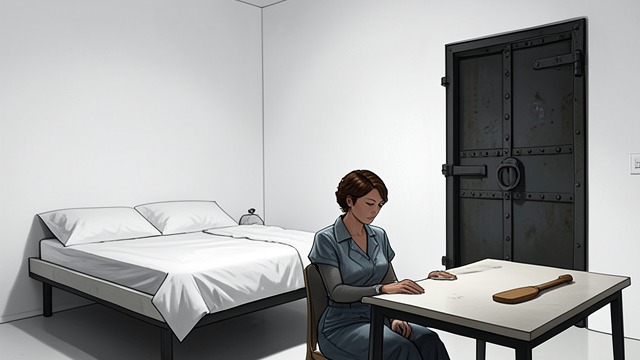
Return Behind the Wall
Stella’s Admission
After Charlie dies, Peter arranges Stella’s admission and places her within the routines of locked rooms, medication, and ward progression. The hospital offers care while restricting her movement.
A Fatal Refuge
Stella dies by overdose in the hospital, despite the staff’s efforts to watch her. The asylum can contain bodies and manage risk, but cannot guarantee recovery or make unbearable grief disappear.
The Raphaels’ arrival in summer 1959
During Stella’s London refuge
After Charlie’s death and Stella’s overdose
