High Table
Awakening the Angel System: Apocalypse: A LitRPG Progression FantasyThe High Table is the covert organization that converts political influence, industrial power, and supernatural knowledge into a transnational threat. Its importance lies not only in the violence carried out by its agents, but in the way its infrastructure reaches into the machinery of war and into the body of Jill, making the organization responsible for both immediate atrocities and the larger crisis threatening humanity.
Nature and Structure
The High Table is presented as a layered power network rather than a conventional army. Its reach includes senior operatives, subsidiaries, organizations, and businesses that support its central projects. Cordell Engineering, controlled by the Black King, is identified as one such subordinate institution; it manufactures parts used in High Table projects, including components connected to the monster Jill became. The organization therefore operates through supply chains and specialist enterprises as well as through direct force.
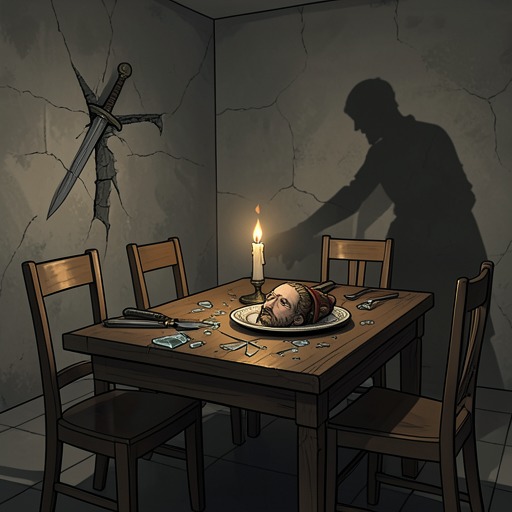
Its leadership is organized through symbolic titles and color-coded positions. After the Gold Queen is dead, the White Knight is imprisoned, the Green Bishop is being experimented on in a basement, and the Purple Pawn’s head has been mounted in Selfia’s office, only the Red Rook and the Black King remain among the High Table’s top members. The hierarchy gives the organization a political and almost game-like surface, but the fates of these members reveal a structure in which rank is inseparable from expendability, captivity, and mutilation.
Operations and Methods
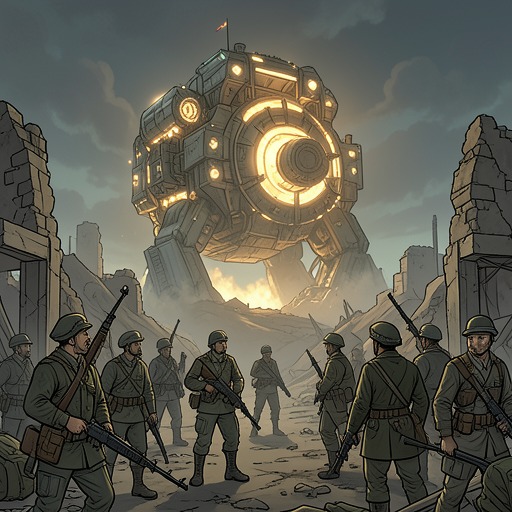
The High Table moves equipment and personnel through strategically important locations. Intelligence gathered by the angels, satellite imaging, and Selfia’s Black Hearts identifies a major concentration of its supplies and personnel in Zanzibar, a port city that has lost contact with the wider authorities despite having little demonspawn traffic and lying on the outskirts of Imperial territory. High Table soldiers continue transporting materials there while Selfian forces prepare an infiltration, creating a tense contrast between visible logistical activity and hidden military intent.
The organization’s methods also include experimentation and the conversion of living beings into weapons. Jill’s transformed body is linked to parts engineered by Cordell Engineering, showing how industrial production feeds directly into bodily corruption. The Green Bishop’s confinement and experimentation further establish that the High Table treats even its own senior figures as material for research. Its violence is consequently administrative as well as martial: people can be killed, detained, altered, or dismantled according to strategic value.
Plans and Strategic Threat
The High Table’s central objective is tied to the Infinity Machine and the corruptive code associated with the demonspawn crisis. Sahaqiel explains that the machine’s accumulated data built up over eons until it began leaking corruptive code, producing the disaster confronting the world. She believes the machine might be repaired and the demonspawn threat eliminated, but only if the enemy’s destination can be discovered. The Red Rook is therefore a high-value target because he is believed to possess the information needed to locate the enemy’s movement and broader operation.
The Red Rook is identified as Dorian Jazz, the High Table’s chief enforcer. Jack insists that Dorian Jazz must be captured alive because destroying the organization’s boats or deleting its intelligence would otherwise leave the coalition without the information required to proceed. This demand distinguishes the campaign against the High Table from simple retaliation: its surviving officers are treated as keys to a hidden system whose military geography and technological purpose remain essential to humanity’s survival.
The organization’s most extreme plan involves Adam, the first Awakened and an unparalleled hunter of the magically gifted. Michael reveals that Adam can pursue such beings across the globe and warns that a direct confrontation with him would end any living being. Yet Michael intends to awaken him, despite Sahaqiel’s protest that Adam would kill the angels and doom the world. Michael describes the release not as destruction but as repair, presenting the deaths of his opponents as the foundation of a newer world. Through this plan, the High Table’s threat expands from covert warfare into deliberate activation of a force capable of global extermination.
Political Violence and the State of Exception
The High Table exists within a wider political landscape in which rulers invoke survival to suspend ordinary protections. Selfia admits that a purge is taking place across the Empire, with three hundred and sixty-nine lives already marked for death and possibly more at risk. The targets include political opponents, rivals, and dissidents—anyone considered capable of slowing the advent of the New Republic. Although this purge is carried out by Selfia’s regime rather than explicitly attributed to the High Table, it mirrors the organization’s logic: emergency conditions transform citizens into obstacles, assets, or disposable bodies.
Jack rejects that logic when he confronts Selfia. He describes the purge as chaos in which hundreds have died, including bystanders and innocents, and objects that the operation endangered Ada’s pregnancy and their unborn child. His resistance exposes the moral gap between the language of necessary action and the concrete consequences of indiscriminate violence. The High Table’s menace is thus reflected by the institutions fighting it; the struggle against hidden tyranny repeatedly risks becoming another system of exceptional power.
The same conflict appears in Jack’s demand that the remaining Theocracy population evacuate to the Flying City and settle in Imperial territory. He frames the order as salvation rather than negotiation because the population lacks adequate food, shelter, and ammunition and will eventually face demonspawn attack. The scene places the High Table’s pressure behind a second forced movement of civilians: survival is offered, but under conditions in which free choice has nearly disappeared.
Narrative Significance and Defeat
The High Table functions as the book’s concealed architecture of catastrophe. Its personnel are not isolated villains; they are connected to factories, ports, intelligence networks, experiments, and ancient machinery. That breadth explains why defeating individual leaders is insufficient. Even after several major figures fall, subsidiaries and supporting businesses remain, and Jack recognizes that the wider network must be addressed later.
The organization also helps define the political transformation of the story. Jack’s public appeal presents himself as the son of the Queen Slayer and King Consort of Selfia Cordelica while offering Imperial citizens a chance to surrender and live as free citizens in the Cordelica Democracy. He argues that the old Imperial war doctrine, which forbids surrender while resistance remains possible, belongs to a dead political order. The High Table’s hidden war therefore becomes the occasion for competing claims about citizenship, legitimacy, and the future of humanity.
Finally, the High Table’s influence persists through the systems it leaves behind. Its weapons, experiments, personnel movements, and plans force the protagonists into an escalating campaign that culminates in the possibility of awakening Adam. The organization’s decisive narrative function is to make political power material: its ideology is stored in machines, built into industrial parts, imposed on altered bodies, and defended through armies. Even when its leaders are captured or killed, the consequences of that design continue to govern the world Jack is trying to save.