Jack’s Emotional Suppression
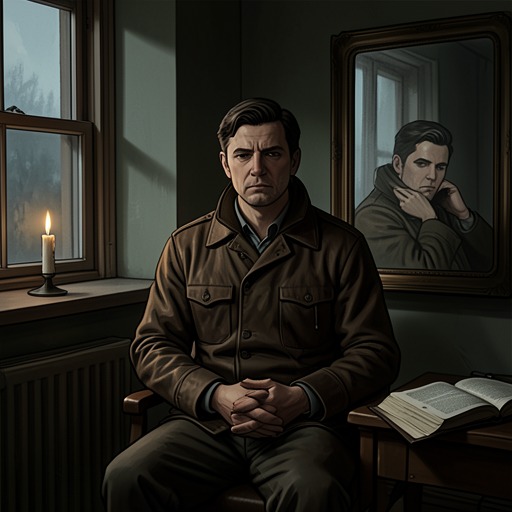
Awakening the Angel System: Apocalypse: A LitRPG Progression FantasyJack’s Emotional Suppression is a deliberately induced state in which Lilith suppresses, rather than erases, Jack’s empathy and guilt. Jack accepts it as an escape from the psychological cost of war, but the change turns emotional survival into a dangerous form of moral and personal disconnection. The state does not free him from the dead; it changes how their deaths reach him, replacing crushing remorse with an unnervingly calm willingness to continue.
Crisis Before Suppression
Jack enters the state under the pressure of accumulated violence and loss. He describes killing and witnessing death as a physical burden, “like a boulder pressing down on me,” while fearing that the fates of those around him will become like the ruined Nest he once encountered. The image joins mass suffering to private responsibility: the voices of millions, the people at the gala, the smell of burning flesh, and those condemned by Selfia’s order all return as part of the same moral wound. His fear is not abstract. It is attached to people he failed, people he lost, and people he believes he may still be unable to protect.
This suffering has the structure of recurring trauma rather than a single completed grief. Jack says that whenever he closes his eyes he hears screams, including the voices of the Nests, and that he cannot sleep because each night brings another nightmare of horrors. His memories of former comrades reinforce the pattern. He identifies Ivan as a former classmate who joked, played pranks, and sometimes got into trouble with Sergeant Dave and the other teachers, while Mai had been able to rein him in; Ada’s question about Mai’s death reveals that Jack’s training history contains another unresolved loss. The past remains active because each death is experienced as both remembrance and accusation.
The Choice and the Mechanism
Lilith frames Jack’s suffering as the consequence of having “too much heart.” Her proposed solution is not to alter his personality outright, but to suppress the emotional responses that make his guilt unbearable. She specifies that Jack would still be able to feel, see, and act normally in a functional sense, while empathy and remorse would be muted. The distinction is crucial: the state is presented as a reduction in access to moral pain, not a replacement of memory, intelligence, or agency.
Sahaqiel recognizes the danger immediately. She objects when Lilith offers to make Jack a remorseless warrior and confirms that she herself could perform a similar suppression, though she warns that it would resemble altering him. Jack nevertheless commands Lilith to proceed. His consent comes at the end of a collapse in which he admits that he cannot bear the guilt, the screams, the images of people he failed, or the people he lost. The decision is therefore both an act of agency and an act made under extreme psychological coercion: Jack chooses the procedure because ordinary emotional endurance has become impossible.
Immediate Effects
After the suppression, Jack’s external circumstances appear more secure, but his inner life becomes strangely empty. While being driven through the city by Jessica, he notices the distance between his former life of public transit and walking everywhere and his present position, with security, a chauffeur, a child, and a stack of last wills and testaments from Yun, Tyrah, and Jena Leslie. The material signs of status and responsibility do not reassure him. Despite possessing what once would have marked a transformed life, he feels hollow.
The state’s effectiveness is nevertheless unmistakable. The dread that had accompanied his movements has disappeared, along with guilt and remorse, and Jack finds himself eager rather than paralyzed. Suppression therefore solves the immediate problem exactly as Lilith promised: it removes the emotional drag that made action difficult. Yet the same change exposes its cost. Jack is not healed, reconciled with the dead, or relieved of responsibility; he is simply no longer being stopped by the feelings that connected his actions to their human consequences.
Persistence of Memory and Moral Injury
Suppression does not prevent Jack from encountering the dead as figures of judgment. In a later vision or nightmare, Leona and Celeste confront him over Jill’s death, while Eleanor and Hoffman accuse him of letting them die or killing them. Jack initially denies responsibility, but the scene places the accusations directly against him and makes escape impossible. Hands push him from behind, Eleanor’s bloodied figure glares at him, and Hoffman clings to his boots. Even when guilt has been chemically or supernaturally muted, the narrative keeps producing bodies, names, and questions that the suppressed conscience cannot permanently exclude.
The state also fails to resolve Jack’s fear of loss. He later names a long succession of dead or endangered people—Eleanor, Mike, Mai, Fujimaru, Itadori, Hoffman, Yun, Tyrah, Jena, and Jill—and then extends the fear to Ada, Leona, Kamila, his children, and his home. He knows that everyone he cares about seems to die or be hurt and that growing stronger has never been enough. Suppression changes the intensity of his response, but not the conditions producing it. The list continues to accumulate, and the possibility of losing those still living remains the emotional structure beneath his apparent calm.
Consequences and Significance
Jack’s Emotional Suppression marks a decisive movement from compassion as a burden to emotional numbness as a weapon. Before the procedure, empathy makes violence nearly unbearable; afterward, the disappearance of guilt makes him more eager to act. The contrast exposes the state’s central irony: Jack gains freedom from remorse by surrendering part of the moral sensitivity that made his humanity visible. Lilith’s promise to create a remorseless warrior is fulfilled functionally, but not cleanly, because the suppressed material continues to return through memories, nightmares, accusations, and fear.
The state also sharpens the conflict between Jack’s desire to protect others and his terror of becoming like his enemies. He had considered becoming a monster strong enough to overcome his fate, and Lilith’s intervention offers a literal method for doing so without requiring him to forget the reasons he once resisted monstrosity. His later confession that he has killed thousands, consigned people to fates worse than hell, and reached the point of doing what his enemies did shows the long-term moral consequence: the emotional barrier between justified violence and enemy violence has eroded. When he concludes that he does not care, the statement is not evidence that the underlying losses have vanished. It is the bleak expression of a person who has made indifference into armor and can no longer trust what remains beneath it.