Post-Shutdown World
Awakening the Angel System: Apocalypse: A LitRPG Progression FantasyPost-Shutdown World names the condition of civilization after Jack activates the Infinity Machine’s kill switch and the world is rebooted. Its decisive fact is not merely that a supernatural resource disappears: the event severs the systems through which magic, technology, warfare, transportation, identity, and resurrection had been organized. The result is simultaneously a catastrophe, a demilitarization, and the beginning of a new political and material order.
The Shutdown and the Loss of Mana
The transition begins when Jack and Michael are torn from existence as the world reboots. The Infinity Machine’s intervention halts Armageddon, but it also brings the long-hidden machinery of the setting into its most consequential state change. The machine had previously treated mana as transferable information, reading and translating the world’s data flows; after the kill switch is activated, that flow no longer sustains the powers on which the old world depended.
The immediate effects are unmistakable. Tenno and Kenichi discover that the demonspawn hordes have vanished, but their systems no longer respond and the mana once felt in their veins has disappeared. Selfia likewise finds that her floating limbs have fallen onto the beach and that she cannot feel her mana. Ada cannot lift her nodachi from the sand and experiences the new weakness in her body as a physical fact rather than an abstract political change. The shutdown makes formerly transparent tools suddenly visible through their failure: systems, weapons, bodies, and machines reveal how completely daily life had depended on mana.
A World Rebooted
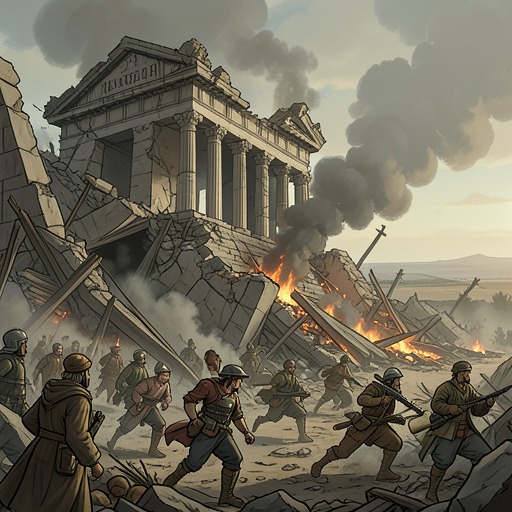
The shutdown also alters the environment. When Ada asks what the kill switch means, Selfia turns toward a landscape stripped of the corruptive purple smog. The distant flying city crashes into the sea, marking the collapse of a major structure of the previous order, while the disappearance of the miasma makes the land newly legible and potentially habitable. The world is not restored to an untouched condition; it is physically rearranged by the same act that removes its magic.
The new condition follows a history of technological and metaphysical entanglement. The Angel System once presented Jack with a level and the title Nephilim, while MECHFrame machines and weapons such as Damocles allowed humanity to fight on a scale comparable to ancient supernatural beings. The Infinity Machine had also been designed by Eve to resuscitate those who fell in past wars and to guide lost souls back to the living world. The shutdown therefore interrupts both the destructive and restorative functions of the old system. It ends the energy basis of advanced equipment even as the consequences of the machine’s resurrection program continue to appear among the survivors.
Resurrection and Social Dislocation
The most disruptive legacy of the post-shutdown world is the return of hundreds of thousands of people. Their arrival is not orderly: resurrected individuals appear across the globe in bathrooms, ship engine compartments, water wells, and abandoned military installations. Governments and communities must house, identify, and integrate people whose historical circumstances may be separated from the present by immense spans of time. The crisis turns resurrection from a miraculous promise into a problem of logistics, citizenship, memory, and competing claims to authority.
The old military and exploratory infrastructure becomes unusable without mana. Airships, mechs, and power generators stop functioning, and the first period after the shutdown is marked by chaos. Yet the loss of those systems also removes the technological means by which the former war was prosecuted. Humanity is left with fewer instruments of domination, but not with automatic peace: rival groups still argue over governance, and the burden of organizing the resurrected population falls upon institutions that were themselves altered by the catastrophe.
New Nations and Rebuilt Spaces
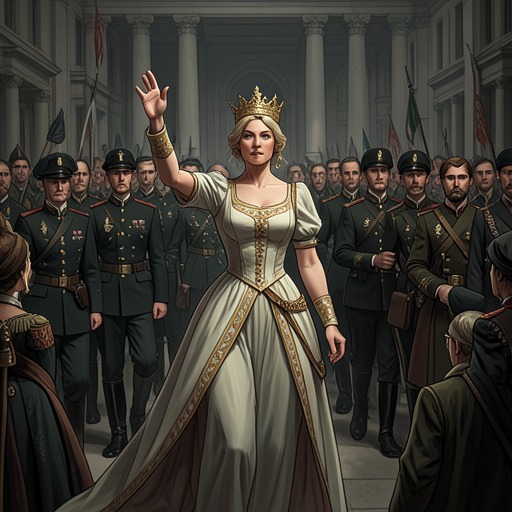
Over time, the survivors suppress most of the violence and disorder, though political unity gives way to a divided international settlement. Selfia’s Republic and the Frontier become two nations on separate continents, governed through different systems. The Frontier is led by the appointed Speaker Lita von Strongarm, with Kenichi and other tribal chiefs serving as a council, while Selfia’s Republic maintains its own political structure. Their delegations and recurring meetings show that reconstruction depends less on restoring the old world than on negotiating a new relationship between distinct governments.
Heaven provides the clearest physical image of this transformation. Once a bastion of the demonspawn, it is left as a transformed ruin and becomes the capital of the Frontier’s government, a forward base for explorers and treasure seekers, and a settlement for the newly resurrected. Gold walls and marble pillars remain, but wires and electric signs now hang among them; ruins become homes and shops, and banners representing the Frontier’s council stand beside the remnants of the ancient stronghold. The former seat of apocalyptic power is converted into civic infrastructure, its monumental past made to support ordinary habitation.
Memory, Victory, and the Post-Mana Future
Five years later, the post-shutdown world has acquired public rituals and competing names. At the rebuilt beach near Jacksonville, Ada waits for the anniversary of Victory Day, commemorating humanity’s victory over the demonspawn and its loss of mana. Some call the occasion V-day, others Resurrection Day, and others the Shutdown. Each title emphasizes a different account of the same rupture: military triumph, the return of the dead, or the technological act that ended the magical age.
The celebration is inseparable from absence. It is also the day Jack disappeared, so the public memory of salvation remains bound to the private memory of loss. The shoreline that once belonged to war and poisoned water is now a tourist destination where families play, children run, and fishermen use the piers. Its peaceful surface does not erase the devastation that preceded it; rather, it demonstrates how the post-shutdown world converts battlefields into places of ordinary life.
The state is therefore defined by contradiction. It is poorer in supernatural power and advanced machinery, yet more capable of inhabiting spaces once dominated by corruption and war. It inherits the Infinity Machine’s mass resurrection without retaining the mana that made such an intervention possible. Its governments remain divided, but their cooperation contains the worst of the ensuing disorder. Above all, Post-Shutdown World is not a simple return to humanity: it is a negotiated aftermath in which ruined fortresses become capitals, dead populations become citizens, and the absence of mana becomes the foundation on which a new civilization must build.