Eve
Awakening the Angel System: Apocalypse: A LitRPG Progression FantasyEve is the creator of the Infinity Machine and the absent architect whose testimony redefines the story’s central technology. Her legacy begins as an attempt to restore the dead after a great war, but it becomes inseparable from betrayal, selective immortality, mass sacrifice, and the danger of allowing a machine to decide which souls deserve to return. Although Eve is not present as an active participant in the later struggle, her confession gives Jack the knowledge needed to understand the machine and suggests that its future may still be reclaimed rather than merely destroyed.
Creator of the Infinity Machine
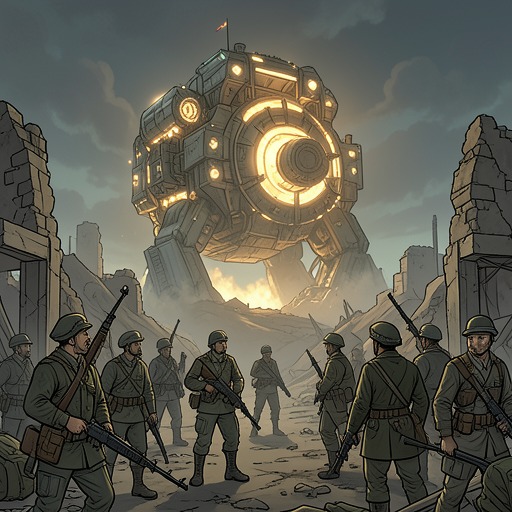
Eve introduces herself through a recording shown to Jack by Lilith in the illusion of Jack’s old apartment. The message identifies her as the machine’s creator and explains that she designed it to resuscitate those who had fallen in the great war. Its intended purpose was not simply to manufacture bodies, but to catalog and guide lost souls back to the living world, including victims of both petty wars and grandiose schemes. In Eve’s account, the Infinity Machine began as an instrument of restoration: a technological answer to grief and the enormous human cost of war.
The recording is addressed to whoever has reached it after the seals have failed. Eve recognizes that such a person must possess unusual tenacity and strength, and she warns that the world is doomed. Her testimony therefore functions as both historical record and emergency instruction. It arrives after the old safeguards have broken down, when the machine’s origins can no longer be separated from the crisis surrounding it.
Betrayal and the Corruption of Her Design
Eve states that she was betrayed when her dispassionate tool for returning lost loved ones became a weapon. Under Michael’s influence, the machine was turned into a mechanism for judging worthiness. Souls loyal to Michael would be selected for immortality, while others would be condemned to recycling. The decisive corruption was therefore ethical as well as mechanical: the machine ceased to serve the dead indiscriminately and became an instrument of political and spiritual selection.
Eve’s account places her in direct conflict with Michael’s doctrine. He argued that the machine had to be selective and that only the worthy should be allowed to return. Eve claims that she could see the danger in his intentions, yet she also admits that she and Michael shared responsibility for what followed. Her testimony does not present her as an untouched innocent. It describes a partnership fractured by incompatible motives, with Eve associating Michael’s actions with power and her own complicity with love.
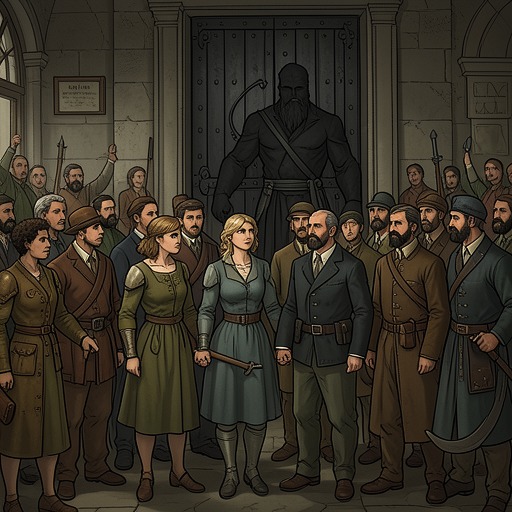
The consequences reached far beyond the machine itself. Eve says that she and Michael encouraged thousands to die for them and sacrificed billions in an effort to correct their mistakes. Their hubris nearly extinguished humanity. The image accompanying her words shows Heaven on fire, with angels rallying around Raphael and the other archangels, turning private betrayal into the ruin of an entire world.
Adam, Grief, and the Unfinished Work
Eve’s most intimate revelation concerns Adam. She calls him her beloved and describes him as the strongest among the angels, touching his face while he remains unresponsive. When Michael attempted to activate the incomplete machine, Adam was summoned from oblivion, but Eve emphasizes that he was not her Adam. The machine’s incompleteness, combined with her rage, sorrow, and loneliness, produced a return that failed to restore the person she had lost.
This account makes Adam the emotional wound at the center of Eve’s project. Resurrection is shown not as a simple reversal of death but as a process capable of producing an altered or unrecognizable result. Eve wanted to recover a beloved individual, yet the machine returned a figure who carried Adam’s identity without restoring the relationship she remembered. Her grief thus becomes part of the machine’s history, and her feelings may have helped shape the disastrous activation even as Michael pursued power.
Eve also reveals that her life’s work remained incomplete. Time ran out for her world before she could finish the machine, so she leaves the task to a future inheritor. Her appeal to Jack is conditional but significant: if he possesses the necessary strength and intellect, he may complete what she started. This gives her disappearance a second function. She is not only confessing the past; she is transferring responsibility for the future.
Legacy and Narrative Significance
Eve’s testimony changes the meaning of the Infinity Machine for Jack. Lilith produces a white orb containing schematics and says that it appears to hold everything needed to fix the machine. The information is protected by administrator privileges, but Lilith believes that Sahaqiel’s help could override those restrictions and reverse the machine’s effects. Eve’s message therefore leads directly to a practical possibility: the machine may be repaired and its corrupted operations undone.
Her legacy also clarifies why control over the machine matters. Later, Michael’s survival is explained through the transplantation of his consciousness into a non-Awakened child, along with years of experiments and the use of countless bodies. That revelation echoes Eve’s warning about souls, bodies, and the transformation of restoration into domination. Against this history of replication and exploitation, Eve’s original aim appears as an incomplete alternative: recovery without selective judgment, memory without ownership, and technology directed toward the dead rather than toward the preservation of power.
Eve’s influence remains visible in the Angel System’s development. Jack’s progression includes an Angel System status at Level 10, the title Nephilim, and later the unlocking of a Radiant Skill and an Anti-Army Class Skill. Eventually he activates the Angel System before the assembled survivors and reveals an interface marked Administrator. These system permissions connect Jack to the technological order Eve created, but they do not erase the moral problem she exposed. The same system that presents growth through levels and skills also makes authority over life, death, and resurrection appear as a programmable status.
Eve’s final significance lies in that unresolved inheritance. She created a machine meant to return the victims of war, saw it converted into a device for exclusion and immortality, helped cause the destruction she wanted to repair, and died—or vanished—before completing her work. Her message leaves Jack with both a warning and a mandate. The Infinity Machine is not merely a weapon to defeat; it is a damaged promise whose repair would require confronting the love, power, grief, and hubris embedded in its design.