House Light
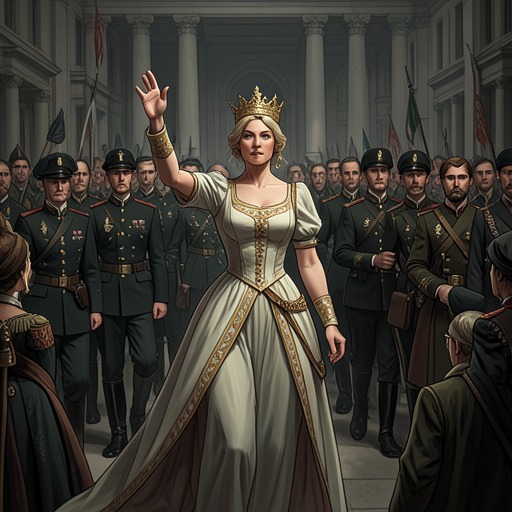
Awakening the Angel System: Apocalypse: A LitRPG Progression FantasyHouse Light is a hereditary noble and military power whose soldiers defend Roland interests against Selfia. Its decisive importance lies in the way it joins family status to armed loyalty: the house is not merely an abstract faction, but an institution capable of ordering persecution, holding fortified territory, and sending figures such as Colette into direct conflict with Jack.
Identity and Military Position
House Light appears in the story as a powerful loyalist house within the Roland political order. Its military forces defend Windermere, a heavily fortified port city whose capture could require months of siege. The defense is associated with the Regalia of House Light, and Colette commands one of the city's trench lines. The description places the house at the intersection of aristocratic legitimacy and battlefield command: its authority is expressed through noble lineage, but maintained through soldiers, fortifications, and resistance.
House Light's resistance also gives the late war a concrete strategic shape. Selfia's army is advancing, yet the house impedes that advance by holding Windermere. Selfia therefore treats the house as an enemy formation rather than as a merely ceremonial aristocratic family. For Jack, however, the military problem cannot be separated from personal history, because Colette—formerly Victoria's bodyguard and the absent mother of Celeste—is among those directing the defense.
Persecution of House Bell
The house's most consequential political action is its role in the campaign against House Bell. Before Roland's attempted secession, House Light operated under orders from Selfia's mother to eliminate House Bell. After Jack's fight with Lancelot, those orders became an open season on every Bell family member. Hundreds died, including both members of House Bell and people whose only offense was having spoken with one of them.
The violence was intensified by the chaos of the invasion. Selfia and Jack's aunt had made arrangements intended to mitigate the danger, but members of House Light isolated and hunted down many House Bell members anyway. This history explains why House Light's surviving loyalists are prepared to fight to the end: surrender is not simply a military decision for them, but a reckoning with the bloodshed committed in the name of their house and the retaliation they expect from Selfia's regime.
Colette and the Personal Cost of Loyalty
Colette embodies House Light's collision with private obligation. Four years after she last saw Jack and after she gave up Celeste, she is serving as a captain in Windermere's defense. When an officer proposes sortieing with a squad of mages to support a quick-reaction force, Colette refuses to remain behind and instead orders that she will go herself, taking up her sword to meet Jack in battle.
Her decision makes House Light's loyalty visibly personal. Colette is not introduced as a distant emblem of aristocratic resistance; she is a former companion whose military duty places her directly against the father of the child she relinquished. Jack asks whether Selfia expects him to persuade Colette to betray her house, but he rejects the possibility that she will listen, pointing to her decision to give up their daughter. Selfia likewise holds no illusion that a loyalist such as Colette can be convinced to defect. The house's institutional allegiance therefore becomes a barrier between two people joined by an unresolved family history.
Noble Continuity and Political Collapse
House Light's significance is clarified by the contrasting behavior of Roland's court during the assault on the capital. When Garnet Lamperouge asks whether Roland should surrender, General Grimm angrily rejects the suggestion. Roland admits that Selfia would prefer to torture and hang him from the side of her palace rather than permit a peaceful surrender. Although this scene does not identify every speaker as a member of House Light, it establishes the wider loyalist culture in which House Light operates: noble authority, military command, and fear of retribution make capitulation nearly unthinkable.
Within that culture, House Light preserves a form of aristocratic continuity while the larger war destroys the conditions that once sustained it. Its soldiers still hold trench lines and its officers still issue orders, but the house's history of sanctioned persecution has made neutrality impossible. The same loyalty that gives it cohesion also fixes it on the losing side of the conflict.
Narrative Significance
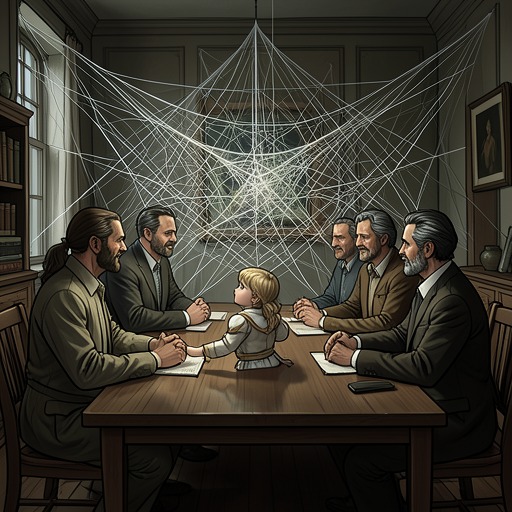
House Light functions as both a military obstacle and a structure through which the novel tests the meaning of kinship and inheritance. Celeste's birth certificate names Jack and Selfia, making Selfia the child's legally recognized mother and linking the girl to the succession. In contrast, Colette's earlier relinquishment of Celeste leaves biological motherhood detached from daily authority and public legitimacy. Against this background, House Light represents another kind of inherited identity: a person is expected to act for a house even when personal bonds point elsewhere.
The house's presence also sharpens the novel's recurring contrast between confinement and movement. Jack is kept inside a luxurious room after his marriage and coronation, effectively a prisoner despite the city flourishing below him; later, his movements are organized by security, armored transport, tablets, and official schedules. House Light turns that controlled political world into a battlefield, where fortified walls and trench lines make allegiance spatially visible. Its final force is therefore not only military. House Light shows how institutions built from family name, command, and historical vengeance can outlast individual affection—and can force private relationships to reappear as public enemies.