
Colonialism's Semantic Blindness
BabelThis flow traces how imperial actors use language to deny responsibility while claiming the authority to define other peoples.
increasing Bearing strength in each event
 decreasing
Bearing strength in each eventdecreasingThe Language of Civility
The Language of Civility
Polite domination
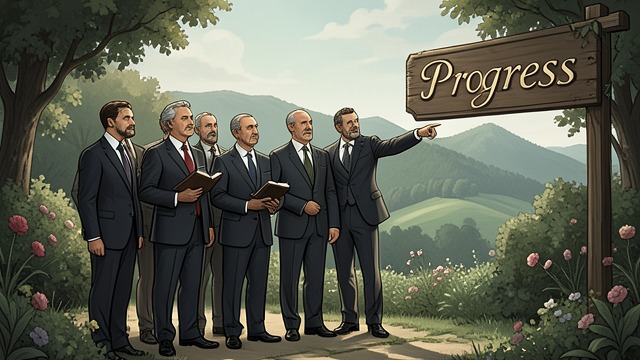
British characters describe conquest as progress, trade, education, and civilization. Their vocabulary turns coercion into benevolent administration.
Exclusion through naming
Chinese people are reduced to racial categories, Indian communities to subjects of improvement, and Black scholars to exceptional individuals. The language decides who counts as fully human.
Moral insulation
Because the terms sound respectable, speakers can discuss violence without feeling violent. Euphemism becomes a shield against responsibility.
The Free Trade Contradiction

The Free Trade Contradiction
Universal rhetoric
Harold Baylis argues that free trade requires unrestricted movement of goods. He presents commercial liberty as a universal principle.
Selective application
The trade depends on naval force, colonial plantations, unequal treaties, and an addictive drug imposed on a reluctant market. Freedom belongs to the seller, not to the people made to receive the product.
Semantic exposure
Robin sees that the argument survives by changing the meaning of choice. The British call coercion free trade because their power determines the available options.
Naming the System

Naming the System
From individual blame
Robin initially focuses on cruel professors, abusive fathers, and dishonest merchants. Gradually he identifies the larger structure that makes their behavior profitable and repeatable.
Historical linkage
Etymology teaches him to see words as records of contact, migration, and domination. Colonialism appears not as an isolated policy but as a network embedded in institutions and language.
Political speech
The strike’s language attempts to make the system visible to people who suffer from it differently. Naming becomes the first stage of collective action.
1830s, British conversations about empire
1839, during the Canton negotiations
1839, during the final Babel occupation
