
The Archive and the Erased
BabelThis flow traces the struggle over who gets to preserve, classify, and remember the history of resistance.
increasing Bearing strength in each event
 decreasing
Bearing strength in each eventdecreasingThe Official Archive
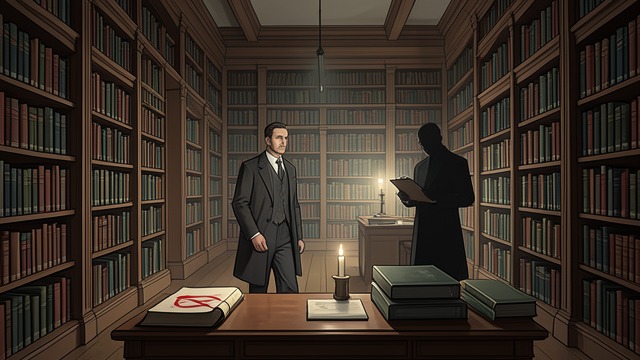
The Official Archive
Institutional memory
Babel stores Grammaticas, manuscripts, ledgers, and scholars’ work as an authoritative record of human language. Its archive appears neutral because it is presented as preservation.
Selective survival
The institution decides which languages deserve funding and which knowledge can be circulated. Non-English research is often locked away or used only for British purposes.
Historical power
To control the archive is to control the future’s account of the past. Babel can make resistance look like theft because it owns the documents that would explain the theft.
Ibrahim's Chronicle

Ibrahim's Chronicle
Recording the rebellion
Ibrahim writes down the events inside the tower so that the strikers will not be remembered only as criminals or foreign agitators. He treats documentation as a form of resistance.
The problem of incompleteness
Robin fears that a single chronicle cannot counter the enormous archive controlled by Babel and the state. Too much of Hermes’s history has already been erased by secrecy and death.
Intervention
The record nonetheless gives future readers another voice. History can be contested even when it cannot be fully recovered.
The Ruined Library
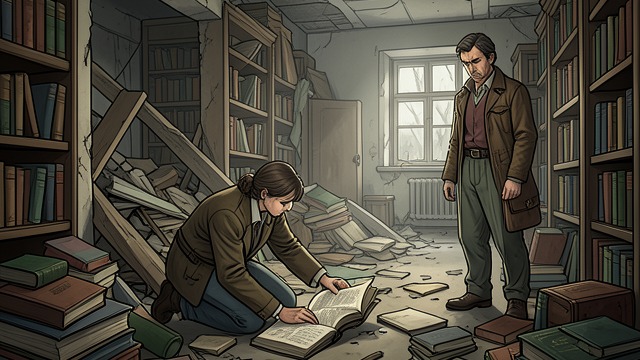
The Ruined Library
Destroyed knowledge
The Old Library contains multilingual research that Babel refuses to fund or acknowledge. Its destruction turns intellectual suppression into a physical wound.
Bodies and books
Police leave dead scholars among the rubble while removing surviving books for imperial analysis. The scene demonstrates that the state wants both the people and the knowledge made invisible.
Memory as duty
Robin and Victoire return to witness the ruins. Their refusal to look away becomes part of the movement’s historical responsibility.
1836-1839, Babel's ordinary academic life
During the Babel siege in 1839
After the Old Library attack in 1839
