
The Technology of Erasure
BabelThis flow traces silver-working applications that manipulate memory, identity, bodies, and the historical record.
increasing Bearing strength in each event
 decreasing
Bearing strength in each eventdecreasingForgetting as Weapon

Forgetting as Weapon
Semantic distortion
Jerome Playfair demonstrates how a Greek-English match-pair can remove knowledge. The effect is presented as a clever military application.
Moral distance
The scholars discuss the device as an academic achievement rather than a form of mental violence. Technical ingenuity permits them to avoid imagining its victims.
Institutional pattern
The weapon exposes Babel’s underlying logic: any linguistic difference can become useful once separated from the people whose meanings made it possible.
The Epitaph Prison
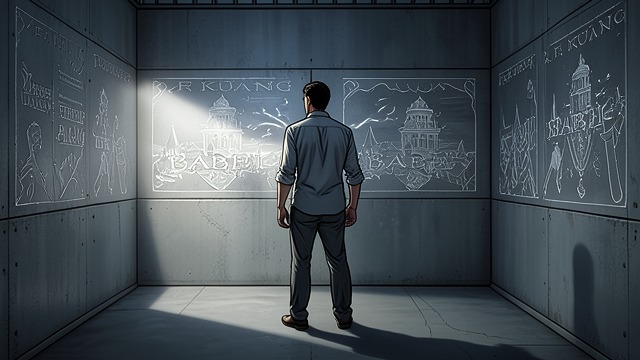
The Epitaph Prison
Voices of the dead
A silver inscription makes the prison walls speak the confessions of previous prisoners. Written history becomes an involuntary chorus of guilt and despair.
Torture through memory
The ward does not merely confine Robin physically. It surrounds him with the emotional residue of people who suffered before him.
Countermemory
Instead of breaking him, the voices mirror his own grief. The device reveals that institutional memory can be weaponized, but cannot fully control what the prisoner understands.
The Body as Text

The Body as Text
Physiological translation
Sterling Jones uses silver to intensify pain and force emotion into speech. Robin’s body becomes a text that the interrogator attempts to read.
Confession under coercion
The technique blurs the distinction between truth and compelled utterance. Speech produced through torture is presented as information but is actually another form of domination.
Resistance
Robin refuses to disclose Hermes contacts despite physical and psychological violence. His silence becomes the last domain the institution cannot translate.
1837, Playfair's silver-working seminar
1839, Robin's imprisonment after the Old Library raid
1839, during Sterling Jones's interrogation of Robin
