
The Final Memory of Home
BabelThis flow traces how memory moves from suppression to selective preservation after the destruction of Babel.
increasing Bearing strength in each event
 decreasing
Bearing strength in each eventdecreasingBuried Canton
Buried Canton
Deliberate forgetting
Robin suppresses Chinese memories and tries to think exclusively in English. He treats memory as a survival burden that must be hidden.
Institutional replacement
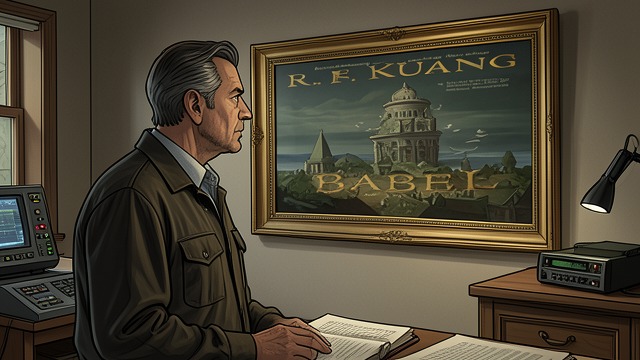
Oxford, Babel, and books become his new geography. The painting of Oxford replaces the absent landscape of home.
Persistent traces
Language lessons, dreams, and sensory memories resist the erasure. Canton remains present precisely because Robin works so hard not to remember it.
Memories in Ruins

Memories in Ruins
Fragmented recollection
Robin remembers Ramiz Rafi Mirza through voice, tea, laughter, and gestures rather than a complete narrative. Griffin survives in tools, notes, and violent instructions.
Inadequate images
The daguerreotype preserves the cohort’s appearance but cannot capture the warmth between them. Written records preserve facts while losing the texture of life.
The duty to remember
Robin begins to understand why Ibrahim’s chronicle matters. Memory is not a perfect translation, but it can resist the story imposed by the victors.
Carrying the Dead Forward

Carrying the Dead Forward
Victoire's flight
Victoire leaves England carrying silver, contacts, and the memory of those who died. Survival requires her to move before grief can immobilize her.
Continuing history
She knows that no victory is assured. Resistance must be rebuilt through alliances, research, and future acts of courage.
Refusing disappearance
The dead remain part of her political future. Their names and choices become resources for a struggle that the Empire would prefer to erase.
1830-1836, Robin's years in England
1839, after the deaths of Ramy and Griffin
After the destruction of Babel, 1839
