
The Town’s Silence and Memory
Bag of BonesThis flow examines how local belonging, racial prejudice, economic dependence, and silence allow violence to persist across generations.
increasing Bearing strength in each event
 decreasing
Bearing strength in each eventdecreasingA Community on The Street
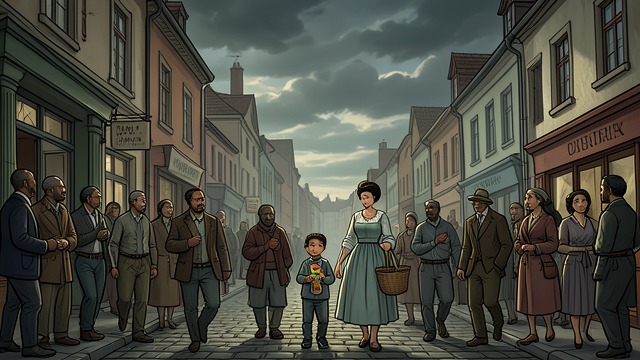
Shared Public Life
Residents, summer visitors, mothers, workers, and children gather along The Street as a visible community.
A Fragile Welcome
Sara participates in this shared life, and people sometimes treat her as a neighbor despite the racial assumptions surrounding her.
Significance
The community’s public warmth makes its later complicity more disturbing: inclusion exists, but it is neither secure nor equal.
The Mob Enforces Its Boundary

Belonging Is Withdrawn
Jared’s followers attack Sara after deciding that her presence has crossed an unwritten racial boundary.
A Public Place Made Private
They commit the violence on a common path, confident that ordinary residents will not intervene.
Significance
The conflict reveals that local solidarity can protect some neighbors while excluding others at the moment protection matters most.
Silence Becomes Protection

The Township Looks Away
When Son Tidwell seeks answers, townspeople who suspect the truth avoid pursuing the perpetrators.
Loyalty’s Cost
The TR’s habits of protecting local families and avoiding outside scrutiny help the guilty survive without justice.
Significance
The same cohesion that sustains a rural community becomes a mechanism for preserving racial violence and inherited fear.
The Present Repeats the Past

Old Power, New Methods
Maxwell’s wealth and allies pressure Mattie through courts, workplaces, gossip, and ultimately an armed attack.
Familiar Community Response
Some residents support Mattie, while others stay silent or distance themselves to protect their own position.
Significance
The town’s contemporary institutions have changed, but the old struggle over whose safety and voice deserve protection remains recognizable.
An Imperfect Refusal

Breaking the Pattern Locally
Some men leave the funeral and move toward Mattie’s trailer, while Bill Dean refuses to join them.
Resistance and Its Limits
Michael and George defend the family, but the response comes only after the town’s violence has already cost lives.
Significance
The story offers no easy redemption for communal silence; it shows that refusing the next act matters, even when it cannot undo the previous ones.
Around 1900
August 1901
Late summer 1901 through the following generations
Summer 1998
July 21, 1998, during the funeral and storm
