Bill Dean
Bag of BonesBill Dean is the longtime caretaker of Sara Laughs and a friend of Mike Noonan whose practical loyalty helps bring Mike back to the lake, even as the community’s buried history turns them against one another. He maintains the house through years of Mike’s absence, welcomes him back, and later warns him that the past and the custody fight around Mattie Devore carry dangers he does not understand. Their friendship breaks under the weight of that warning, but during the July storm Bill’s refusal to leave Yvette shows that his final position is not simple allegiance to the town’s destructive impulses.
Caretaker and Old Friend
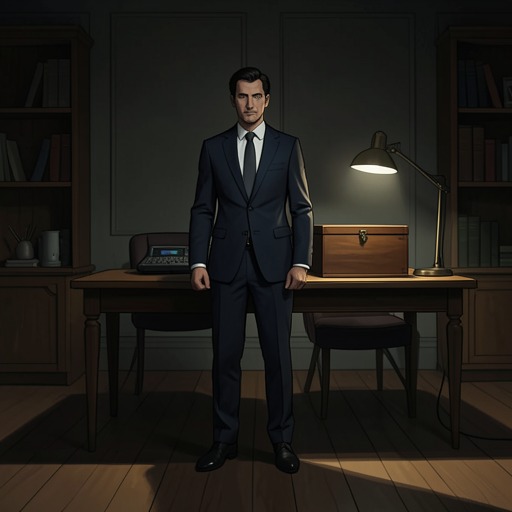
For years, Bill looks after Sara Laughs while Mike stays away after Jo Noonan’s death. His work is meticulous and seasonal: he removes and replaces the storm shutters, drains the pipes before winter, checks the pump and generator, keeps maintenance tags current, and anchors the swimming float after Memorial Day. He even has the chimney cleaned in early summer 1996, though no fire has been lit for two years. Mike pays him quarterly, and Bill accepts the checks without pressing him about why he has stopped using the house.
That restraint is part of Bill’s friendship. Mike has visited the lake only two or three times since Jo died, never staying overnight, and admits that he does not know what he would have said if Bill had asked why. It is only after speaking with Harold Oblowski that Mike begins to consider returning. A week later, in early May, he calls Bill and says he expects to come down around the Fourth of July, with the possibility of spending the fall and winter there too. Bill welcomes the news and says that people in the area have missed Mike and would like to offer condolences. Mike’s return is also a return to a community Jo had served: she contributed to the local library, led a successful bookmobile fund drive, belonged to a sewing circle and the Castle County Crafts Co-op, and helped with sick visits, the volunteer fire department’s blood drive, and Summerfest.
Bill treats the empty house as something that needs to be made ready for its owner, not merely kept standing. He says that Sara Laughs is structurally fine but gets stale after standing unused, and promises to have Brenda Meserve clean it from top to bottom. At Mike’s request, he also sends a package of twenty photographs taken with a disposable camera. The first four, taken from the top of the driveway, show the house “warts and all”: moss on the wings, fallen branches, and drifts of pine needles. Bill resists tidying the view before taking the pictures because Mike wants an honest record of the place’s neglect.
When Mike arrives, Bill has arranged for Brenda to shop for him. A note explains that the kitchen table holds the supermarket receipt and that the pantry is stocked with canned goods, with a modest supply of perishables as well. Bill is away for the Fourth of July with his wife, Yvette, visiting her sister in Virginia, but leaves phone numbers for her, a local contact, and the plumber, electrician, Brenda, and the television technician. The preparations extend Bill’s care beyond maintenance: he wants Mike to be able to settle in and handle problems despite his absence.
The Past and the Community’s Silence
Bill’s easy welcome gives way to caution when Mike tells him he has been looking into the history of Sara and the Red-Tops and has also asked about Normal Auster, Kenny’s father. At the Lakeview General Store, Bill keeps smiling as he unscrews his gas cap, yet Mike senses that he has gone rigid inside. Bill asks whether Mike intends to write about such matters, warning that people in the area would take it badly. He then reveals that Jo had considered writing about Sara and the Red-Tops for a local paper and, Bill thinks, possibly Yankee magazine.
The disclosure changes what Mike knows about Jo’s activities. Bill says she had asked questions during the fall of 1993 and the winter and spring of 1994, travelling around the area, including Motton and Harlow, with a notebook and a small tape recorder. He had cautioned her that there were sore toes locally and advised her not to tread on them. Jo said she understood, but, as Bill recalls it, she kept asking questions and listening to older residents’ stories. Mike is shaken by the realization that his wife had pursued local history without telling him; he had previously assumed that any writing she produced would have turned up among her papers.
Bill draws a sharp distinction between the history of the local families and that of Sara and the Red-Tops, whom he describes as outsiders who wandered through. In his view, Jo could have written about them without provoking the same resentment. By contrast, he insists that the story of little Kerry Auster is not suitable for a newspaper or magazine. Normal, he says, “just snapped,” and the tragedy remains capable of hurting people. His explanation is not simply a warning about privacy: it expresses a local code in which families and old events remain tied together beneath the surface. As Bill puts it, the past in small towns dies slowly.
The same fear shapes his account of the TR as a place where everyone’s ease depends on everyone else staying settled. He compares community life to four or five people sharing a bed in the cold: if all lie still, they manage, but one restless person can keep everyone awake. Mike, in Bill’s analogy, has become the restless one. Bill says that people are uneasy about his interest in Mattie and acknowledges that some residents believe there is something between them. Even without endorsing that gossip, he warns that Mike is making life harder for himself by remaining at the TR.
Bill’s warning grows more grave when he describes Max Devore. He tells Mike that Devore’s reputation for madness is no figure of speech and asks whether he would really rely on the courts to stop a man who could not get what he wanted through legal means. Bill alleges that Devore set the 1933 summer fires, which burned over half the county and killed people, including one of Bill’s relatives. He says the arson was never proved, but presents it as an example of what Devore might do when young, broke, and outside the law’s reach—and a reason to fear what he might do now. His account mixes an unproved accusation with a sincere effort to make Mike understand the danger.
Friendship Under Strain
Bill’s concern does not lead him to ask Mike to abandon Mattie’s custody fight. When Mike makes clear that he will not stand aside and let Devore take Mattie’s child without a fight, Bill replies that he would not ask that of him now. His urgency is protective but entangled with the town’s reluctance to disturb old arrangements: he begs Mike to let the rest of it go and says he is worried about him. Mike recognizes that Bill is lying when he minimizes his own position, but suspects that Bill is also trying to convince himself.
After Max Devore dies, Mike asks Bill directly whether they are still friends. Bill answers at once that they are, then warns that some people around town may act stand-offish. Mike understands that residents could blame him for the old man’s death, despite Devore’s physical condition and the absence of broad agreement. Bill’s reassurance therefore comes with an acknowledgement that their friendship cannot shield Mike from the community’s suspicions.
The relationship reaches its break when Mike confronts Bill about what the local families did to Sara Tidwell and her family. Bill says they did not drive them away; they left of their own accord. He repeats a racist saying attributed to his father to explain their departure, exposing the prejudice embedded in the inherited local account. Mike then presses him about who set the trap that killed Son Tidwell’s boy. The exchange connects the town’s demand for silence not only to the painful memory of individual tragedies but also to a history of racial hostility and possible violence.
Bill does not answer Mike’s questions with a full account of what Jo discovered. Instead, he urges Mike to stand back, saying that events will run their course whether or not Mike intervenes. He invokes the image of a river almost at the sea, beyond the reach of a dam built by someone like Mike, and frames withdrawal as necessary for Mike’s soul. Mike tells Bill to stay away from Mattie and Kyra. Bill answers that he will not leave his house and that neither of them has anything to fear from him. He adds that he wishes he had never returned from vacation, but did so mostly on Mike’s account.
Bill goes inside and locks a door he may never have locked while at home. The clear click makes the separation unmistakable to Mike: the old caretaker who once welcomed him back has now shut him out. The scene does not erase Bill’s earlier care or his stated worry for Mike; instead, the lock gives their conflict a concrete ending, turning a long friendship into a boundary neither man can cross at that moment.
Yvette and the July Storm
The break does not make Bill a willing participant in everything the TR’s residents do. During the storm, as George Footman warns Mike that Footman is dangerous, Bill grips Yvette’s wrist so tightly that his fingernails turn white. Yvette does not complain; she wants him to hold on to her. Mike understands that the grip is not aggression directed at his wife but an effort to keep himself from being drawn away.
When a supernatural force pulls at those present, Bill does not go with Buddy Jellison and the men who leave Grace Baptist. Mike sees Buddy depart through a side door with two companions and realizes why Bill is holding Yvette so firmly. Bill resists the pull and stays with her. In that moment, the image of the locked door changes its meaning without undoing the rupture: Bill had shut Mike out, but he is also capable of refusing the dangerous group impulse and holding fast to the person beside him.
Bill’s arc is shaped by the contradiction between care and concealment. The same man who keeps a house ready for a grieving friend, stocks its kitchen, and leaves a list of practical contacts also protects a local silence that obstructs Mike’s investigation into Sara, Jo, and the town’s past. His warnings reveal genuine fear, but his account of the past carries the community’s prejudice as well as its anxiety. At the storm’s climax, his choice to remain with Yvette offers a final distinction between belonging to the TR and obeying every force acting through it.