Dream–Reality Correspondence
Bag of BonesDream–Reality Correspondence describes the increasingly unsettling match between Michael Noonan’s dreams and waking experience. Its decisive signs are concrete: a shallow cut that recurs in dreams and appears on his hand, and three sunflowers in a photograph of Sara Laughs that reproduce the arrangement he had dreamed. The pattern makes the dreams more than an inward refuge or a writer’s imaginative material; it forces Michael to confront the possibility that they register events beyond his conscious knowledge.
The Cut That Crosses the Boundary
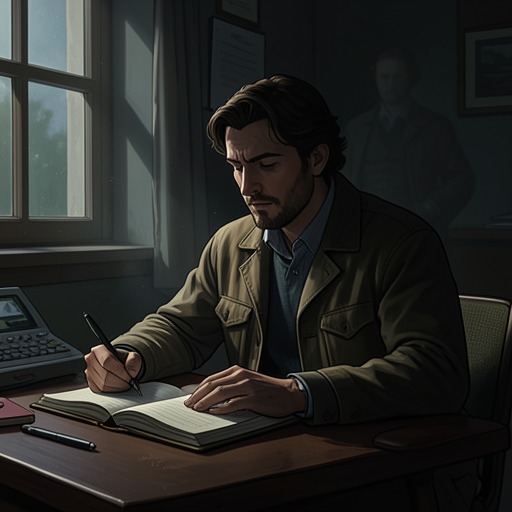
In a nightmare, Michael stands above Sara Laughs, unable to make himself go down to the house. As he raises his hand to brush away his damp hair, he sees a recent shallow cut across its back, just beyond the knuckles. The dream’s details feel so exact that he wonders whether their vividness is itself evidence: they are, he thinks, the kind of details a novelist might make. Yet the wound is not confined to the dream, and its location shifts between his right and left hand in different appearances.
After another night of terror, Michael wakes and finds a shallow, clotted cut on the back of his hand, just below the knuckles. He supposes he made it while crawling in the dark, disoriented, trying to get back to bed. That explanation accounts for the injury’s presence but not the dream’s prior insistence on the same detail. The wound becomes a small physical remainder of the nightmare, one that waking cannot simply erase.
The cut returns to his attention as he prepares to go back to Maine. Michael tries to fit it into a neat psychological explanation of his dreams, then calls it coincidence: hands are exposed and often get cut. But the explanation does not satisfy him. The instinctive resistance comes from what he calls the boys in the basement, his name for the less conscious creative processes he associates with writing. They do not accept the coincidence theory, even as he puts the thought aside during the plane’s descent toward Bangor.
Sara Laughs in Photographs
A second correspondence comes into view through photographs of Dark Score Lake. Michael sorts through Jo’s old pictures and finds an image he remembers taking in 1990 or 1991: Jo, wet from swimming, standing on the float as the sun goes down behind her. The photograph establishes the ordinary material presence of the lake and their shared past, while the larger collection directs his attention back to Sara Laughs.
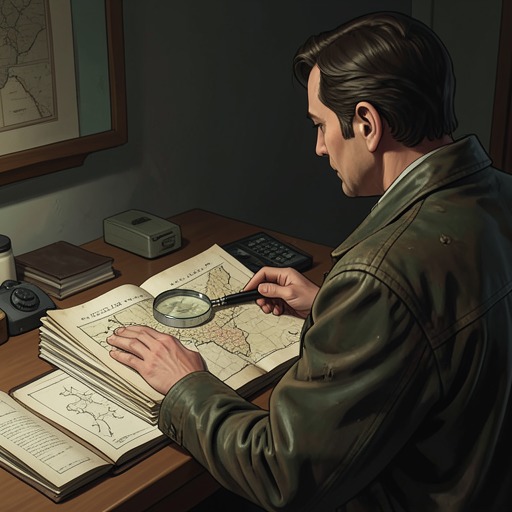
To compare the house with its dream appearance, Michael asks Bill Dean to photograph it without tidying away signs of neglect. Four days later, a package arrives with twenty pictures taken on a disposable camera. Bill has documented the moss, fallen branches, and pine needles at the house, preserving the unprepared state Michael had requested rather than making the place look more orderly than it was.
The details that matter most are not the general signs of disuse but the stoop at the bottom of the driveway. In one photograph, three large sunflowers grow through its boards. Michael recognizes them as exactly the three flowers in his dream. Their number and placement make the resemblance unusually specific: not merely a dream of the same house, but an image that seems to anticipate a particular feature of its actual surroundings.
Testing the Dream Against the World
When Michael later walks down the driveway, the correspondence is not perfect. His dream had included a fallen branch that he remembered avoiding, but the branch is not there in waking life. He examines both hands: neither bears a mark, not even a shadow of the scar from the cut he had sustained while crawling around his bedroom during the ice storm. The absent branch and unmarked hands provide counterevidence, while the earlier cut and the three sunflowers remain difficult to explain away. The book keeps the pattern grounded in specific checks rather than treating every dream detail as confirmed.
That mixture of match and mismatch shapes the concept. Michael knows how readily imagination can supply convincing detail; he also knows that his dreams have contained correspondences his ordinary explanations do not settle. His attempt to classify the cut as coincidence is therefore not a conclusion so much as a defense against an unresolved possibility. The material details make uncertainty active: a dream can resemble a novelist’s invention and still leave a trace that appears to answer it.
Grief, Memory, and the Return of Jo
Dream and waking experience are also bound together by Michael’s grief for Jo. When he reads from a copy of The Moon and Sixpence and reaches the passage in which Strickland calls Stroeve a funny little man, he realizes that Jo will never turn the page and hear the line. The paperback makes her death newly undeniable: the books and phrases through which they shared life continue, but she cannot continue reading beside him. This scene is not itself a dream correspondence; it shows how memory and ordinary objects can make an absent person present with painful force.
Later, when Michael returns to Sara Laughs, he confronts the place he had treated as shelter and feared as a source of danger. A remembered phrase, “Well, then — that's all right, isn't it?”, becomes part of the decision to go in. The wording recalls an earlier moment when he said he was done, Jo did not answer, and the room contained no sensed presence. On entering the house again, he does not cry. The recurring phrase thus links separate moments without making them identical: its meaning changes as grief and fear give way to a willingness to face what the house holds.
During the later supernatural crisis, Jo appears to Michael as the Outsider disappears. He sees her as exhausted and diminished, standing among birch leaves that look charred, and understands her message as a shared triumph. He chooses the intimate, inward explanation—that he reads her words from her mind—over a merely rational account. The scene intensifies the book’s uncertain traffic between external event and internal experience, while presenting Jo’s presence as help rather than as proof that every dream image should be trusted.
Consequences and Significance
The correspondences matter because they unsettle the distinction Michael depends on as a novelist: the line between what is imagined and what has happened. He repeatedly tries to read the dreams as products of his own mind, yet the cut and the sunflowers press back as particulars the explanation cannot absorb. The tension is not resolved by treating every image as prediction; instead, the narrative lets physical evidence accumulate while leaving room for doubt and for the possibility of a supernatural source.
The pattern also gives grief a form. Jo remains part of Michael’s life through remembered speech, shared reading, and, eventually, a presence he experiences during danger. At the end, he closes his book of dreams by choice, refusing to make himself suffer further through the record of what he has seen. But he does not erase the love that the memories carry. His attention turns toward Kyra, the child sleeping down the hall, and toward the responsibilities and attachments that continue in the waking world. Dream–Reality Correspondence therefore connects uncanny evidence to a more intimate change: the past remains active, but Michael’s future is shaped by whom he chooses to care for now.