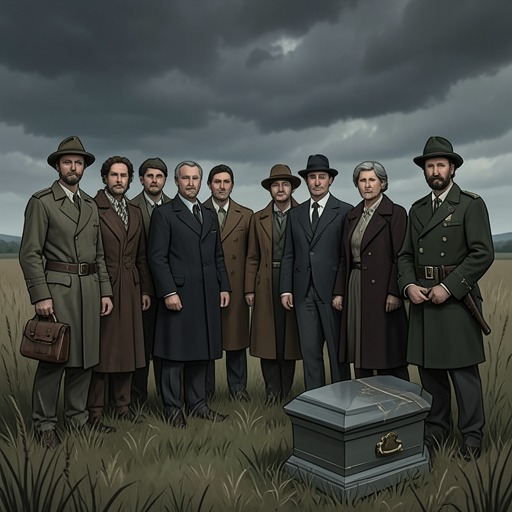
Feilao'en Cemetery
Bag of BonesFairlawn Cemetery is where Johanna Noonan is buried and where Michael Noonan’s grief first takes shape through shared mourning, later returns in dreams and memory, and ultimately gives way to a continuing connection with Jo. The cemetery is both a literal site of farewell and a point of reference for the story’s shifting boundary between death, remembrance, and supernatural presence.
Jo’s Funeral and the First Visit
After the viewings and funeral service, a small prayer was held at Fairlawn Cemetery. Michael remembers the afternoon less as a formal ceremony than as an oppressive day of heat and disorientation: without Jo to talk to, he felt lost, and even wished he had bought better shoes, knowing she would have teased him about them. The small, mundane regret makes her absence immediate; the familiar conversation he expects from her is now impossible.
The following day, Frank stayed behind with Michael. They picked real flowers from behind the house—flowers Jo liked—and arranged them in coffee cans from the pantry. They carried them to the new grave, placed them there, and sat together under the beating sun. Frank recalled that Jo had been the sweetest thing in his life and that, when they were children, he and his brothers had protected her. The visit joined a simple act of care for the grave to Frank’s memories of the sister he had helped look after.
Grief After the Burial
The funeral and burial do not immediately make Jo’s death emotionally real to Michael. Later, while reading The Moon and Sixpence, he reaches a passage in which a character calls another a funny little man. The book prompts the realization that Jo will never turn the page and hear the line. Though Michael had seen and identified her body and attended the funeral, the paperback makes her death undeniable in a way the coffin and ceremony had not. Fairlawn’s burial is therefore a fact of his life before it becomes a fact he can fully absorb.
The cemetery also remains part of his memory through the objects and actions that surrounded the funeral. The flowers, the grave, and Frank’s visit preserve a relationship that cannot be reduced to the burial itself. Remembering the grave means remembering Jo’s tastes, Frank’s devotion, and the ordinary exchanges Michael has lost.
The Grave in Dreams and Recollection
In a recurring nightmare, Michael walks down the driveway toward the lake and sees Jo’s coffin lying on its side, partly open and empty. He recognizes it as the coffin Frank had negotiated for, believing the undertaker was trying to overcharge him. The imagined empty coffin turns the funeral object into a source of terror: the dead have not simply remained in the grave, and the dream transforms mourning into the fear that Jo has escaped and is coming for him.
That nightmare belongs to the frightening dreamscape of Sara Laughs, not to an event at Fairlawn itself. Its force comes partly from the contrast with the actual burial: the real grave had held flowers placed by Jo’s family, while the dream coffin is empty and associated with a monstrous, shrouded figure. The cemetery’s significance thus extends beyond its physical grounds through the remembered coffin and the unresolved emotional pressure of Jo’s death.
A Continuing Bond
Michael’s relationship with Jo persists beyond the funeral, though its form changes. At one point he raises a glass of champagne in the Derry office and tells her he is finished, receiving no response and sensing no presence in the room. Later, in a moment of crisis, he recognizes Jo as a dim figure standing near The Street after the threatening presence has vanished. She appears exhausted and diminished, but her presence helps him understand that they have survived the struggle together. Michael interprets their marriage as a zone of connection that death has not wholly erased.
The cemetery’s meaning is therefore not confined to a final separation. Michael’s grief eventually includes the years he spent without Jo and without his work, but also gratitude that he may be able to write again. After crying, he goes down to the lake and wades in water that feels like a resurrection. His bond with Jo remains, while his care and affection also turn toward Kyra, the child sleeping down the hall. The grave marks the loss that shapes his story; memory and action show how he continues living with that loss rather than leaving it behind.