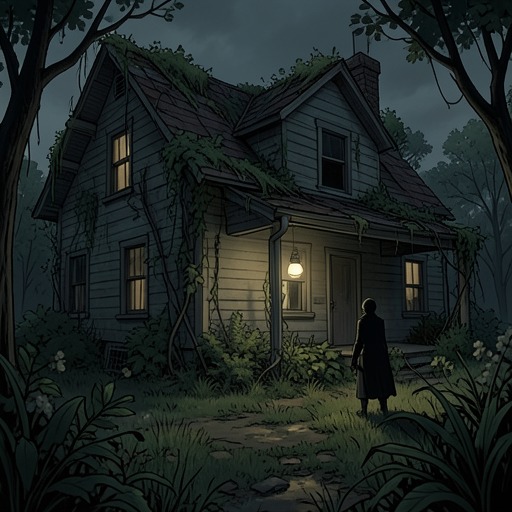
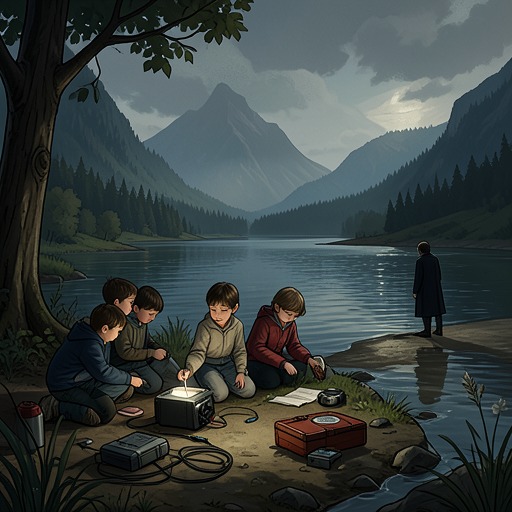
Help im drown
Bag of BonesHelp im drown is a misspelled plea that recurs as both a physical message and a supernatural voice at Sara Laughs. It joins an unexplained sign on the refrigerator to Mike Noonan’s choking, water-tasting visions of a drowned child, making the words a persistent summons rather than an isolated piece of writing.
First Appearance at the Refrigerator
After hearing renewed sobbing that sounds like a terrified child, Mike tastes the lake’s iron-rich water in his mouth and nose. He gags over the sink, but spits out only a little saliva; the sensation of being waterlogged then vanishes. Still shaken, he reaches for the refrigerator and stops when he sees that the fruit-and-vegetable magnets have been drawn into a circle. At its center is the message Help im drown.
The note gives written form to the episode’s otherwise disorienting sensations: a child’s crying, the taste of water, and the fear of drowning. Its ungrammatical wording makes the appeal seem less like an ordinary message composed at leisure than an urgent attempt to get words out. Mike decides to leave immediately, but an hour later he is back in his study, absorbed in writing. The sharp reversal does not resolve the haunting; it shows how quickly ordinary work can draw him back into life even after he has resolved to flee.
The Message Becomes a Voice
The phrase resurfaces after Mike learns about a child’s murder from Mrs. Meserve. The account concerns Normal Auster killing Kenny’s baby brother by holding him under a pump until the child filled with water and died. Mike connects that story to the refrigerator message, recalling it as he considers the cold mineral taste in his own mouth and throat. The connection gives the plea a possible historical referent, although the message itself does not explain who placed it or how it reached him.
Later, while walking north along The Street, Mike sees the Green Lady in a birch and pine and considers searching Jo Noonan’s studio for something she may have left behind. The words then come to him from the woods, the water, and himself. The phrase no longer belongs to a fixed arrangement of letters: it seems to arrive from several directions at once, as Mike’s chest tightens and his stomach contracts. He cannot speak. The episode turns the earlier written plea into an attack on his body, as though the message had been waiting to make its meaning felt rather than merely read.
Intrusive Thoughts and the Drowned Boy
During the same vision, the plea repeats in Mike’s mind in altered form, alongside fragments about a blue-cap man, lost berries on a path, and someone holding the speaker. Some versions retain the childlike grammar of the refrigerator message; others shift to the more direct wording Help I'm drown. The changing fragments suggest a voice struggling to convey a sequence of experience, not a composed explanation. Their repetition supplies urgency where the speaker’s identity and circumstances remain uncertain.
The pressure on Mike’s chest feels like hands holding him down. He experiences the trees as if seen through water, and sees a small drowned boy on his back in the lake, his cheeks puffed and his eyes white. As the plea returns, Mike experiences himself at once as the child beneath the surface and as the white man at the bank, struggling to breathe. That impossible doubling makes the words more than a report of someone else’s danger: for the duration of the vision, Mike is caught in the relation between the drowned child and the living witness.
Recurrence and Significance
The vision passes, but not cleanly. Mike remains sick and clings to a birch while the pressure in his chest eases. He sees the drowned boy again and recognizes the child as a Black boy whose name was almost certainly Tidwell. The message has therefore led him toward the history of the Tidwell family, though its repetitions arrive in flashes and fragments rather than as a complete account.
The phrase’s force depends on its return in different media: first an arrangement of refrigerator magnets, then an association triggered by a story about an infant’s murder, and finally an intrusive voice accompanying Mike’s sensation of drowning. Each recurrence narrows the distance between a plea for help and the witness who hears it. The words do not tell Mike everything, but they make the past press upon his present body, turning an awkwardly spelled note into a signal of suffering that cannot simply be dismissed as a message on a refrigerator.